49 Closet Organization Ideas That Make Everyday Storage Easier

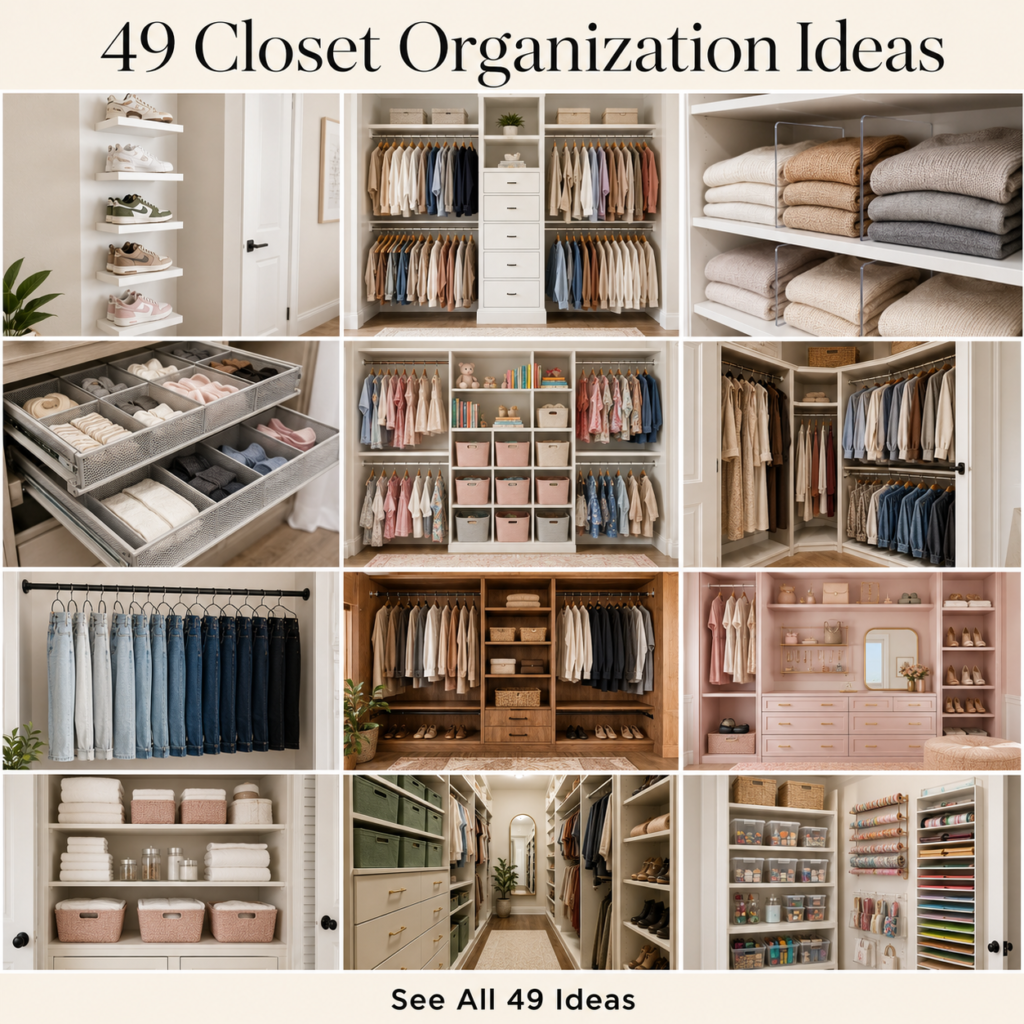
Good Closet Organization starts with a simple pleasure: opening a door and finding exactly what you need. Your favorite sweater has room to breathe, shoes stay together, and the bag you reach for every morning is no longer buried behind yesterday’s outfit. A useful setup makes getting dressed easier while giving your space a calmer, more considered feel.
There is no single layout that suits every home. Some wardrobes need more hanging space, while others work better with folded stacks, divided drawers, or baskets that contain the smaller pieces. A narrow reach-in closet asks for different choices than an open bedroom wardrobe. Household closets bring another set of priorities, from towels and cleaning tools to craft supplies.
These ideas explore those differences through practical storage and inviting design. Expect everything from simple shelf dividers and shoe displays to coordinated children’s closets and generous dressing areas. Choose the details that solve your everyday frustrations, then adapt the colors, containers, and arrangement to your own routine. The goal is a system you can comfortably maintain.
Effective Closet Organization gives each category a clear home and keeps frequently used items easy to reach. Combine hanging space for garments that need it, shelves for manageable folded stacks, and divided storage for smaller belongings. The most useful arrangement reflects what you actually own, with enough open space to remove and replace things easily.
1. Floating Shoe Shelves That Free Up the Floor
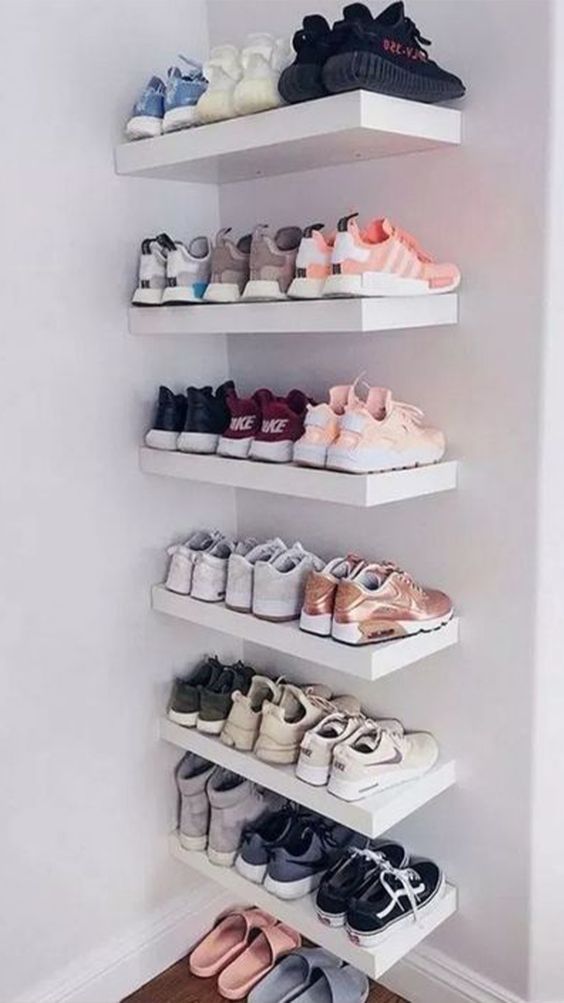
A vertical shoe display turns an overlooked wall into useful storage while keeping favorite pairs easy to compare. Narrow white shelves give sneakers their own rows without the visual bulk of a large cabinet. This direction suits a collection you enjoy seeing and wearing regularly. Save this wall-storage idea for your next closet refresh.
2. Woven Drawer Baskets for Everyday Beauty Essentials
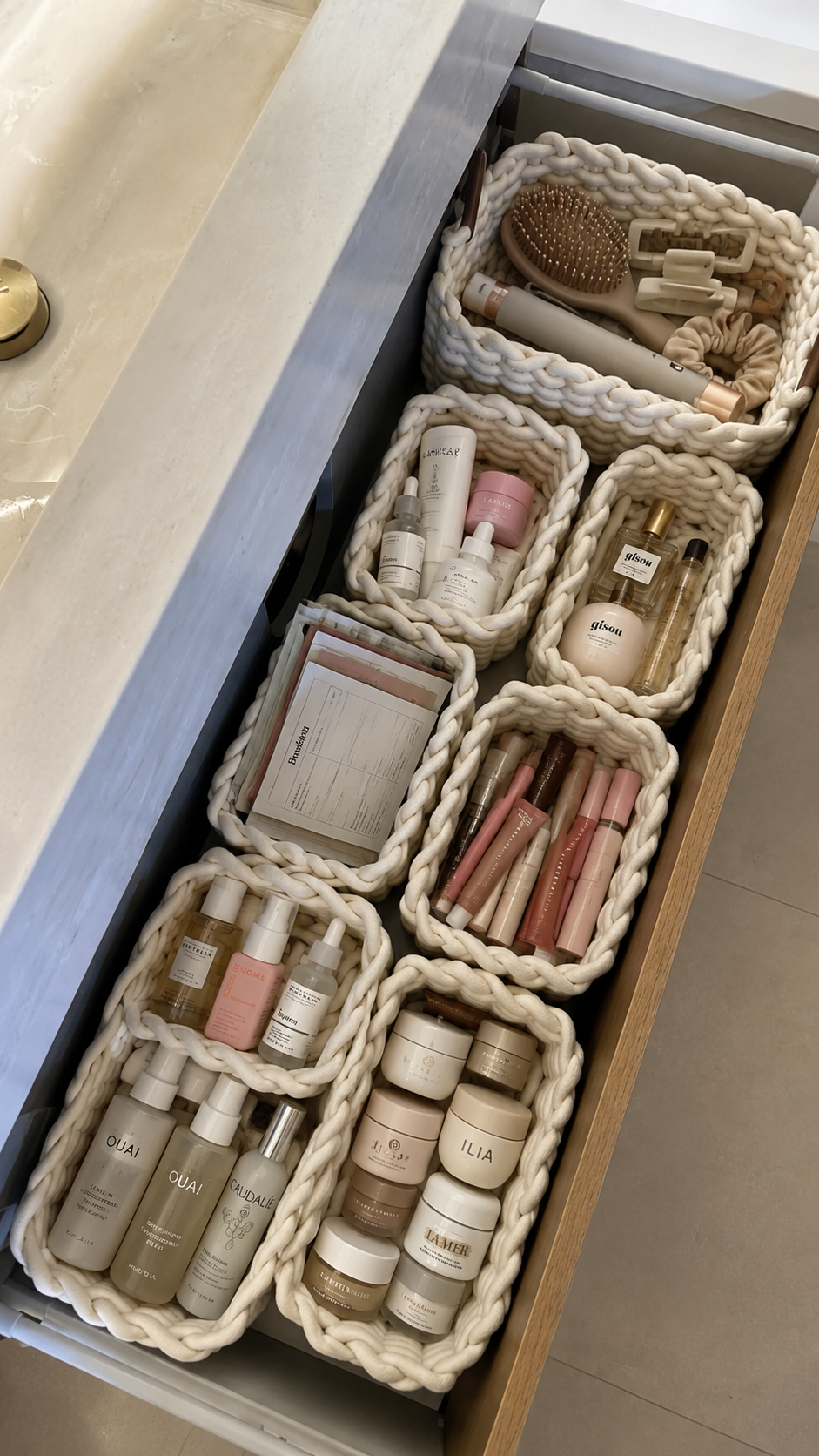
Small essentials feel easier to manage when a drawer has distinct compartments. Cream woven baskets create gentle boundaries between bottles, tubes, and compact items, bringing texture to a practical routine. Apply the same principle to a dressing-area drawer where little pieces tend to disappear. Adapt the basket arrangement to the items you reach for most.
3. Divided Mesh Drawers for Smaller Clothing Categories
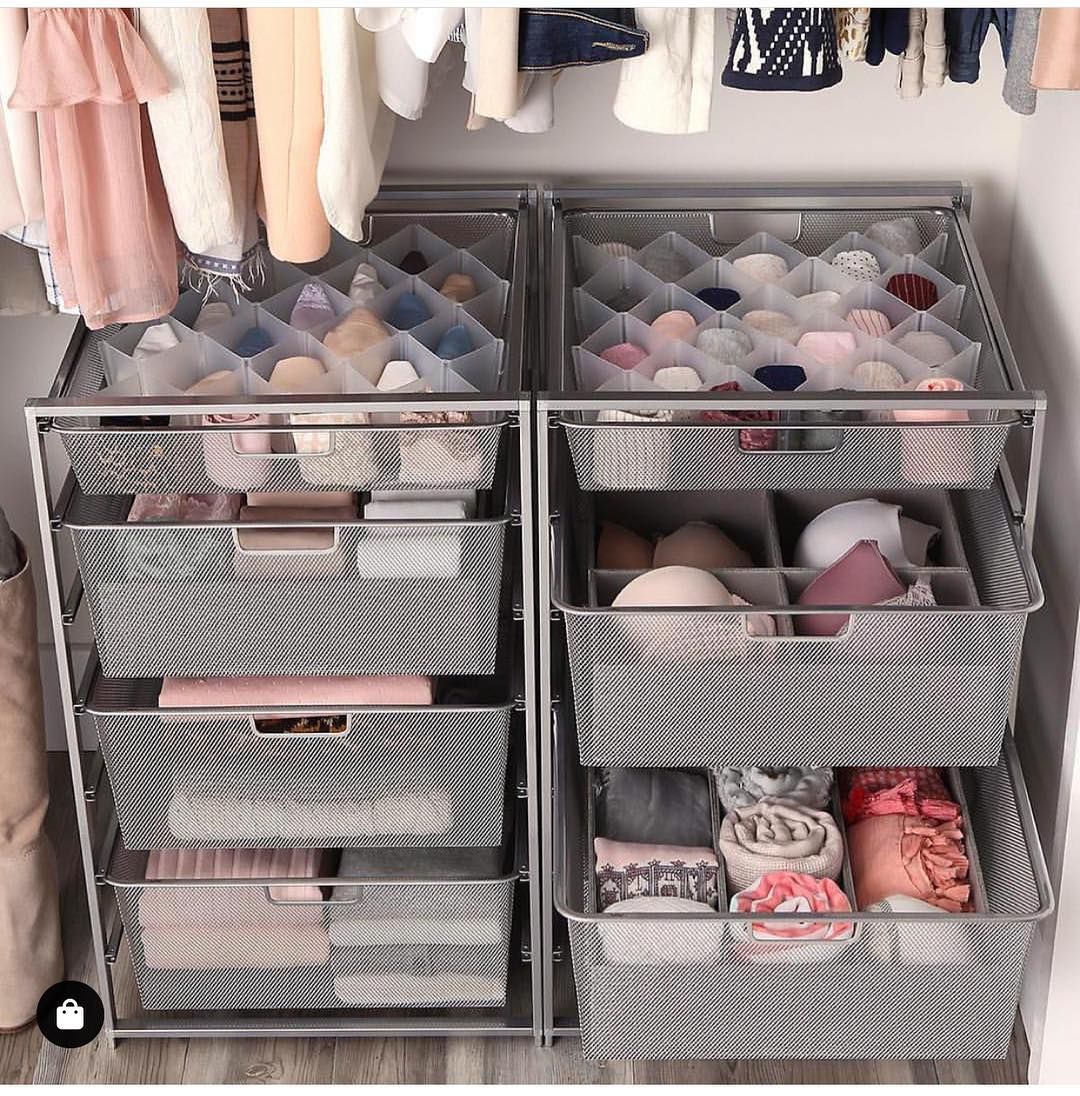
Dedicated compartments bring order to the clothing that rarely behaves on a hanger. Mesh drawer towers beneath hanging garments provide separate homes for underwear and folded pieces, while inserts keep small items from drifting together. This approach makes the lower closet feel purposeful instead of becoming overflow space. Bookmark this setup for your everyday basics.
4. A Utility Closet That Uses the Back of the Door
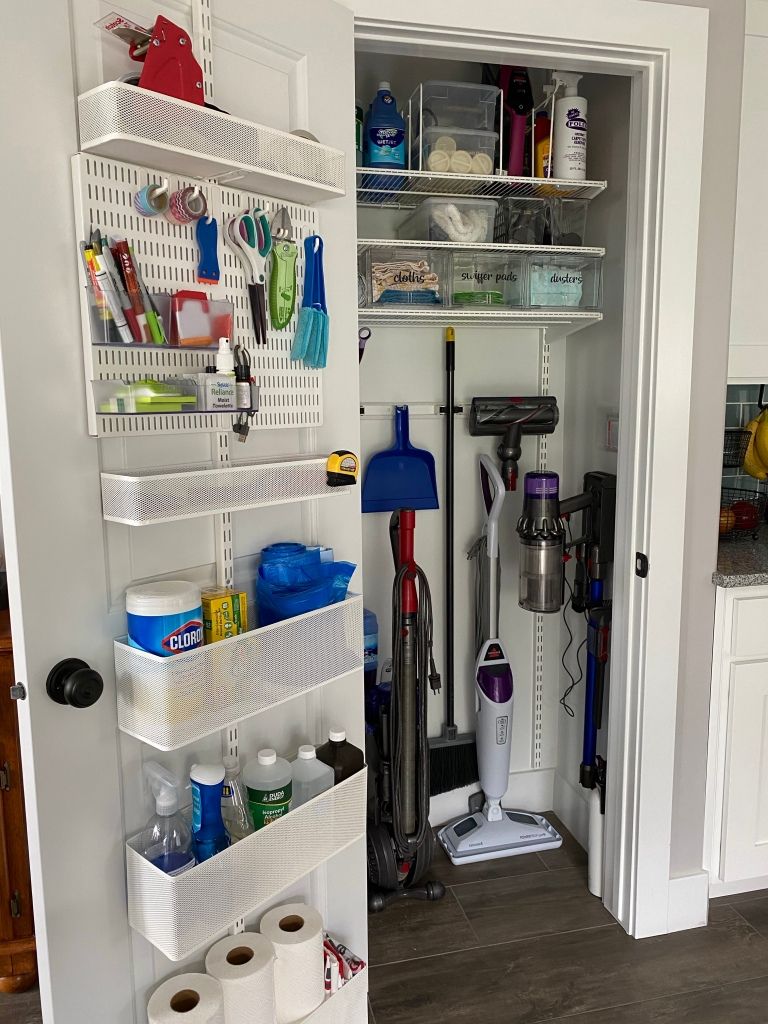
The back of a closet door can support a surprisingly useful storage zone. Here, door-mounted baskets and a pegboard-style panel separate smaller supplies while taller cleaning tools occupy the interior. The appeal is clear visibility across very different categories. Borrow this layered arrangement when your household closet needs better separation.
5. A Central Drawer Tower With Balanced Hanging Zones
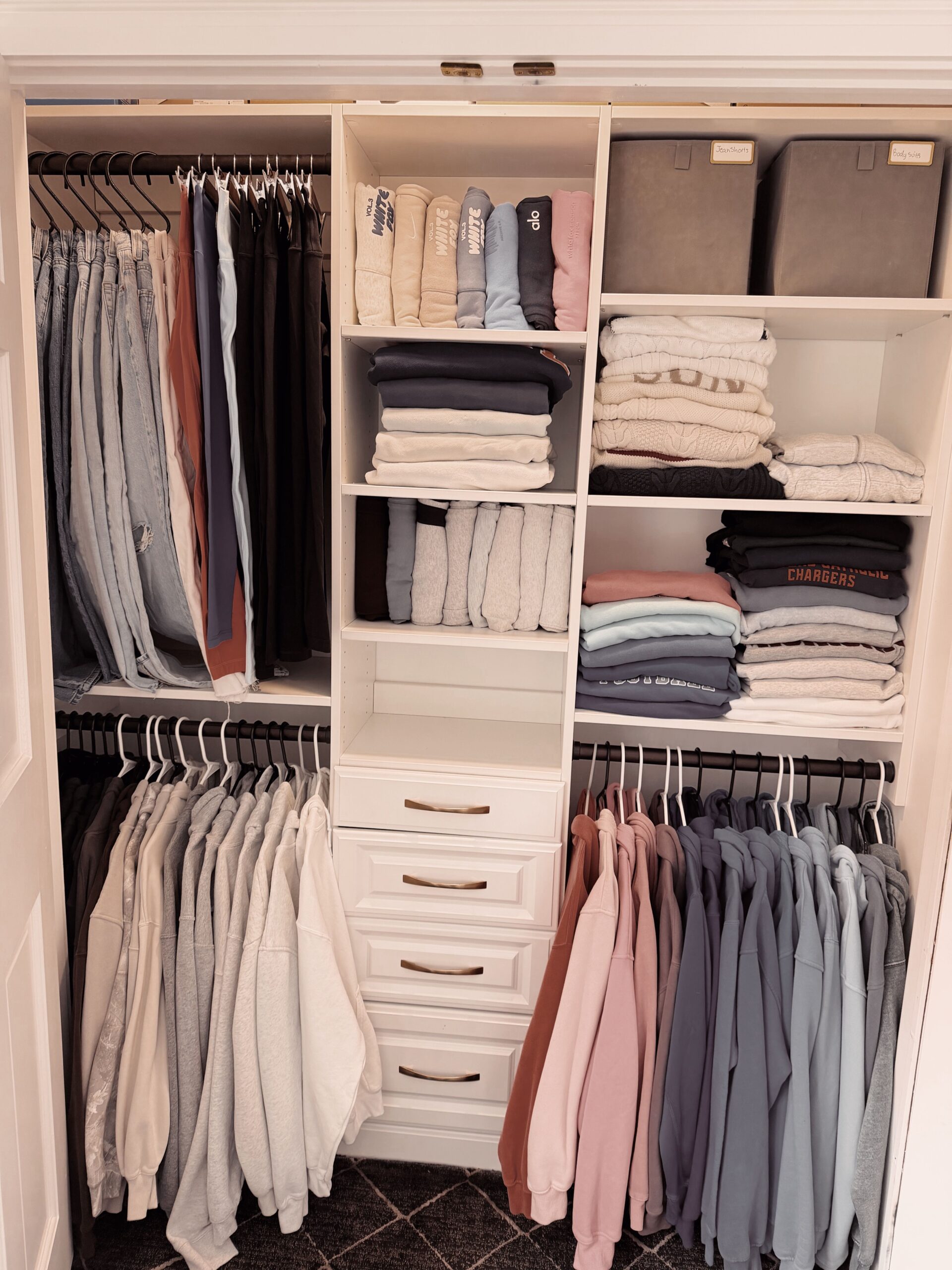
A central tower gives a busy wardrobe a clear structure. Drawers contain smaller pieces, surrounding shelves hold folded clothing, and separate rods keep hanging garments grouped. The pale palette adds cohesion without requiring every item to match. Choose this direction if your wardrobe needs several storage types working together. Use it as a reference for planning your closet zones.
6. Textured Drawer Dividers for a Polished Dressing Routine
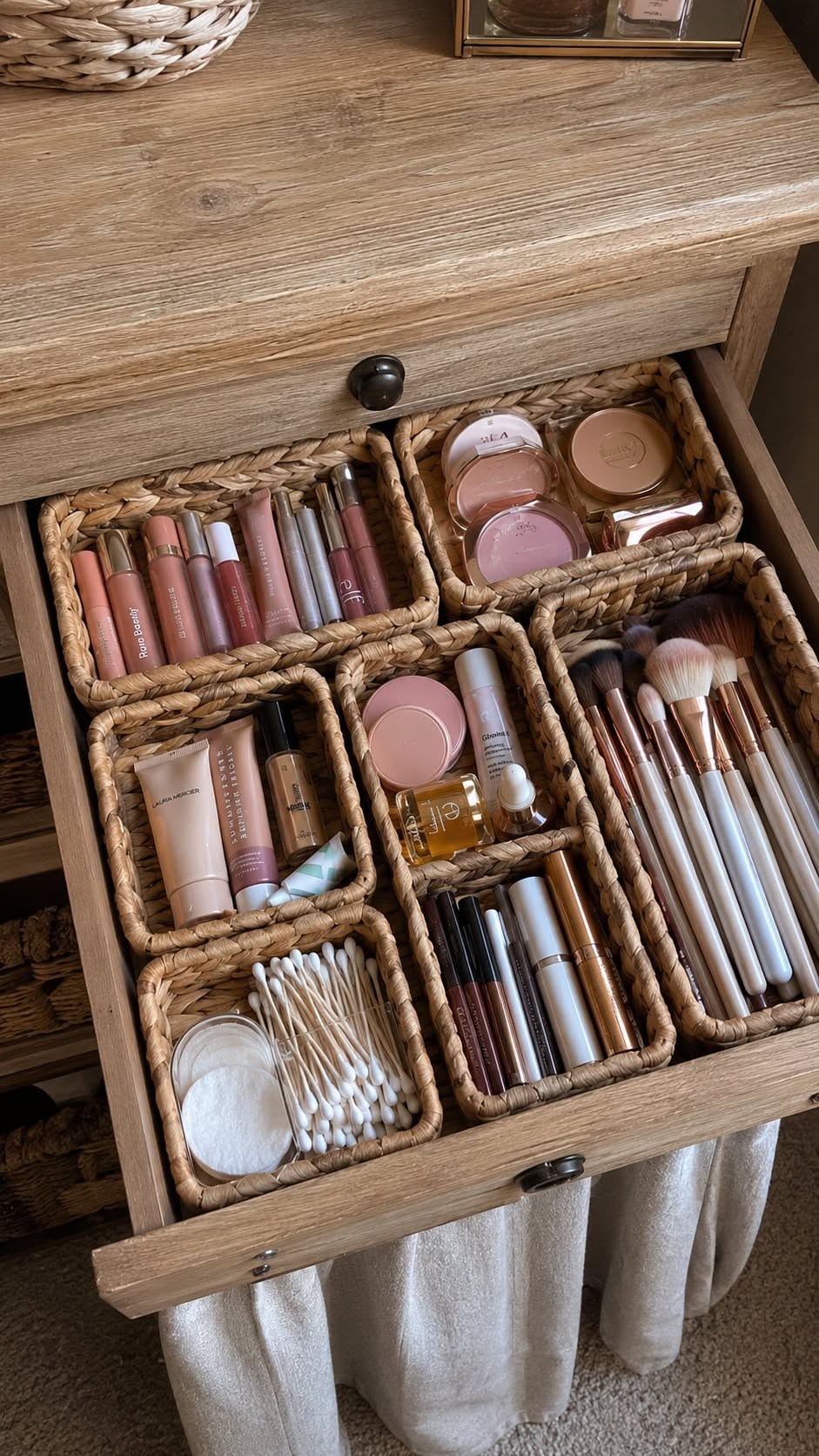
A neatly divided beauty drawer can make a dressing area feel considered down to its smallest details. Woven trays group slim cosmetics and round compacts without hiding everything in one deep pouch. Their warm texture complements the wood-toned drawer beautifully. Try this compartment approach wherever your getting-ready essentials need a more visible home.
7. Pull-Out Wire Baskets for Folded Everyday Clothes
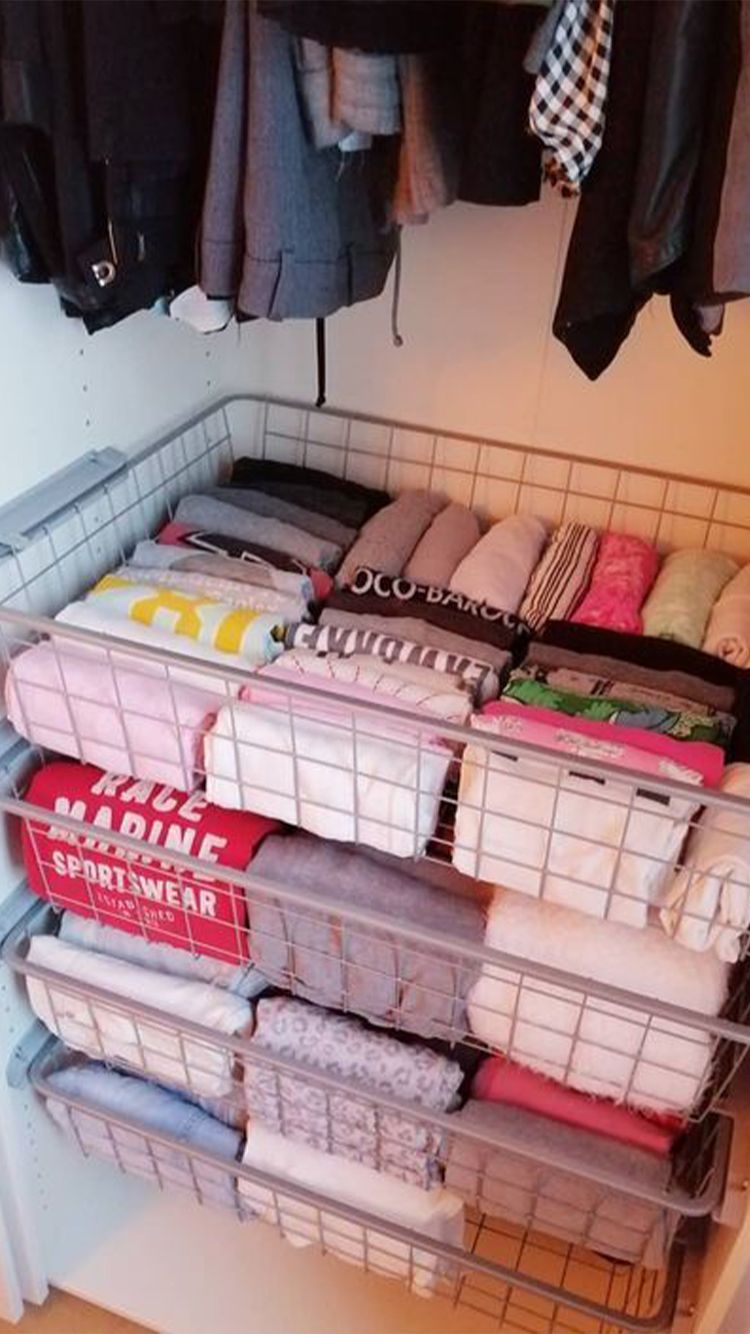
Open wire baskets make folded clothing easier to browse beneath a hanging rail. Keeping pieces in shallow, visible groups reduces the need to disturb an entire pile when choosing one item. This is a useful direction for casual clothing that does not need hanging space. Bring the pull-out basket idea into your busiest wardrobe section.
8. A Narrow Household Closet With Mixed Storage
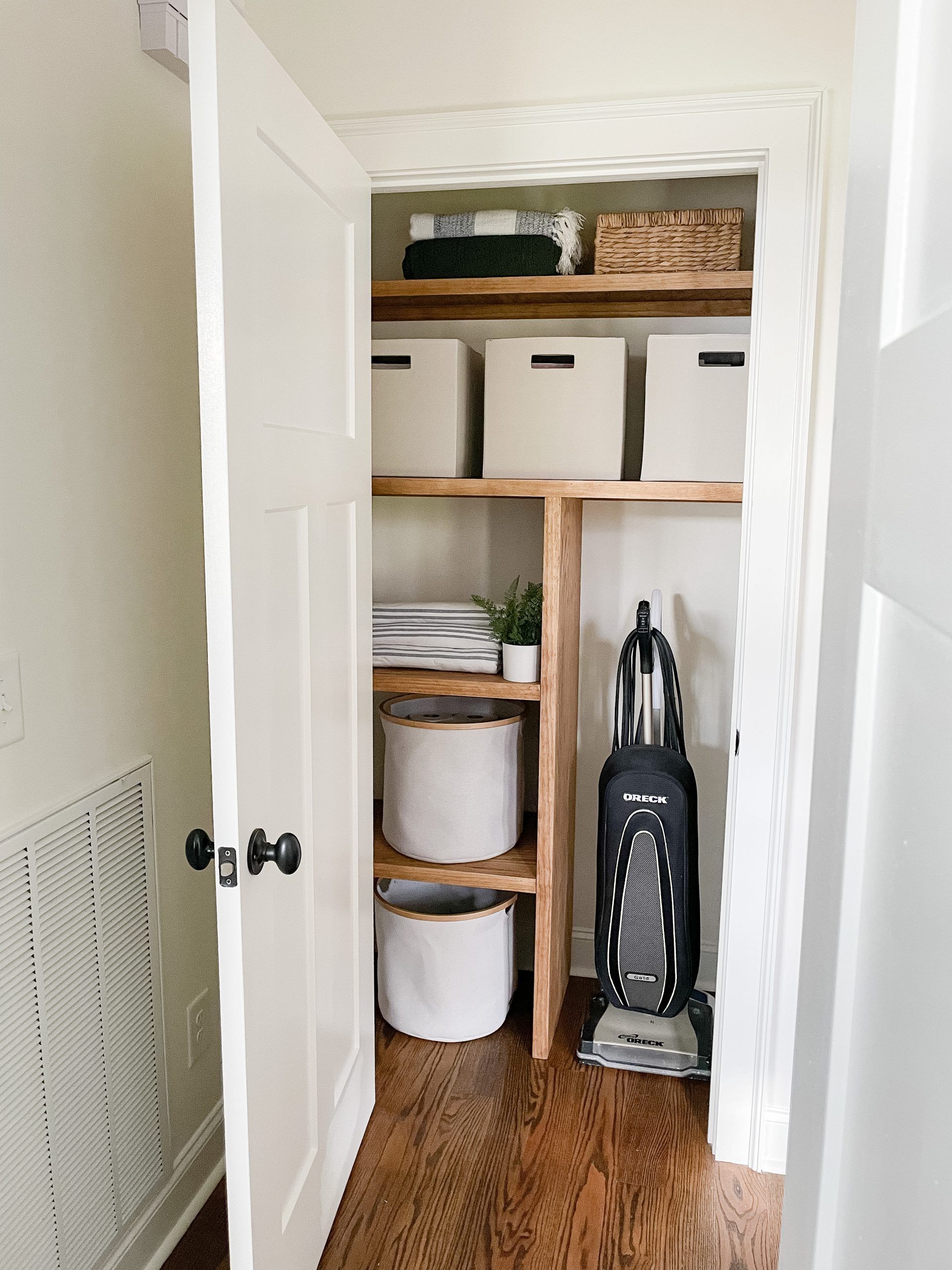
A small utility closet feels more intentional when tall and short items have different homes. Upper bins contain loose supplies, shelves hold folded linens, and a dedicated vertical opening accommodates a vacuum. The warm shelving gives the practical arrangement an inviting finish. Keep this layout in mind for an awkward hallway closet.
9. A Reach-In Closet With a Dedicated Laundry Zone
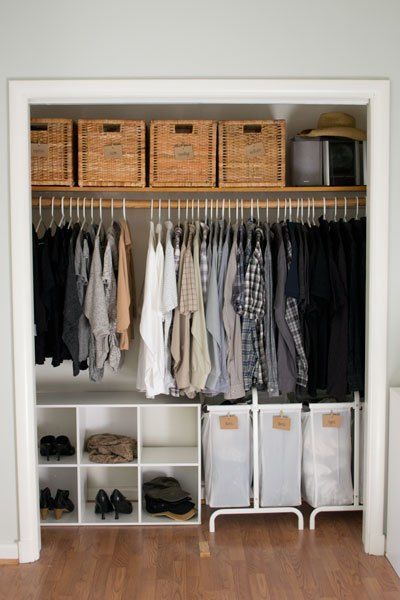
Laundry sorting becomes part of the wardrobe routine when hampers have a defined place. This reach-in arrangement combines hanging clothes, upper baskets, lower cubbies, and separate laundry bags without abandoning a clear visual structure. It is especially appealing when bedroom floor space feels precious. Make room for a laundry zone in your next organization plan.
10. Wood-Toned Shelving With Double Hanging Rails
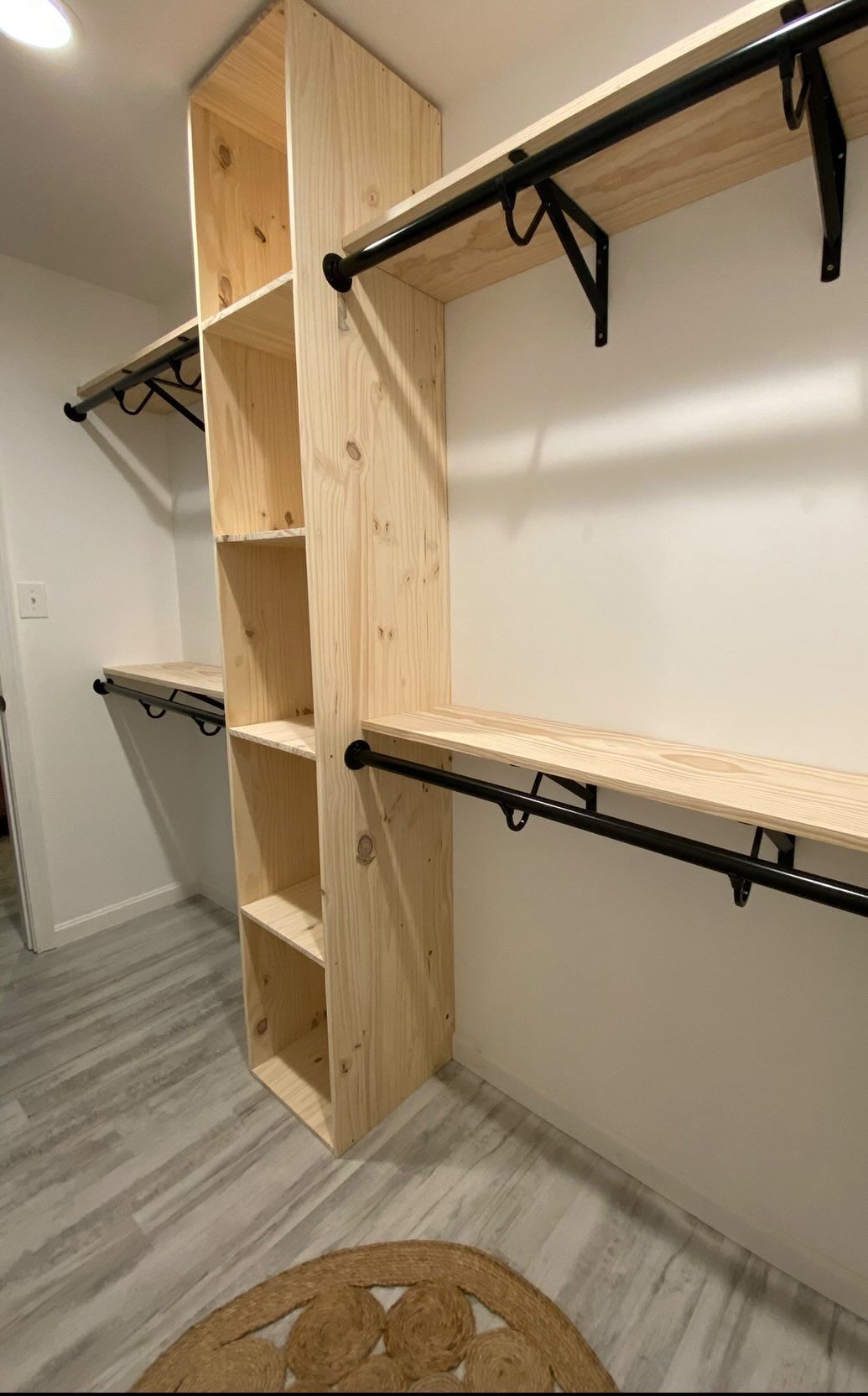
A straightforward framework of shelves and dark rails creates flexible wardrobe zones. The central shelf column offers a place for folded categories, while hanging levels on either side can suit shorter garments. The open construction keeps the arrangement visually simple. Sketch your clothing categories onto a similar layout before deciding how much hanging space you need.
11. Shelf Dividers That Keep Folded Stacks Separate
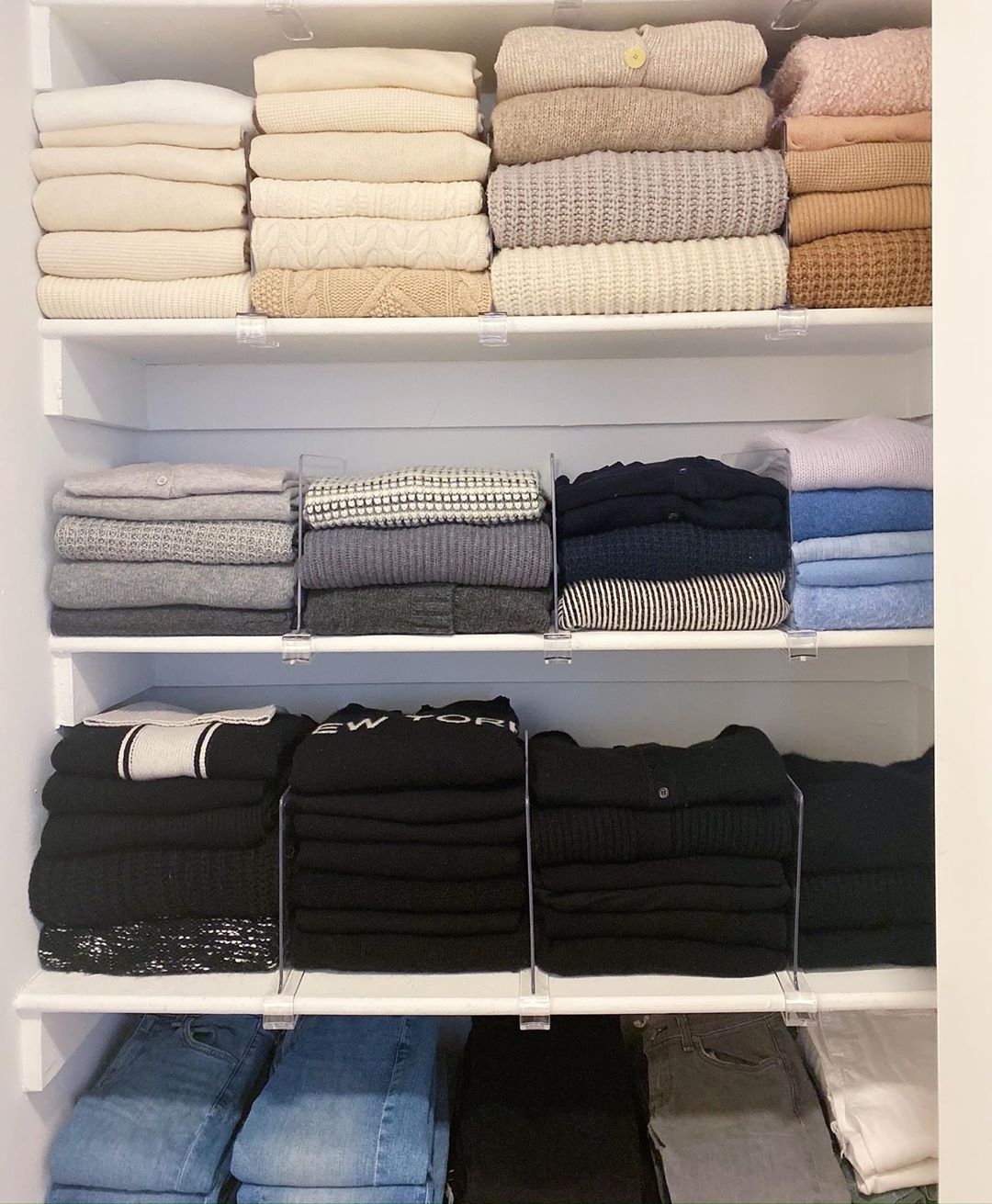
Folded shelves feel calmer when neighboring stacks stop leaning into one another. Clear dividers create boundaries without making the shelving look heavier, while grouped colors help each category read as a unit. This small detail suits knitwear and other folded favorites. Add shelf separation to the area that becomes untidy first.
12. Upright File Storage Hidden Inside a Basket
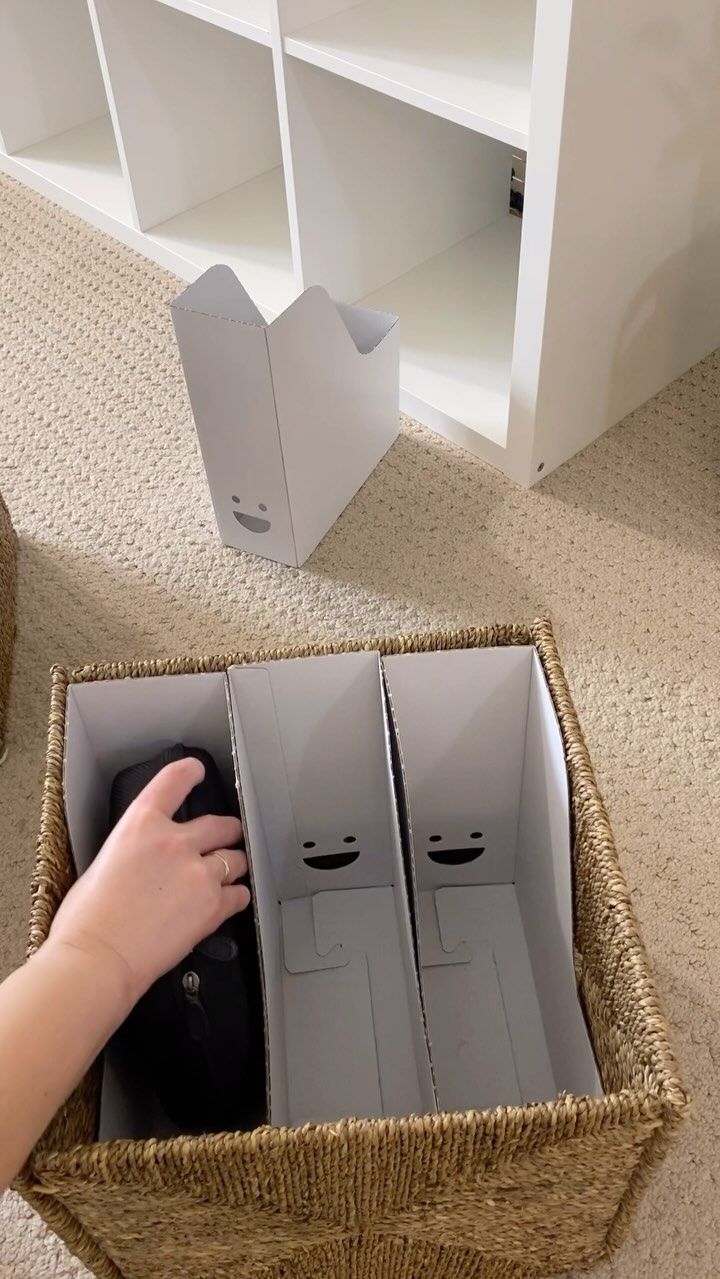
A woven basket can contain more structure than its relaxed exterior suggests. Upright file holders inside create individual lanes for paper-based belongings rather than letting them collapse into a mixed pile. This idea works as an organizational reference for a multipurpose closet or office overflow. Repurpose a basket you already own for a clearly divided category.
13. A Shared Kids’ Closet With Easy-to-Read Labels
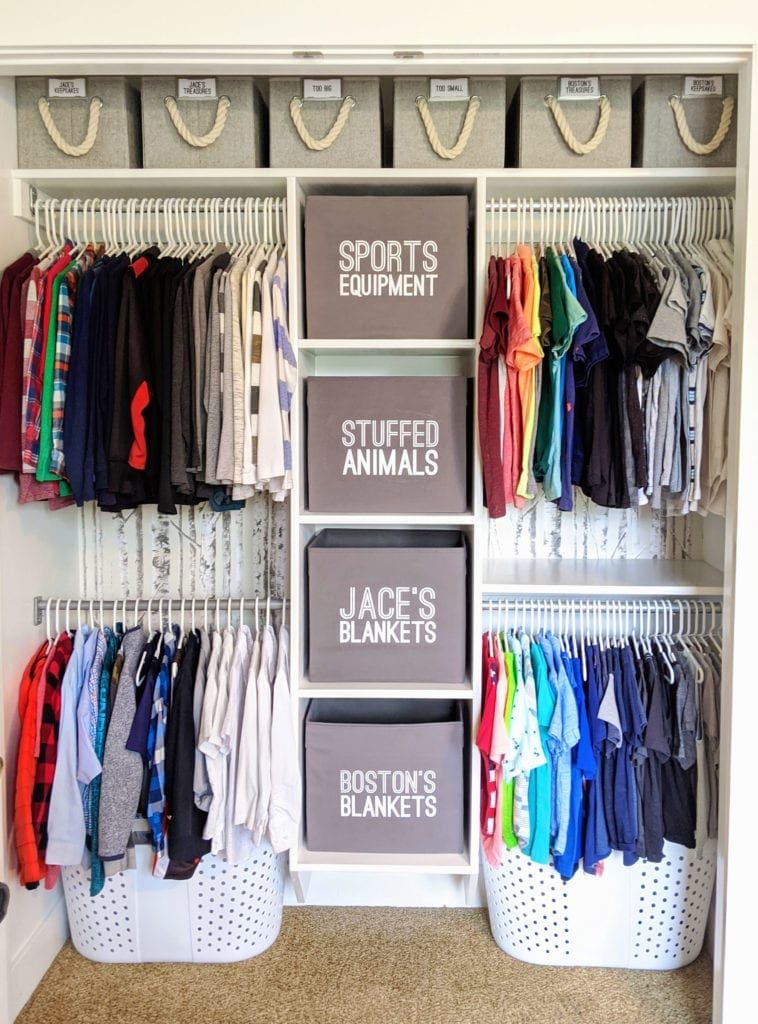
Clear labels give a shared children’s closet a useful sense of ownership. Central bins separate belongings, double rods organize clothing on both sides, and matching upper baskets keep the wider arrangement cohesive. The system explains itself instead of relying on memory. Customize the labels around the categories your household actually uses.
14. Clear Labeled Drawers for Household Supplies

Transparent drawers pair visibility with a defined home for each category. The labeled fronts make a household supply shelf easier to navigate without opening every container. For a similar closet setup, use categories that are specific enough to recognize quickly and broad enough to maintain. Take the labeling principle into your household storage area.
15. A Central Bin Column for a Children’s Wardrobe
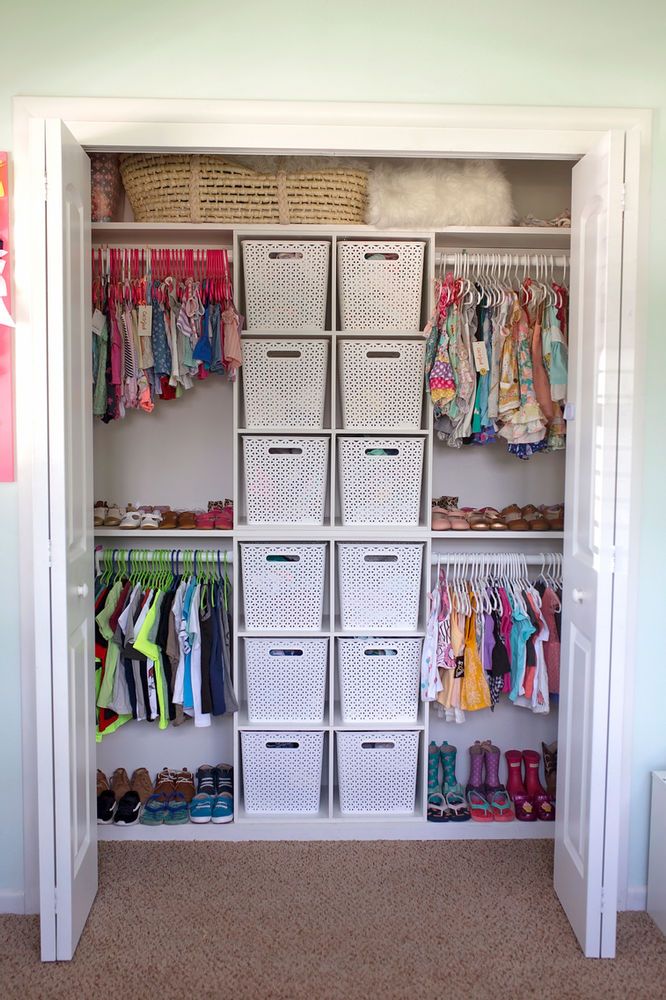
A tall column of matching bins creates a steady visual center between colorful hanging clothes. Shelves and hanging rails around it divide the wardrobe into manageable sections, with shoes arranged below. This balance is appealing when a small closet holds many different belongings. Save the centered-bin layout for a child’s room makeover.
16. Soft Knitwear Stacks Above a Coordinated Clothing Rail
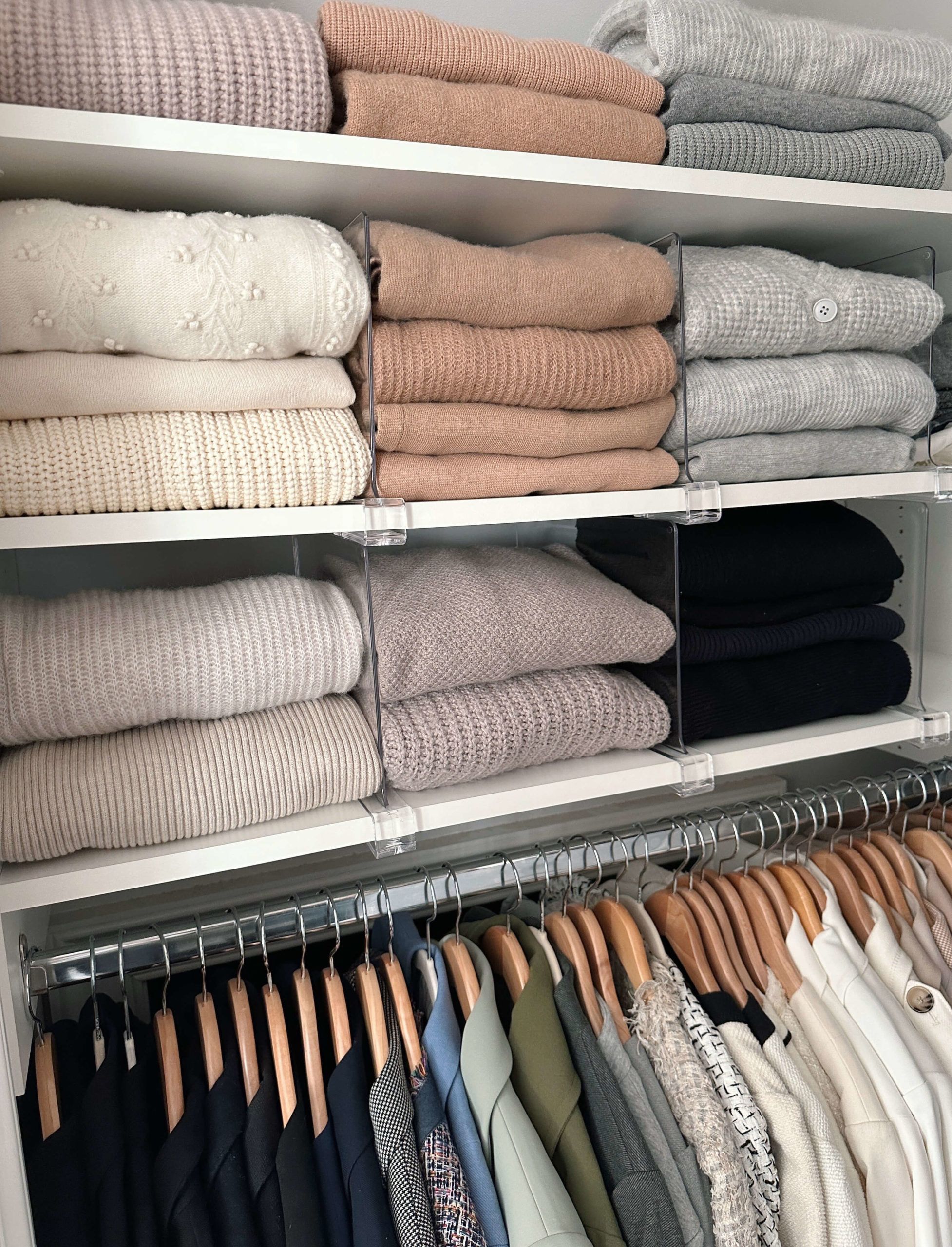
Softly grouped sweaters give open shelves an inviting, almost boutique-like feel. Dividers keep stacks distinct, while coordinated hangers below provide continuity between folded and hanging clothes. The result feels polished without hiding the wardrobe’s textures. Try grouping your knitwear by category first, then refine the color arrangement to suit your style.
17. A Fully Zoned Closet With Seasonal Baskets
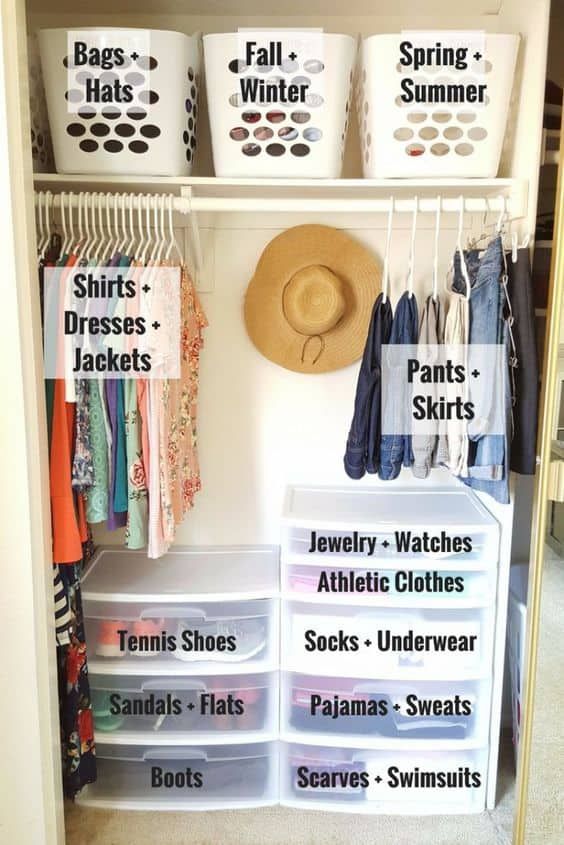
A visible category map can make a modest closet easier to maintain. Upper baskets separate seasonal belongings, hanging areas distinguish garment groups, and labeled drawers assign smaller pieces a home. The appeal lies in removing guesswork at put-away time. Create a simple zone map for the categories that currently get mixed together.
18. Folded Shelves for a Colorful Clothing Collection
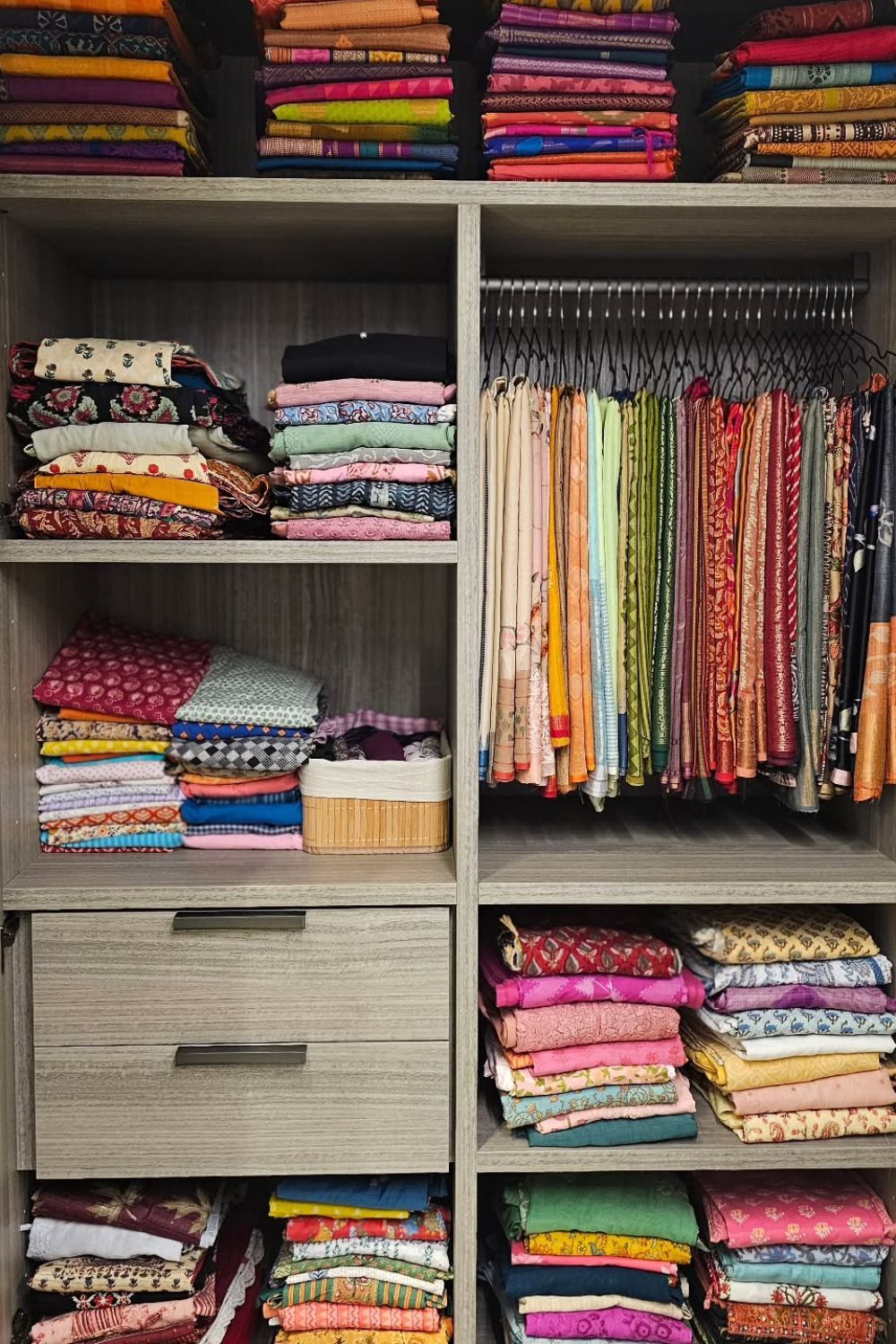
A colorful wardrobe benefits from structure that lets its variety remain visible. Folded stacks share space with a hanging section and drawers, offering different homes for different garment shapes. The open shelves make patterns part of the room’s character. Organize your brightest pieces into manageable groups without feeling obliged to hide their personality.
19. An Apartment Closet With Visible Shoes and Accessories
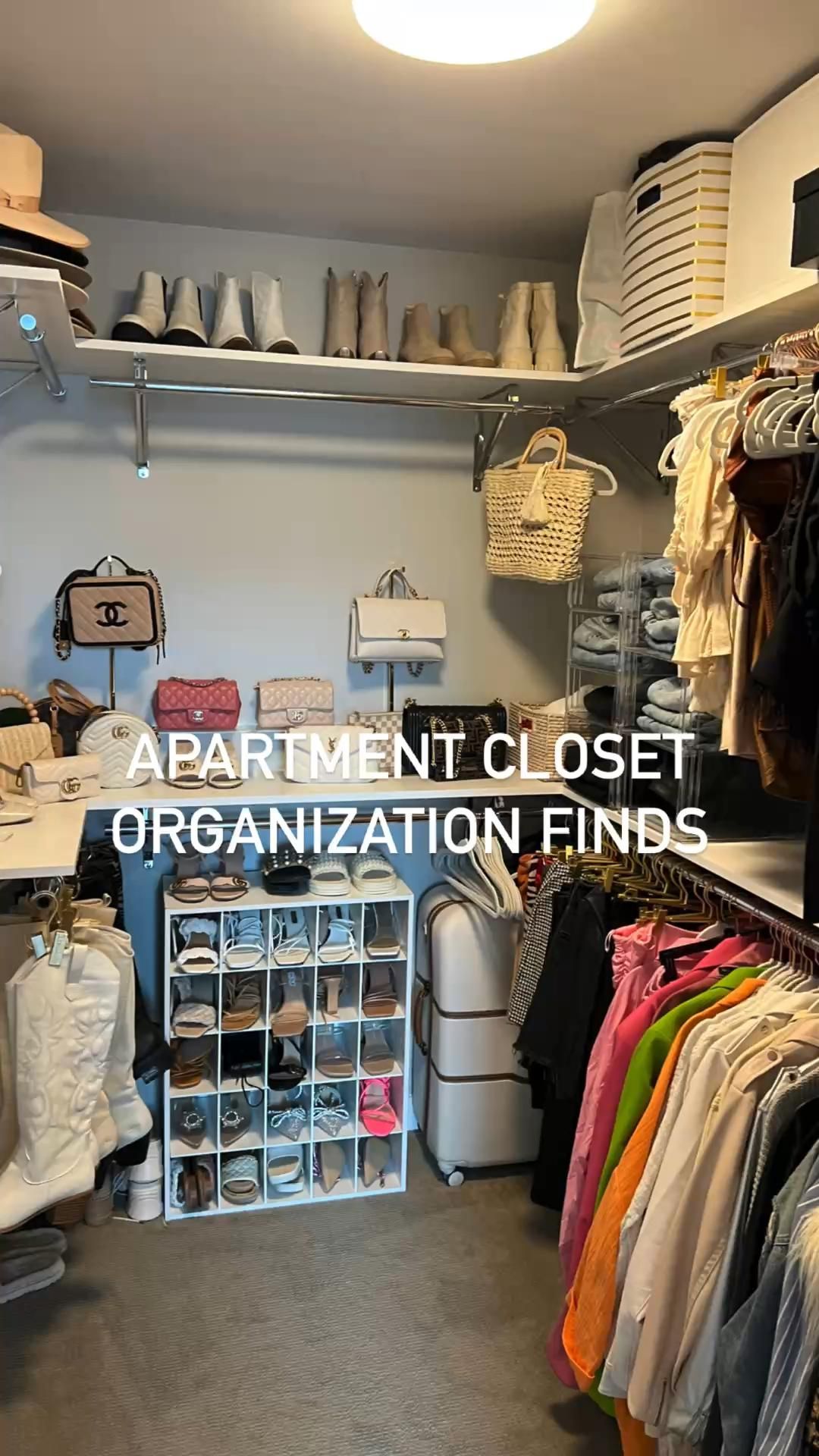
A compact dressing space can support several categories when each occupies its own area. Upper footwear storage, hanging clothes, bags, and a shoe organizer make the collection visible from different angles. The useful takeaway is separation within a small footprint. Select one overlooked surface in your closet and give it a specific purpose.
20. Clear Drawer Compartments for Small Accessories
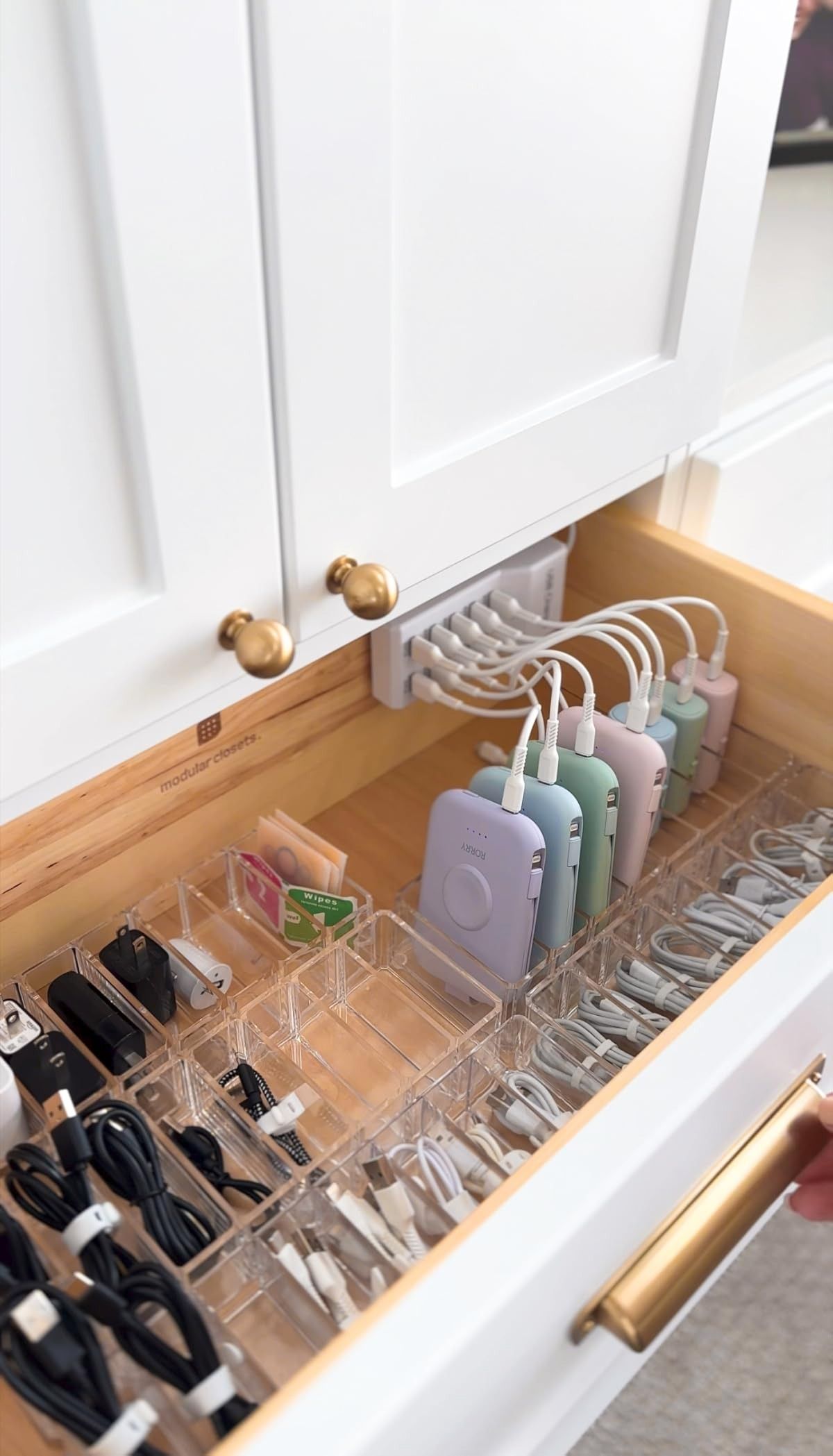
Small accessories are easier to choose when they sit in individual compartments. Transparent trays divide this shallow drawer into visible sections, avoiding the tangled effect of one catchall container. The layout feels especially useful for a dressing station with assorted small pieces. Rework your most cluttered accessory drawer around a few deliberate compartments.
21. An Open Corner Wardrobe With Distinct Hanging Heights
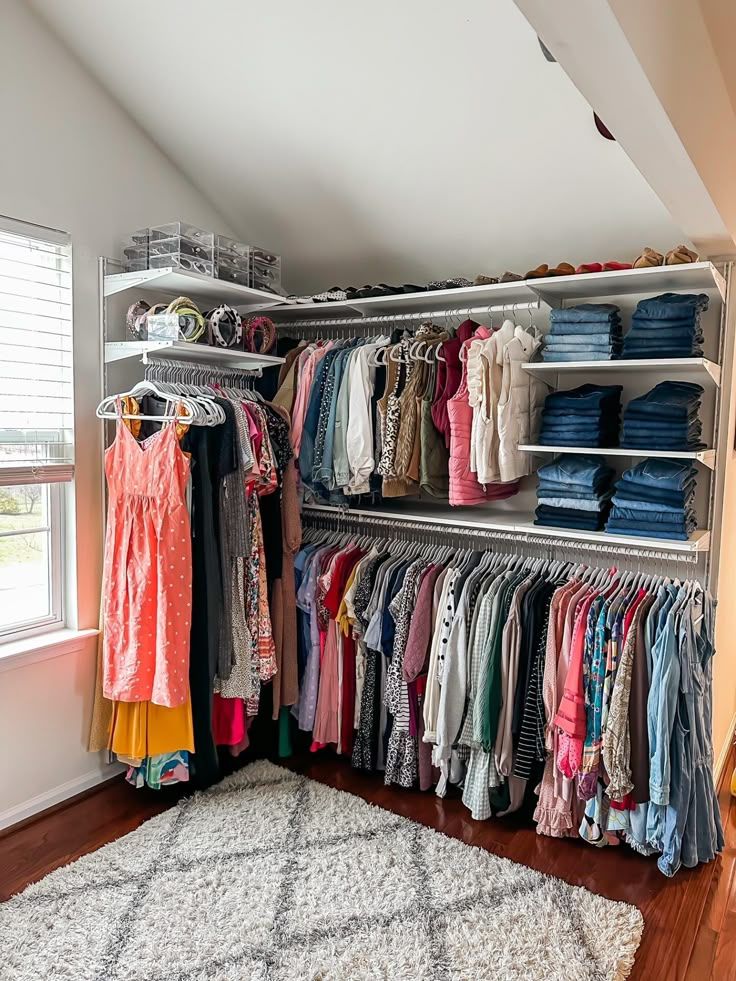
An open corner wardrobe can accommodate long garments and shorter clothing without treating every section alike. Double rails occupy one area, a taller hanging zone serves another, and shelves gather folded denim. This arrangement makes the storage respond to the clothes. Use your longest garments to guide where uninterrupted hanging space belongs.
22. A Compact Closet With Useful Storage Below the Clothes
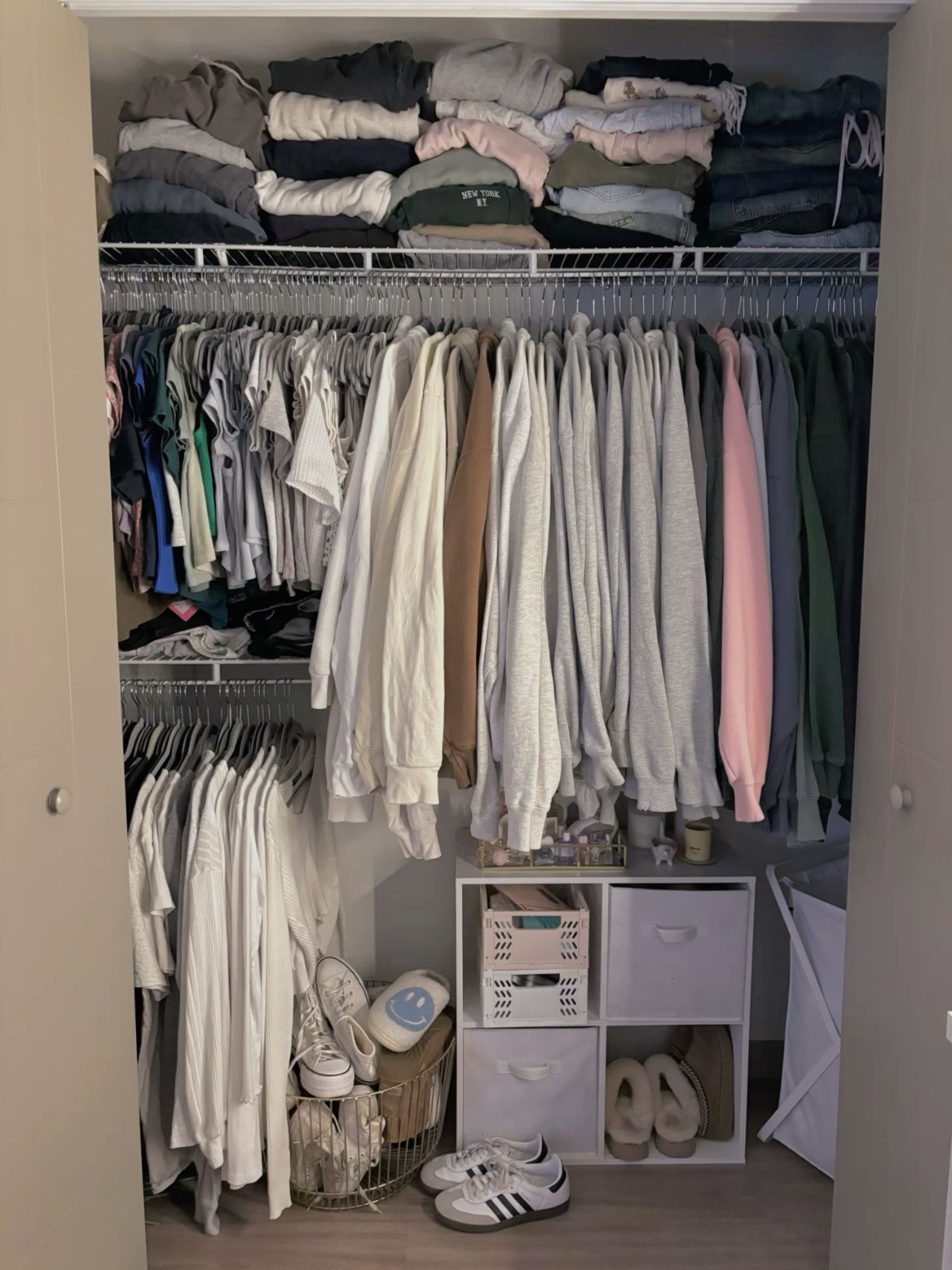
The space beneath shorter garments can do more than collect stray shoes. A small cubby unit gives this wardrobe a defined lower zone while upper shelves and hanging rails handle the larger categories. It is a practical way to organize around an existing closet. Look below your clothing rail for one manageable improvement.
23. An Open Wardrobe With Warm Shelves and Dark Rails
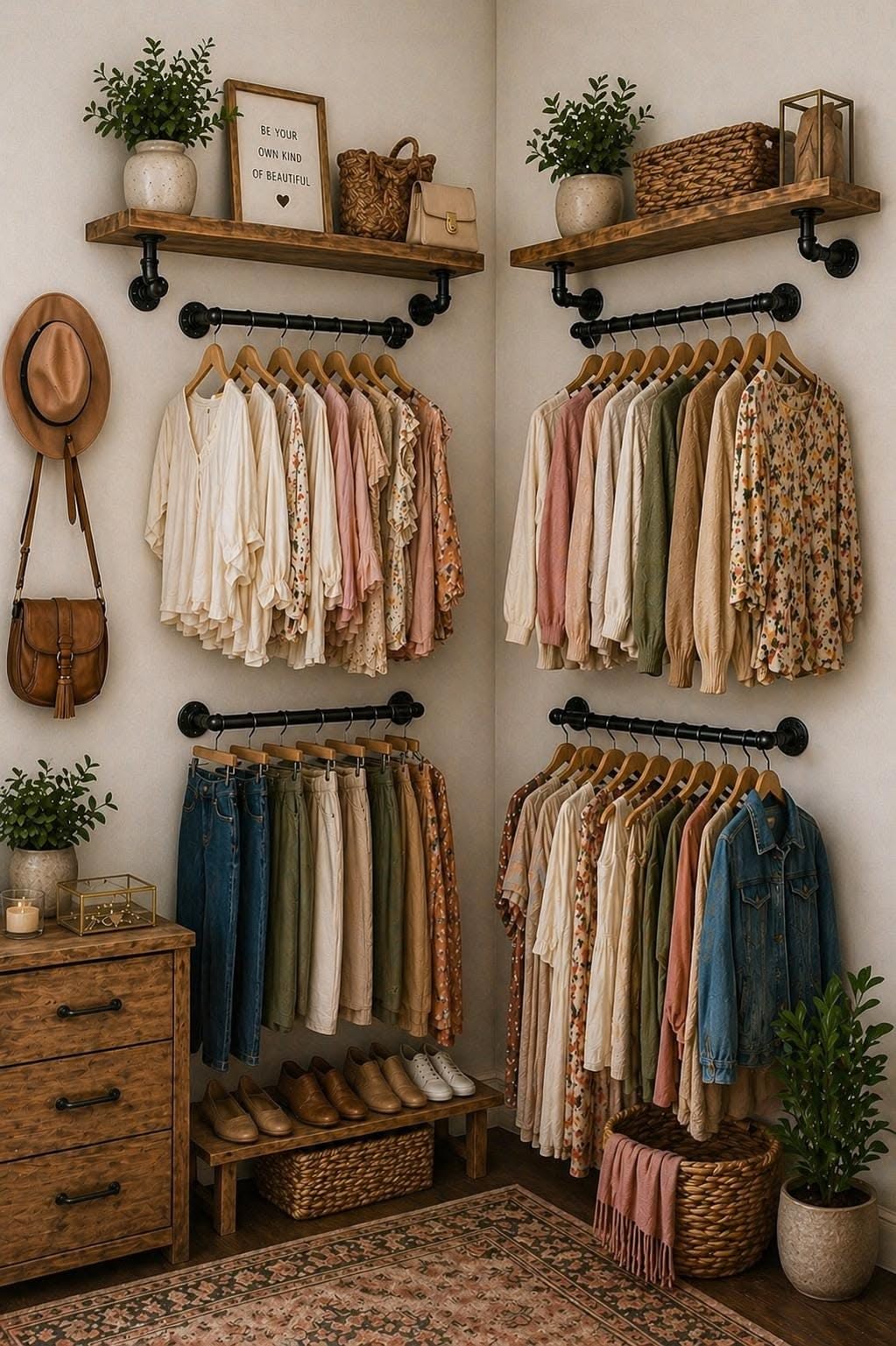
Clothing storage can become part of a bedroom’s decor when its structure feels intentional. Dark rails, warm shelves, and grouped garments give this open arrangement character, with baskets and shoes occupying the lower area. The exposed format suits pieces you enjoy seeing daily. Bring this warm, open-storage direction into a dressing corner.
24. A Dedicated Denim Rail Arranged by Shade
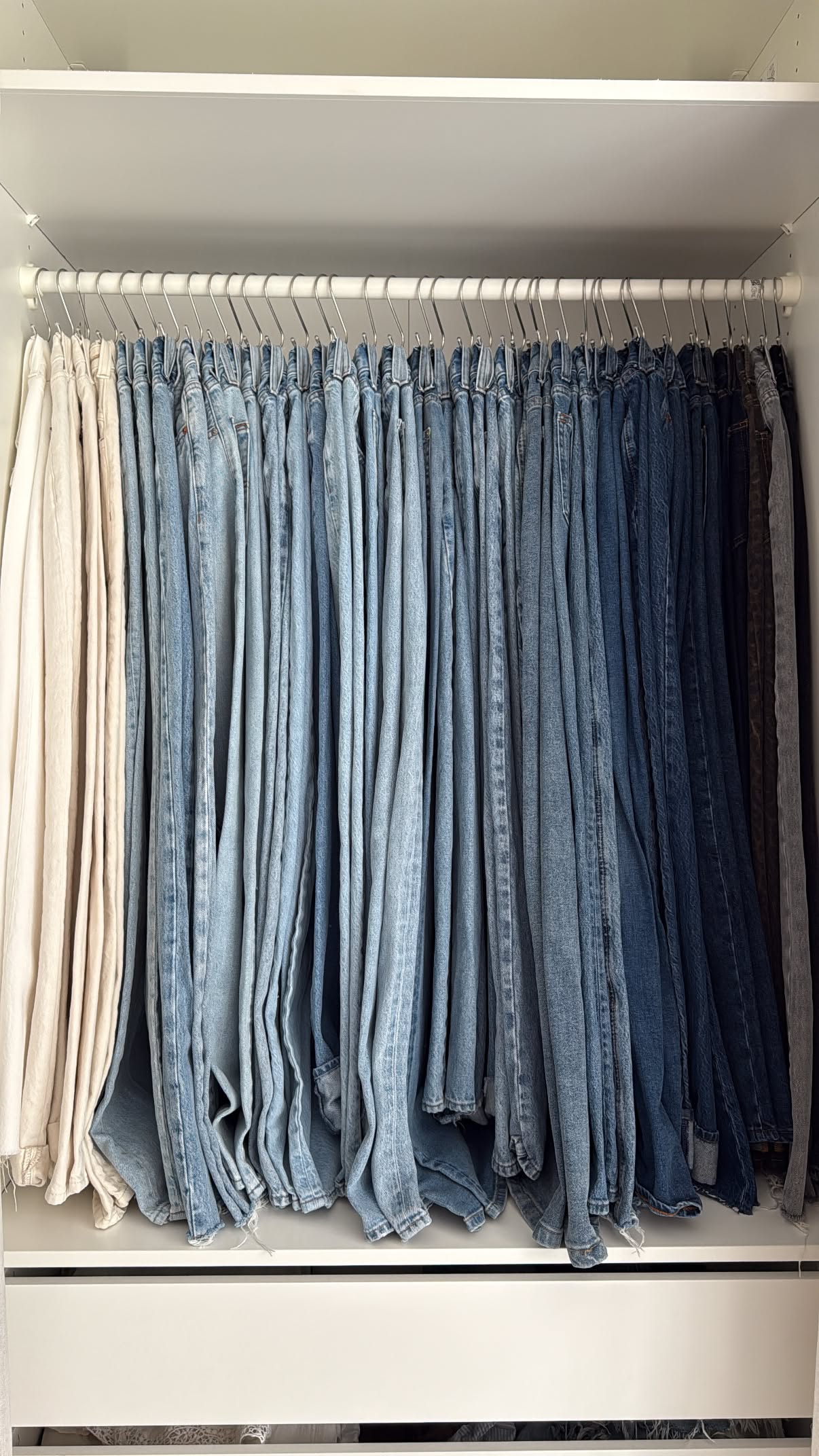
A single clothing category can look remarkably orderly when it has a dedicated rail. Denim arranged from pale to dark creates a clear visual progression and makes different washes easier to compare. The effect feels considered without decorative extras. Give your most frequently worn trouser category a clearly defined section of its own.
25. Side-Wall Bag Storage Beside Double Hanging Rails
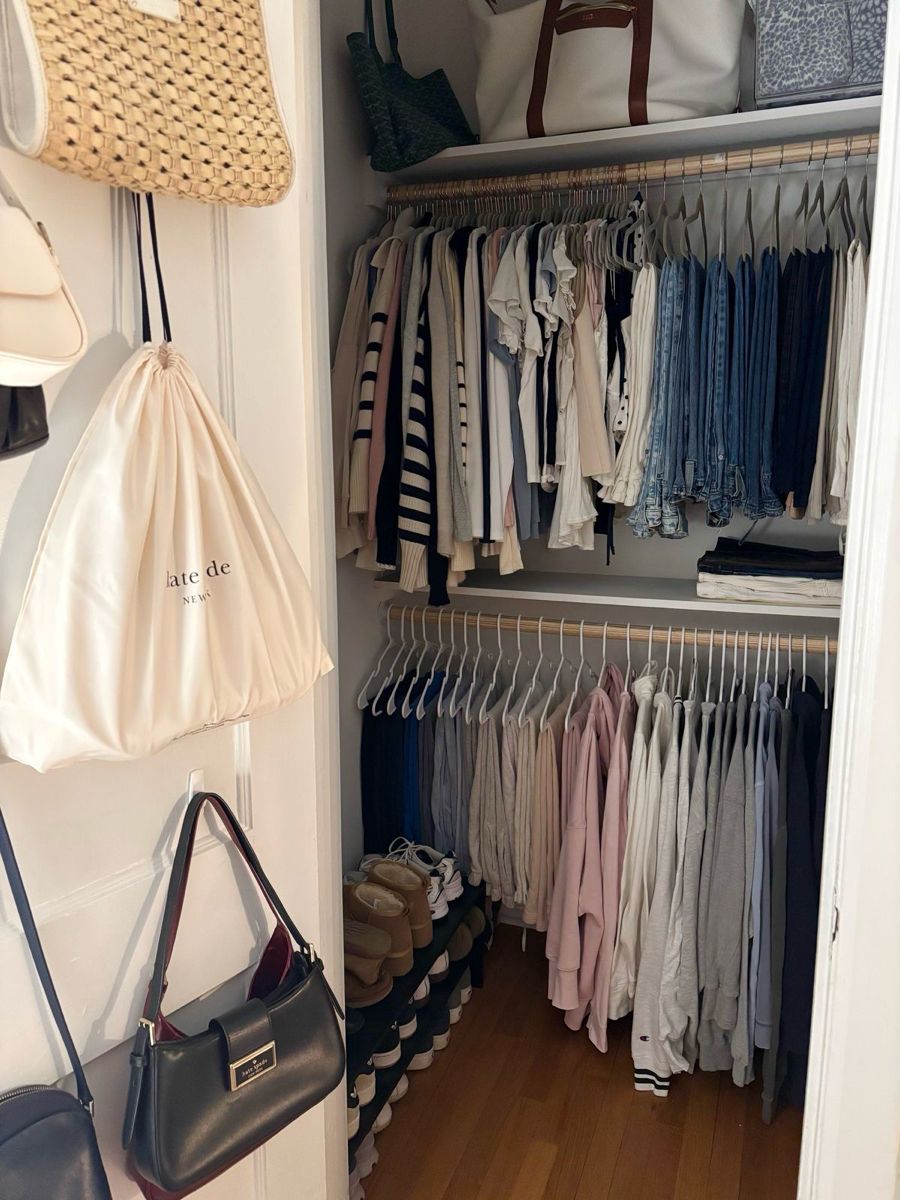
Bags often need a different home from the clothing around them. Side-wall hooks keep several within view, while double rails and upper shelving handle the wardrobe’s main volume. This arrangement draws useful storage into an otherwise easy-to-ignore area. Consider a dedicated side-wall zone for the bags you regularly rotate.
26. A Corner Closet Framed by Wood-Toned Sliding Doors
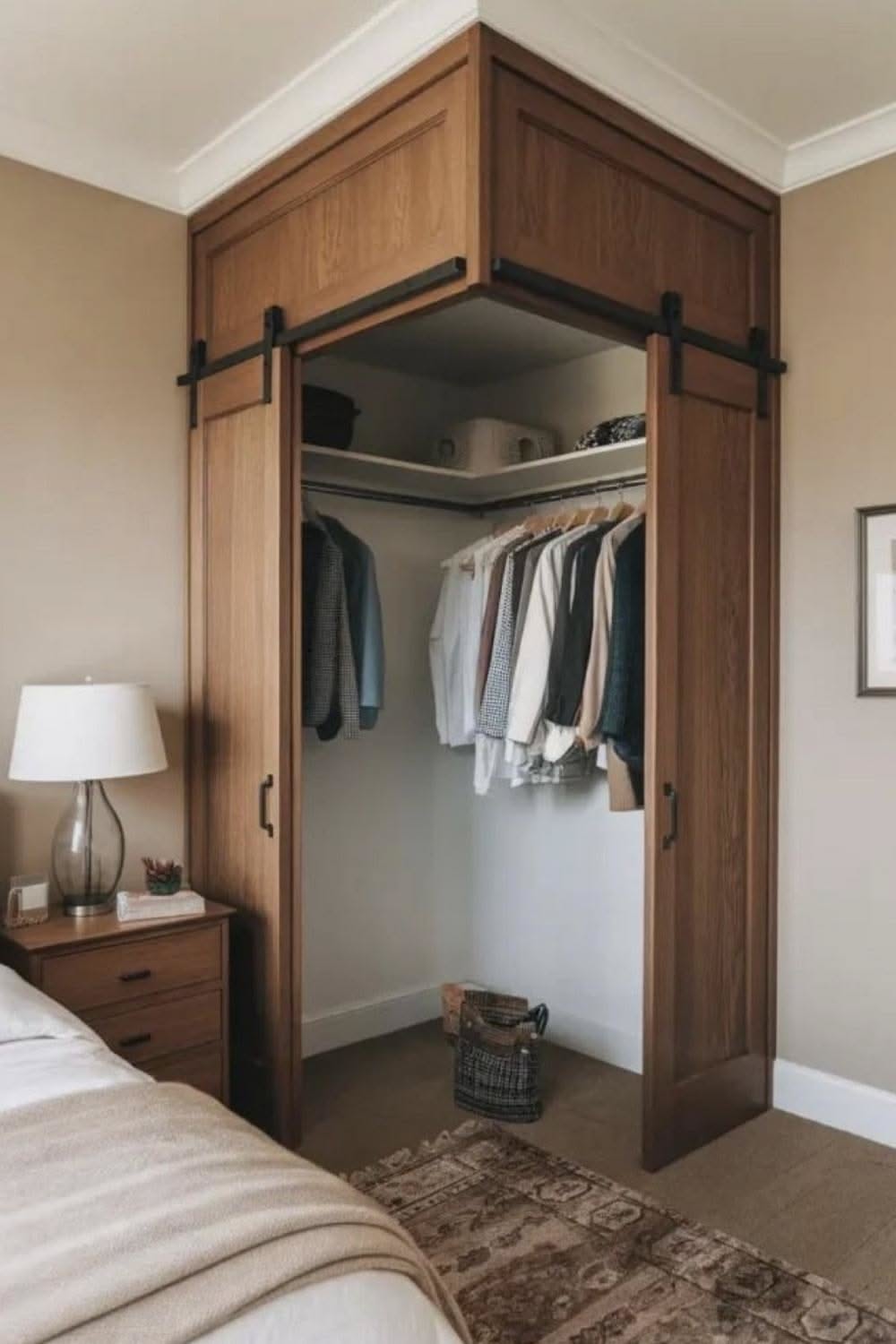
A corner closet can feel like a deliberate bedroom feature when its exterior has a strong architectural presence. Wood-toned doors and visible dark tracks frame the opening, while the interior stays relatively simple. The idea connects storage with the room’s wider style. Keep this corner treatment as inspiration when reviewing your bedroom layout.
27. A Closet Plan That Assigns Every Shelf a Job
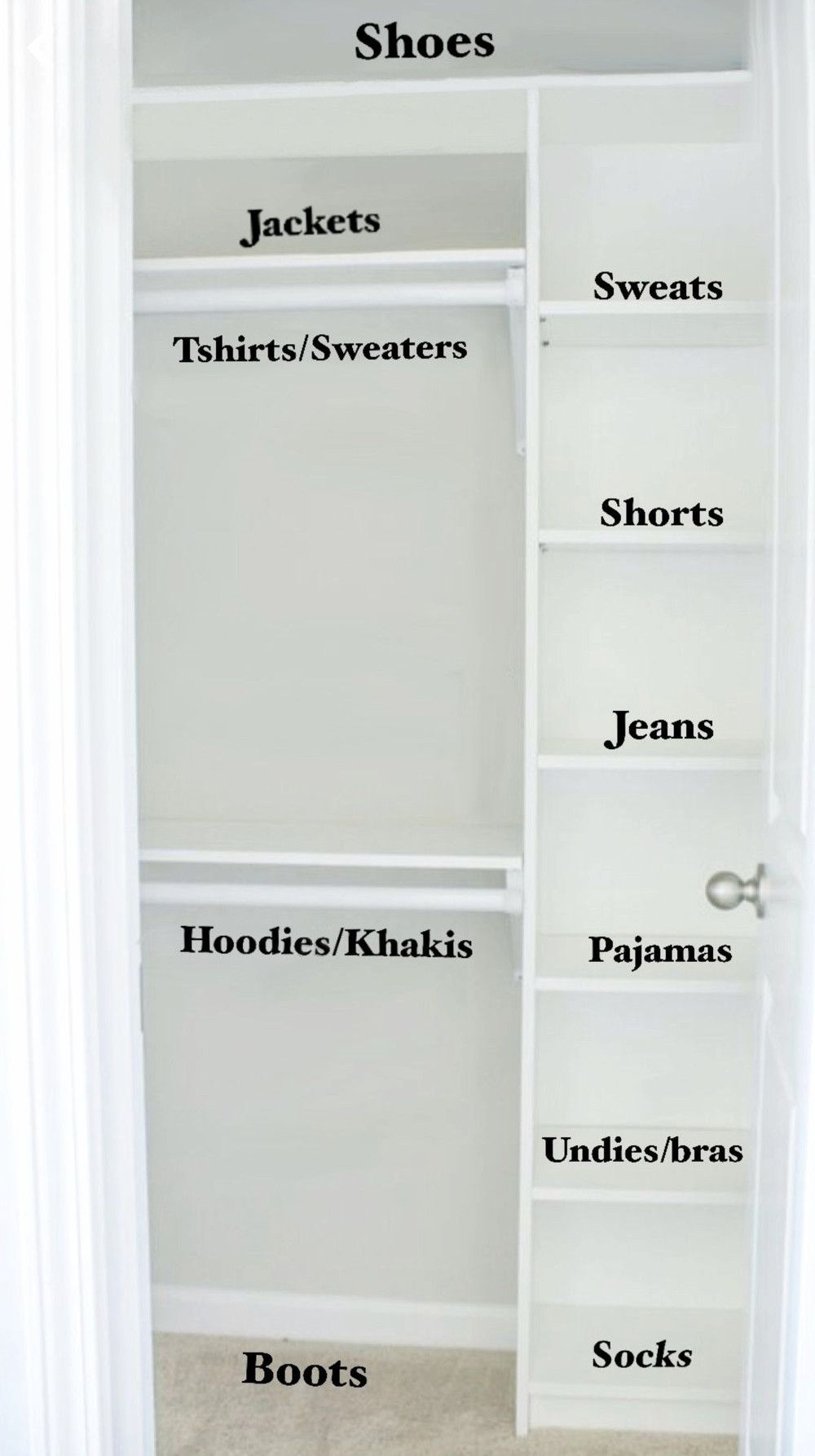
Planning categories before filling shelves helps prevent convenient spaces from becoming miscellaneous storage. This labeled layout separates hanging clothes, folded groups, shoes, and smaller belongings across a narrow closet. Its strongest feature is the clear division of purpose. Write down a job for each section before you start putting everything back.
28. A Freestanding Tower With Small Open Compartments
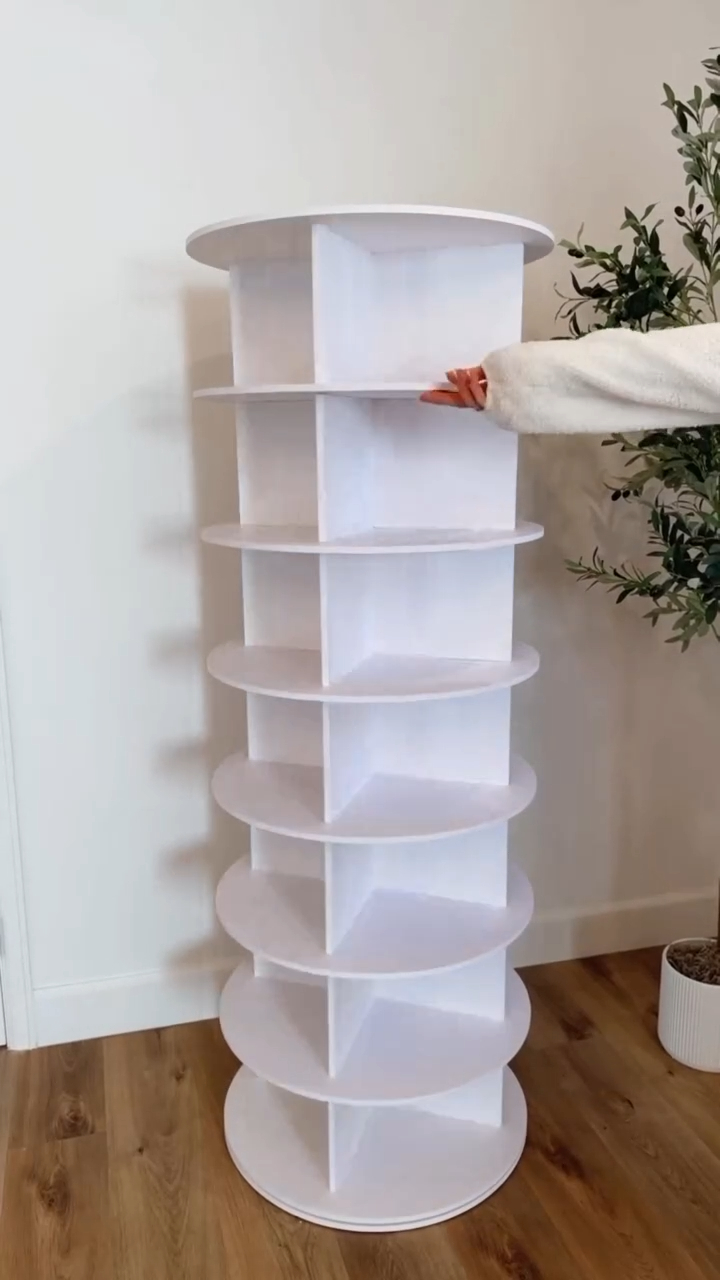
A slim compartment tower introduces a different way to organize smaller belongings. Its curved shelves and divided openings create individual spaces without a large rectangular cabinet. The open format could suit accessories or compact items that benefit from separation. Measure your available corner and adapt this vertical-storage concept to what needs a home.
29. A Lit Wardrobe With an Organized Jewelry Drawer
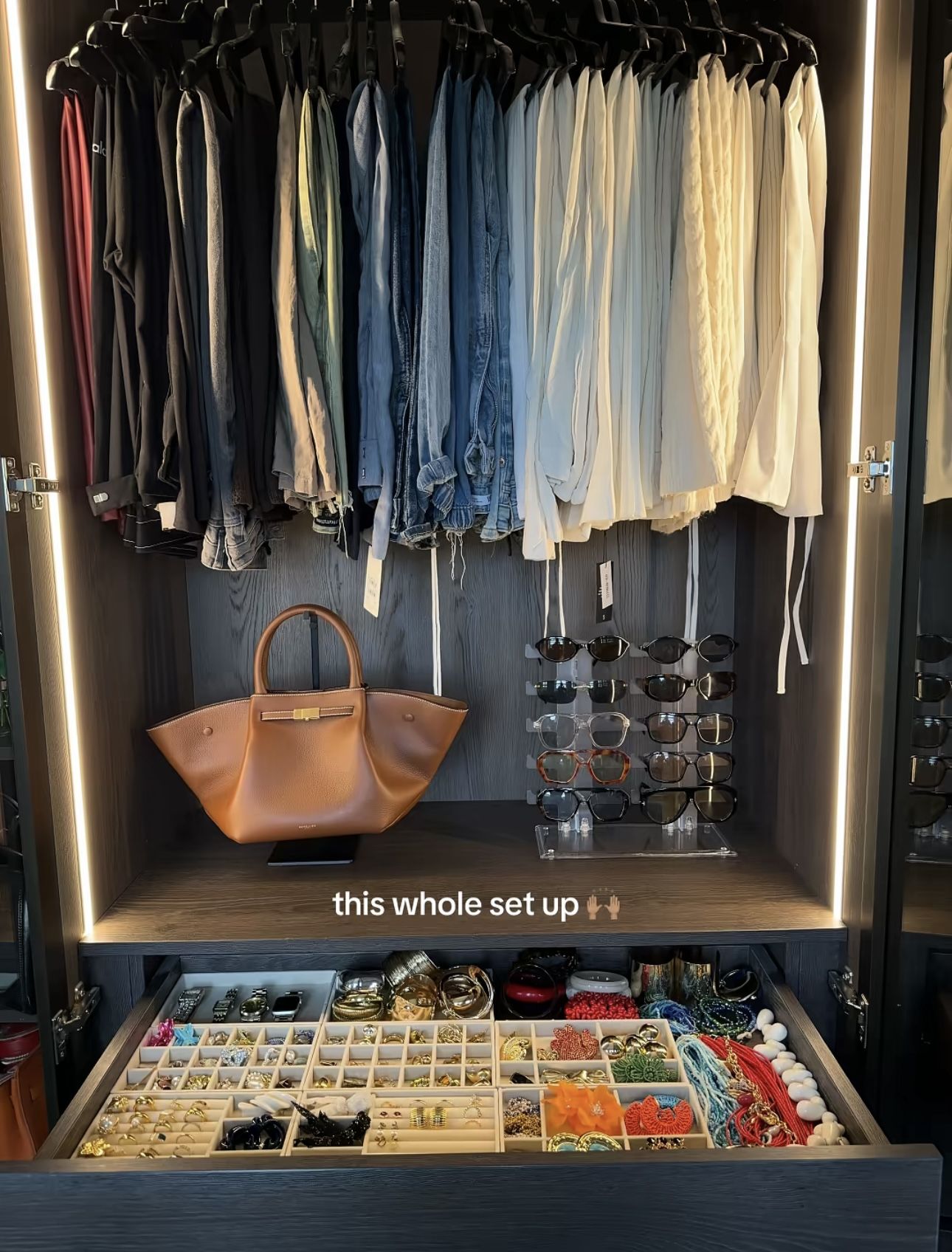
An illuminated wardrobe feels especially polished when smaller accessories receive the same attention as clothing. A wide divided jewelry drawer sits beneath a display shelf, while garments remain visible above. This arrangement brings several getting-ready categories together. Use the accessory drawer as inspiration for a more complete dressing station.
30. A Linen Closet With Soft Pink Storage Baskets
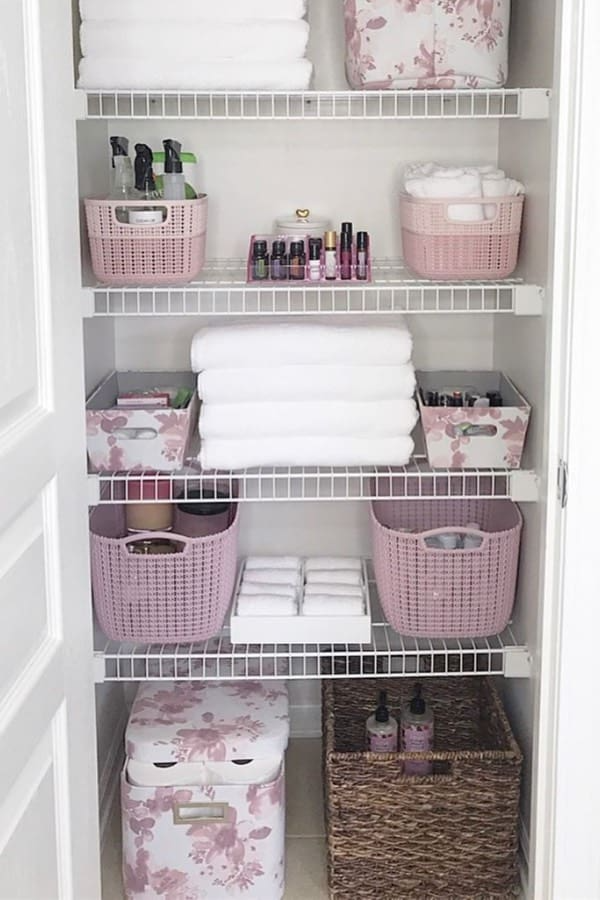
A restrained accent color can make household storage feel more cohesive. Pink baskets and patterned containers sit alongside white towel stacks, separating smaller supplies from larger linens. The arrangement remains practical while bringing a gentle decorative mood to an ordinary closet. Choose one accent color to unify the containers you keep on display.
31. An Open Dressing Wall With Drawers and Display Shelves
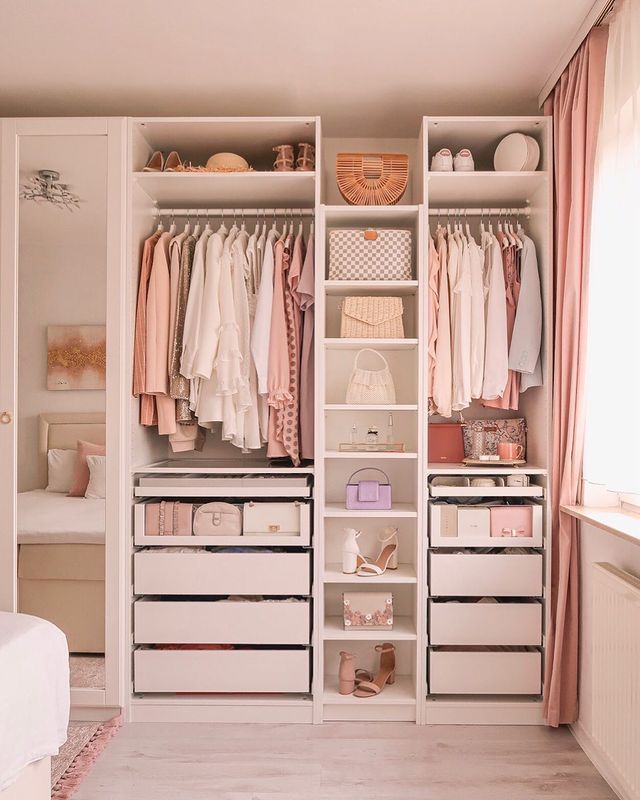
A coordinated dressing wall gives clothing and accessories a shared visual language. Hanging sections frame a narrow central display, while drawers below contain less decorative belongings. Soft pink tones carry through the arrangement without overwhelming the white structure. Save this balanced composition for a wardrobe that will remain visible from the bedroom.
32. Bedroom Cubby Storage That Supports a Small Closet
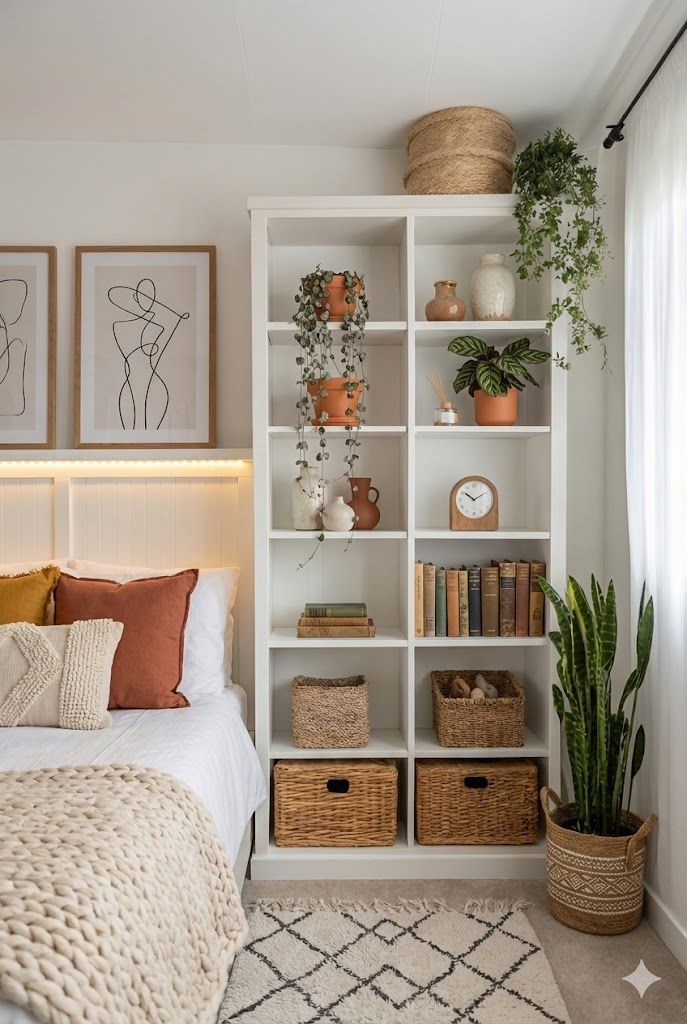
Storage outside the closet can relieve pressure inside it. A tall bedroom cubby unit combines baskets with books and decorative objects, showing how practical overflow can belong naturally in the room. Keeping selected categories contained prevents the shelves from feeling crowded. Assign one nearby basket to a wardrobe category that needs extra space.
33. An Open Wardrobe With a Central Drawer Unit
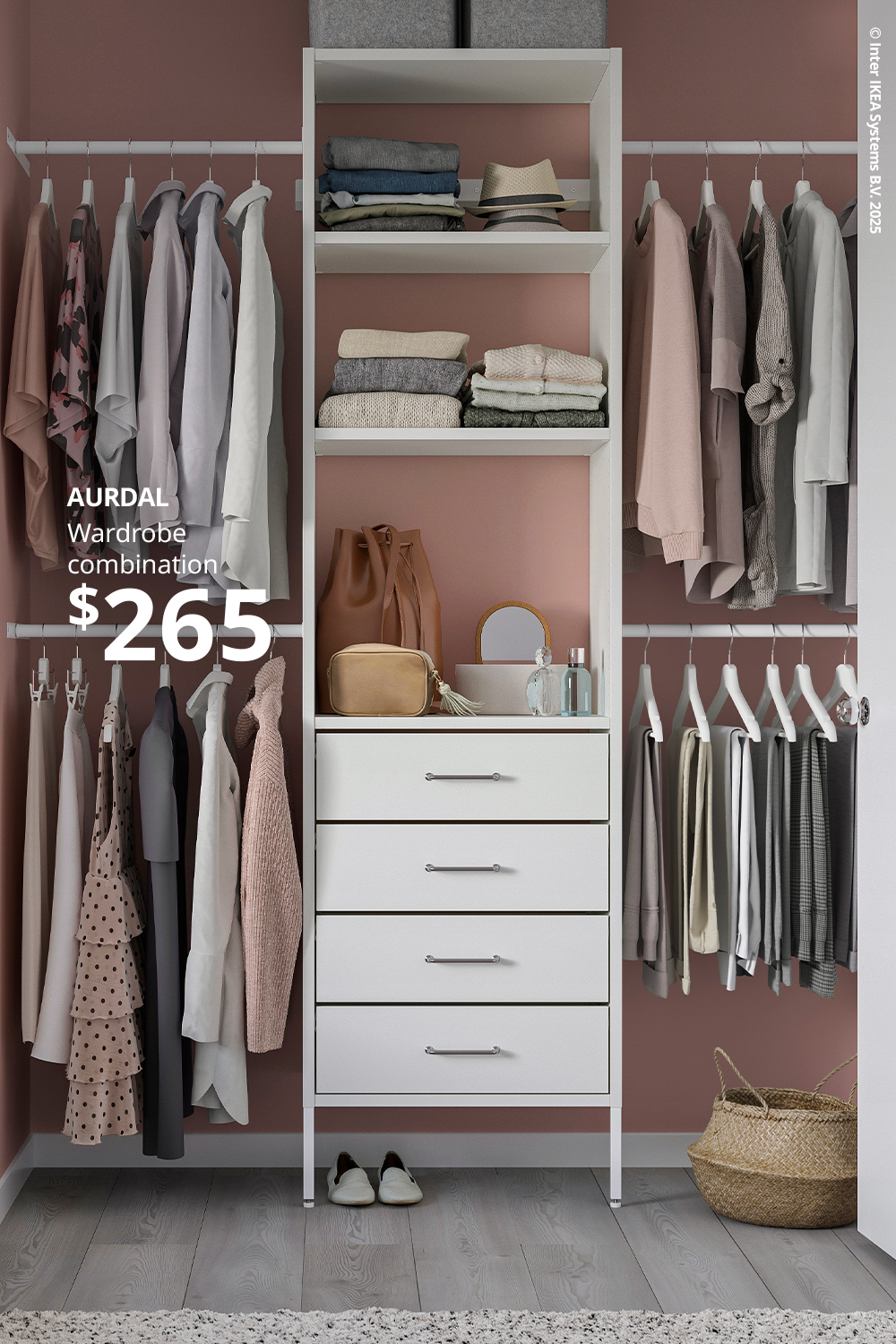
A central drawer unit gives an open wardrobe a dependable core. Shelves above provide visible storage, while hanging rails on both sides separate shorter garments into clear groups. The uncluttered structure leaves the clothing easy to browse. Adapt this symmetrical arrangement when you want both concealed storage and accessible hanging space.
34. Wire Drawer Units Beneath a Full Clothing Rail
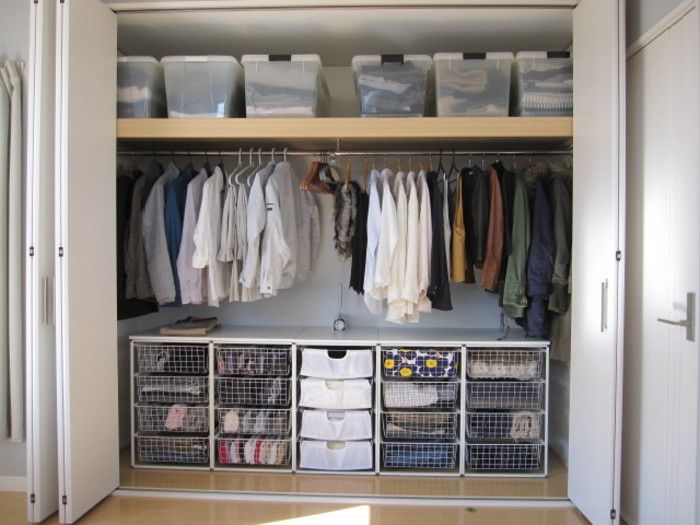
A row of lower drawer units can add structure beneath an existing clothing rail. Transparent upper boxes and mesh lower baskets keep categories visible at different heights. This direction suits a reach-in closet that needs more separation without changing its entire layout. Start by assigning one lower unit to your most disorganized clothing group.
35. Woven Baskets Mixed With Open Wardrobe Shelves
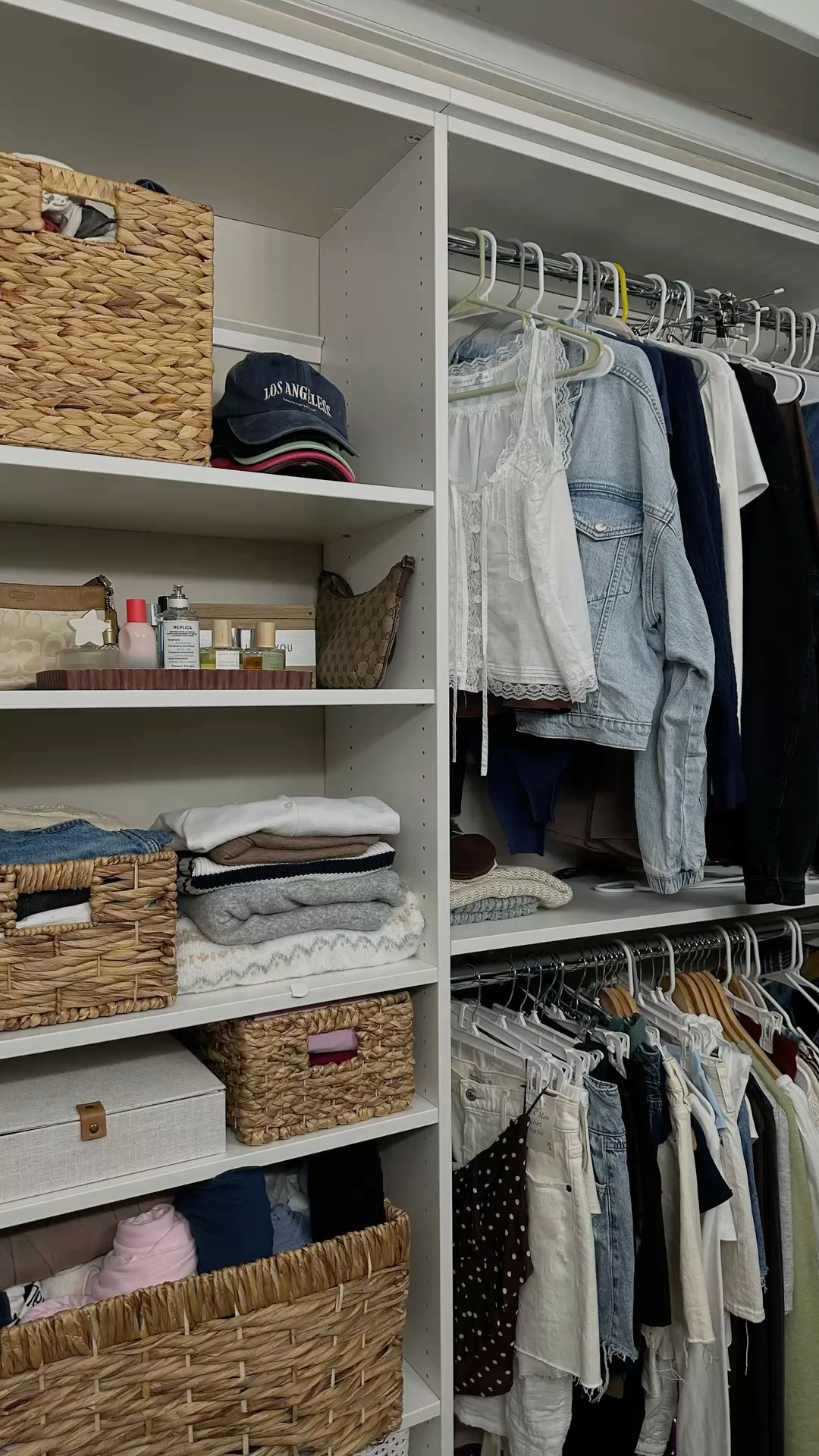
Baskets soften the appearance of open storage while giving loose belongings boundaries. Mixed with folded stacks and hanging clothes, they keep the closet from looking overly uniform. The appeal is a comfortable balance between display and concealment. Reserve baskets for the categories that resist neat stacking in your own wardrobe.
36. A Nursery Closet With Low Cubbies and Upper Bins
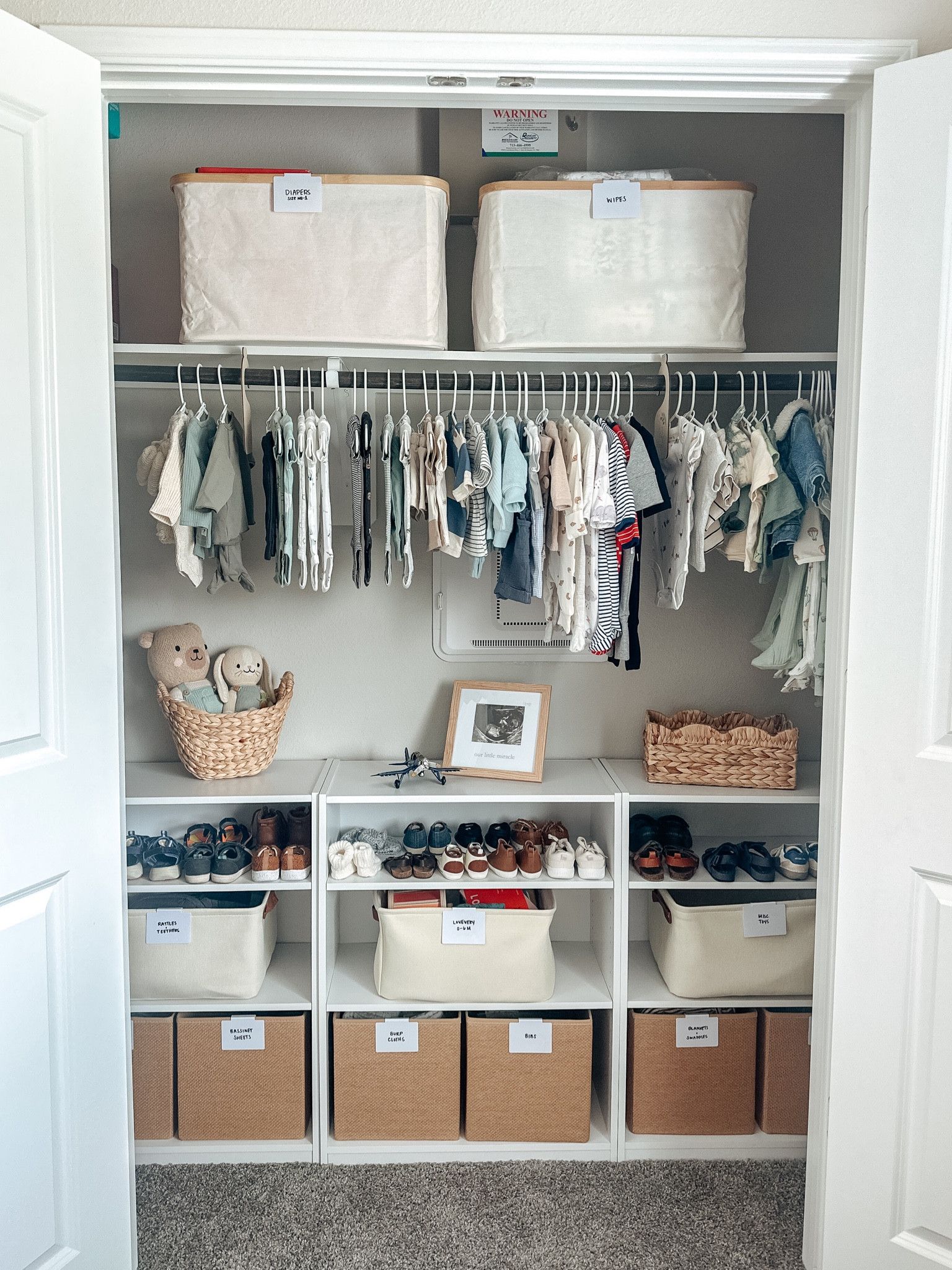
Small clothing benefits from storage that recognizes its different scale. A single rail leaves room for cubbies below, while upper bins contain additional belongings. Shoes, baskets, and fabric containers each occupy defined spaces. The arrangement feels easy to scan during busy routines. Plan nursery categories around what needs the quickest access.
37. A Warm Walk-In Closet With a Central Dresser
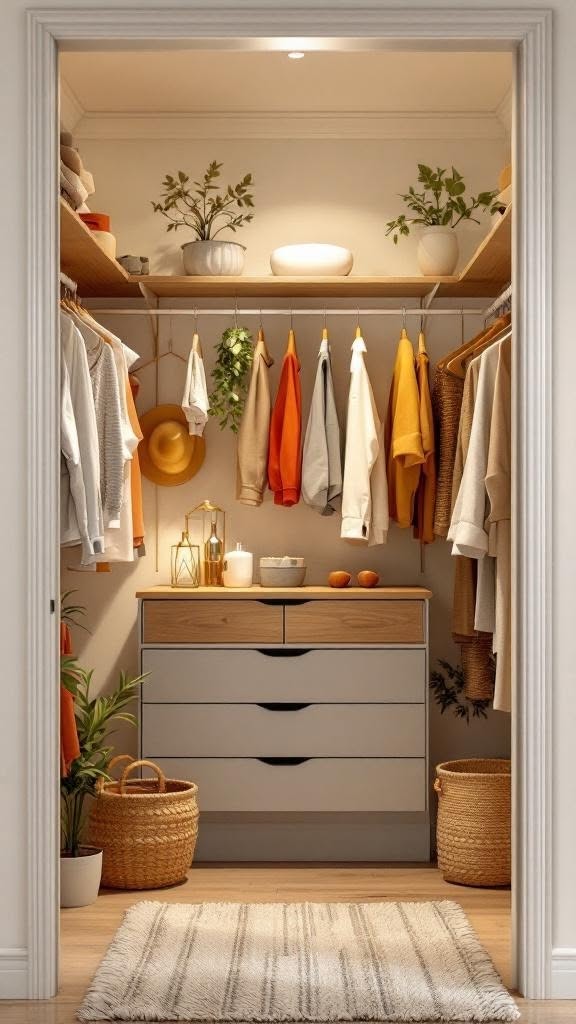
A dresser can give a small walk-in closet a welcoming focal point. Hanging garments surround it, while warm lighting and a runner create a softer dressing-space atmosphere. The drawers offer a grounded alternative to filling every wall with open shelves. Consider a central dresser as the starting point for your own layout.
38. A Multipurpose Closet for Office and Hanging Storage
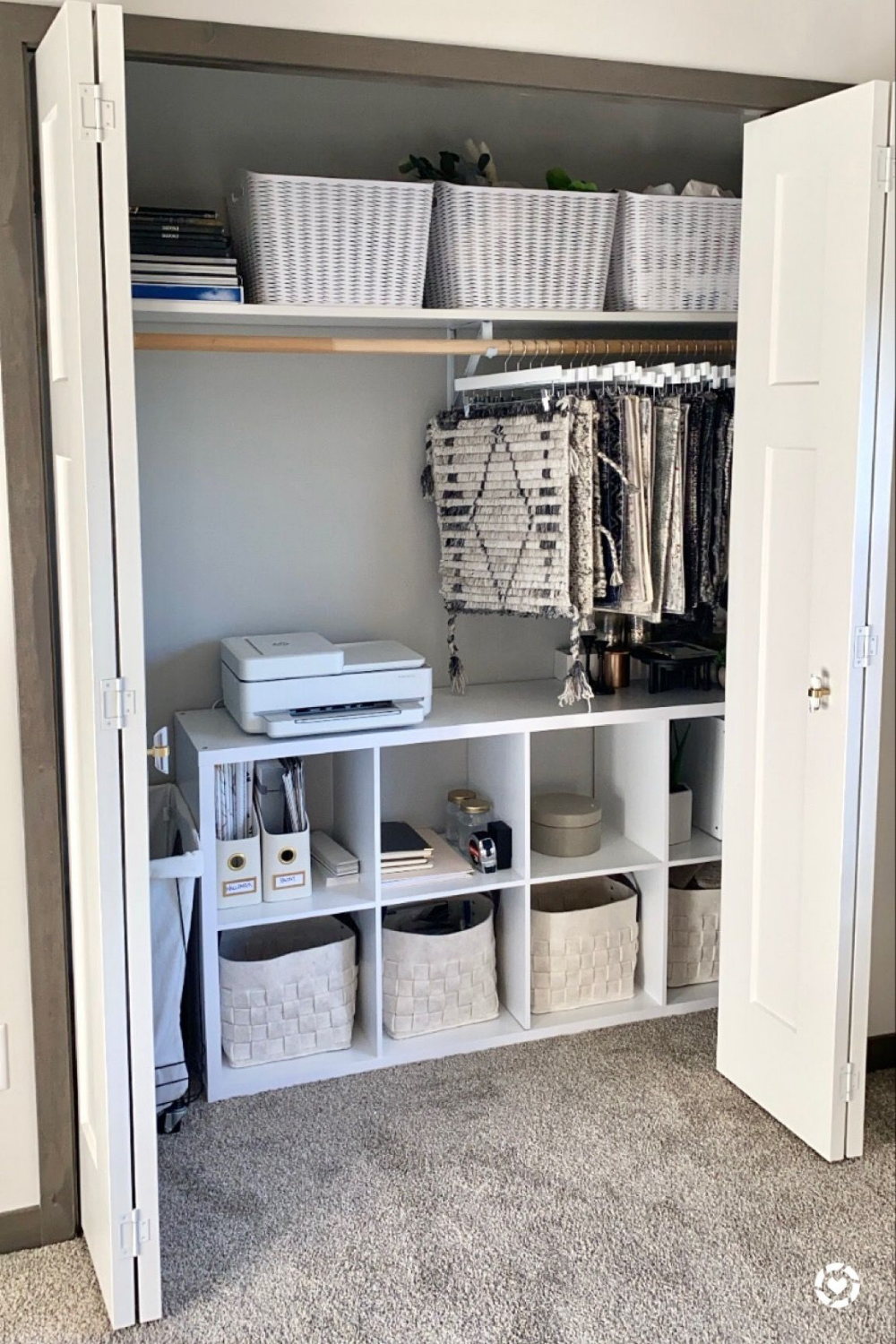
A household closet does not have to serve only clothing. This arrangement pairs hanging storage with a printer surface, file holders, and basket-filled cubbies. Its strength is the clear separation of functions within one opening. Borrow this zoning approach when office belongings and wardrobe overflow need to share the same space.
39. A Pink Wardrobe With a Separate Accessories Column
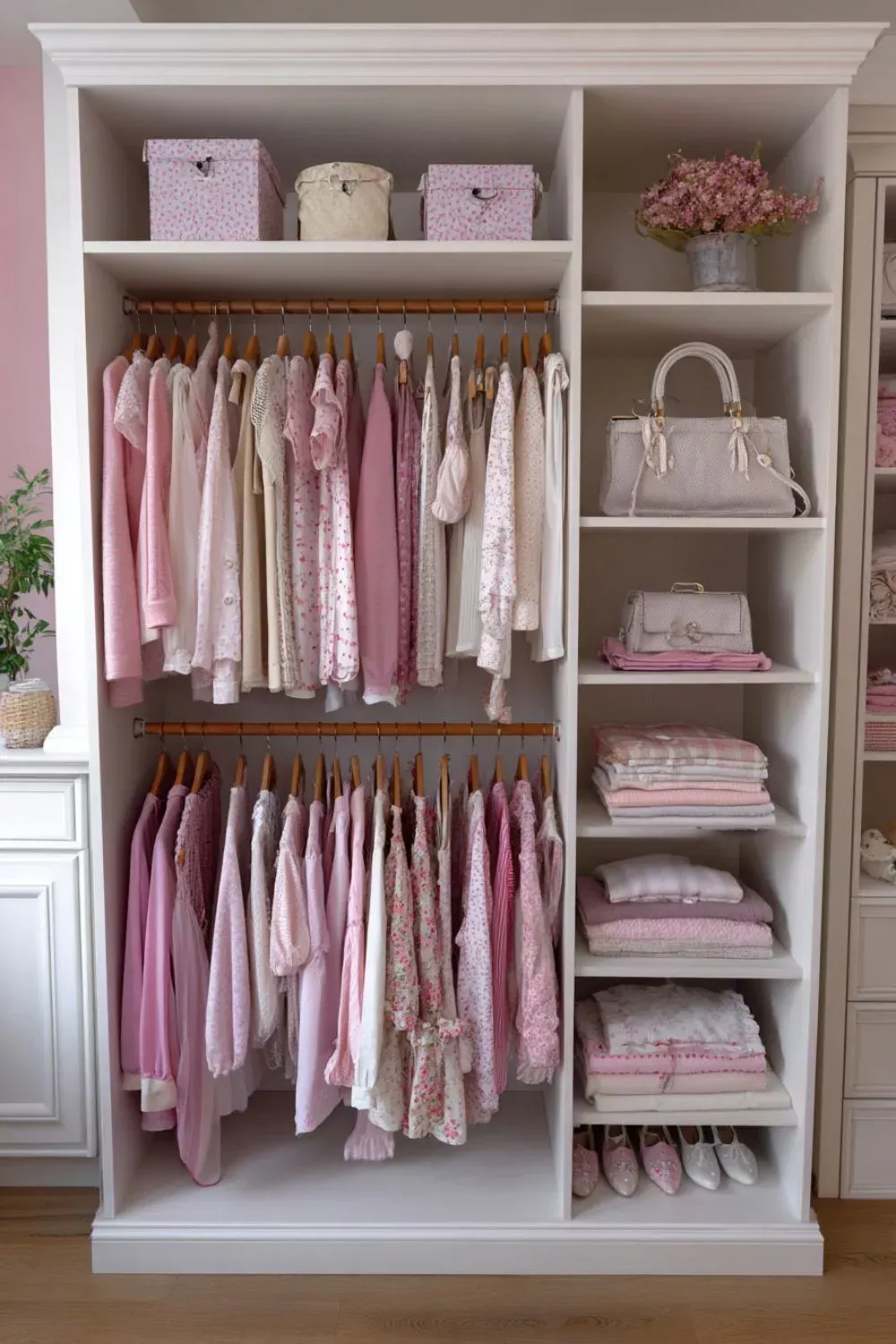
A coordinated clothing palette feels especially intentional beside a dedicated accessories column. Double hanging rails hold garments, while adjacent shelves display bags, folded pieces, and shoes. The layout makes smaller accessories easier to pair with outfits. Give your favorite finishing pieces their own shelf section instead of scattering them throughout the closet.
40. Dark Storage Cubes Beneath a Hanging Rail
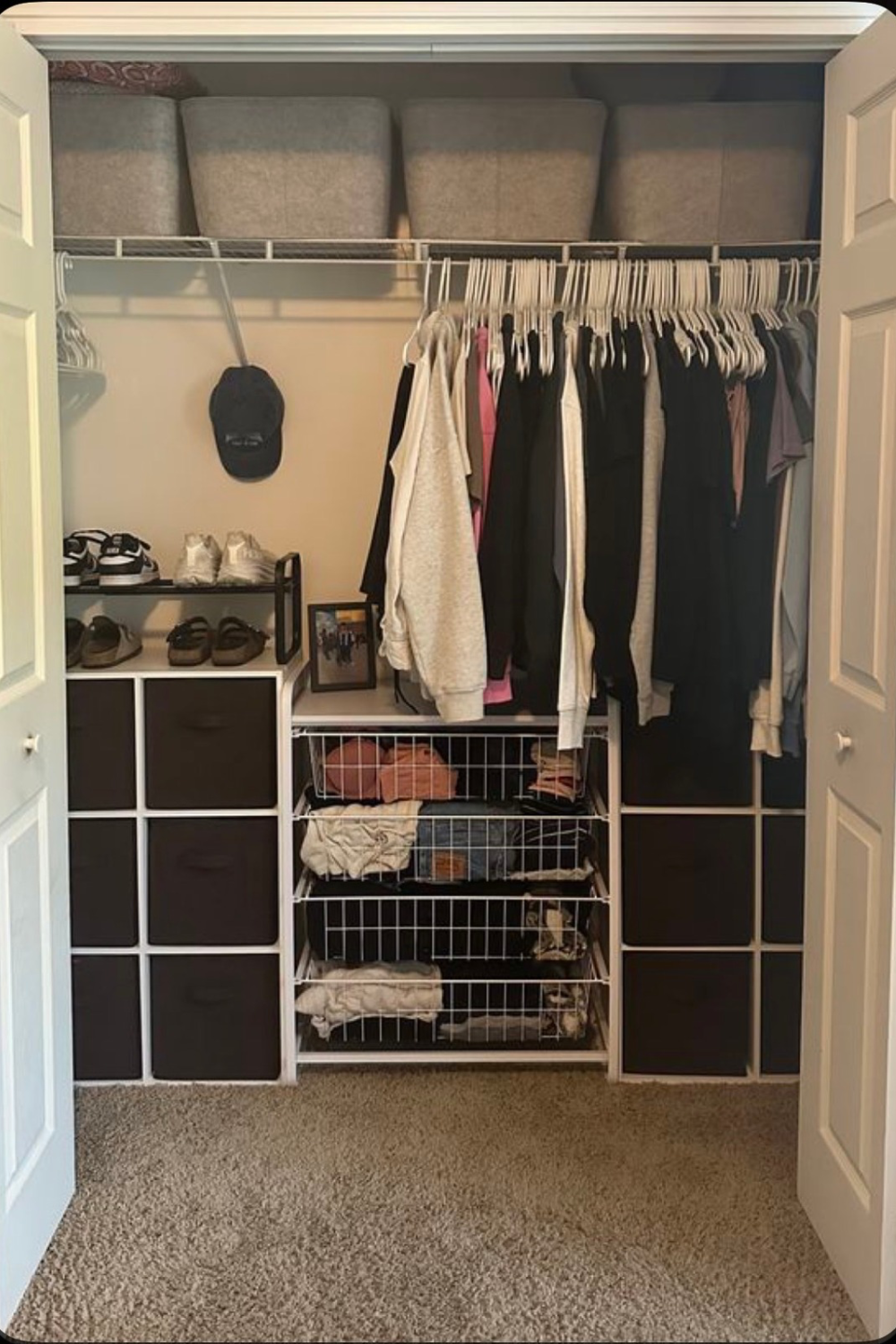
Dark fabric cubes create a visually steady base beneath hanging clothing. A central wire-drawer unit introduces more accessible storage, while matching upper bins contain additional categories. The combination offers both hidden and visible options without elaborate cabinetry. Choose concealed bins for the belongings you prefer to keep out of sight.
41. Drawer Inserts That Separate Everyday Intimates
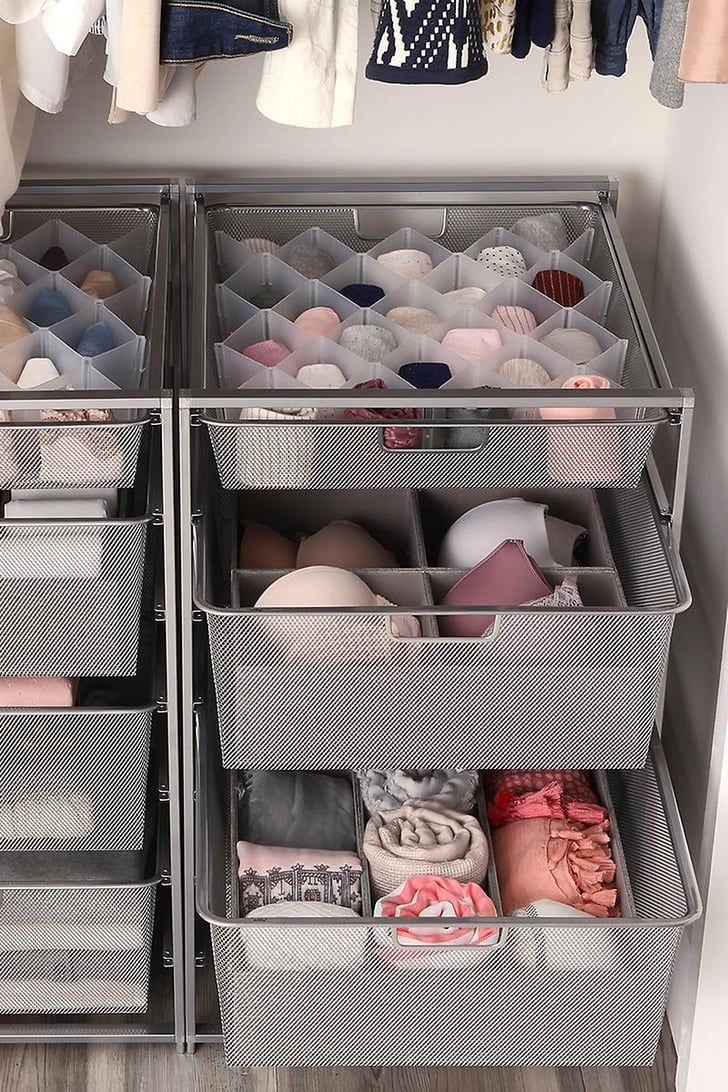
The smallest wardrobe categories often benefit most from individual compartments. Divided inserts keep everyday intimates separated inside mesh drawers, making the contents easier to scan without digging. Even one organized drawer can make putting laundry away more straightforward. Start with the category that tangles or disappears most often in your current setup.
42. A Mixed-Height Closet Planned Around Garment Length
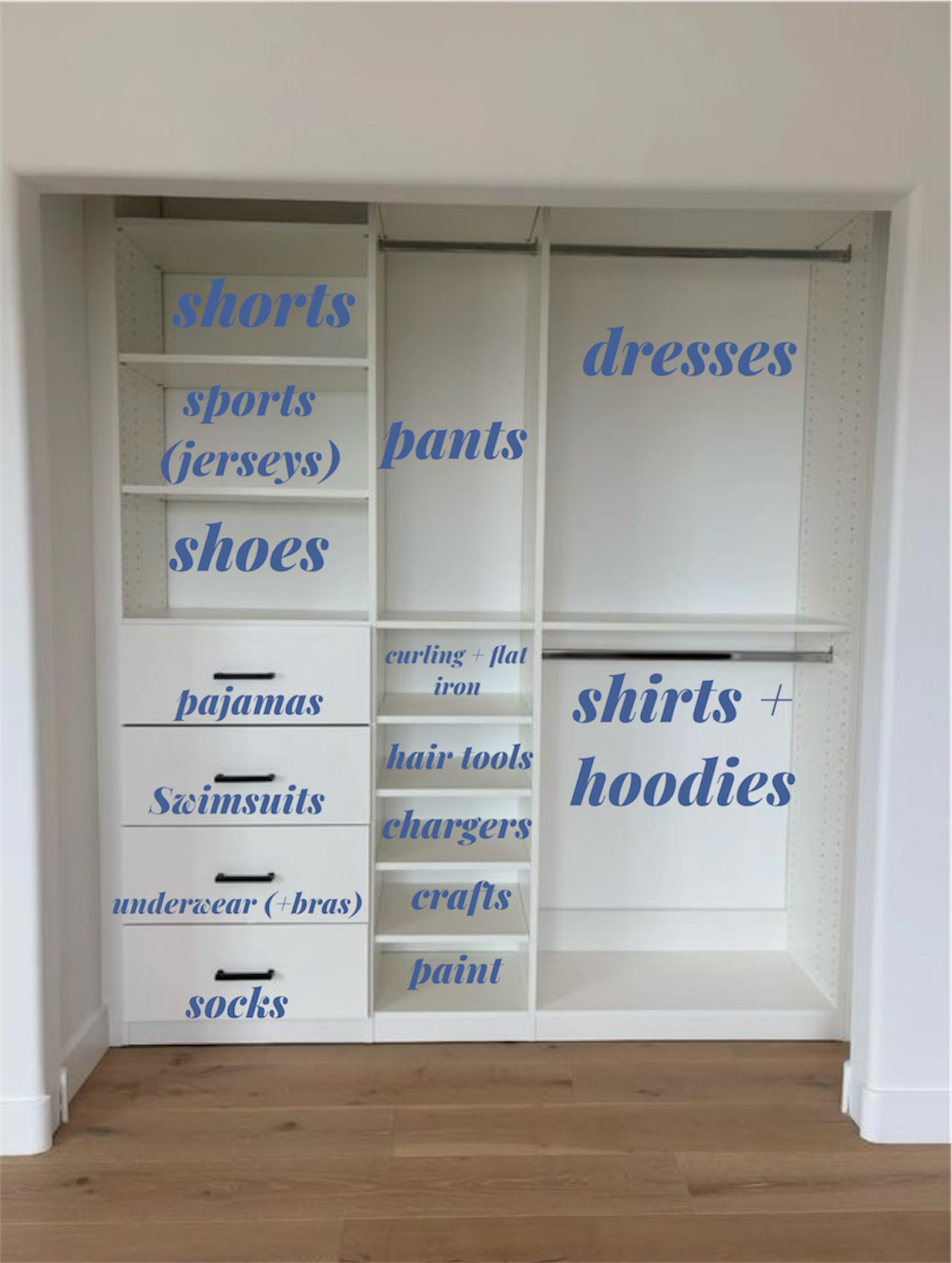
Different garment lengths deserve different amounts of vertical space. This labeled layout separates long hanging sections from shorter rails and smaller shelves, showing how categories can guide the structure. Planning this way avoids treating every part of a wardrobe identically. Sort your clothes by hanging length before deciding where each category should live.
43. A Small Walk-In Closet With Coordinated Green Bins
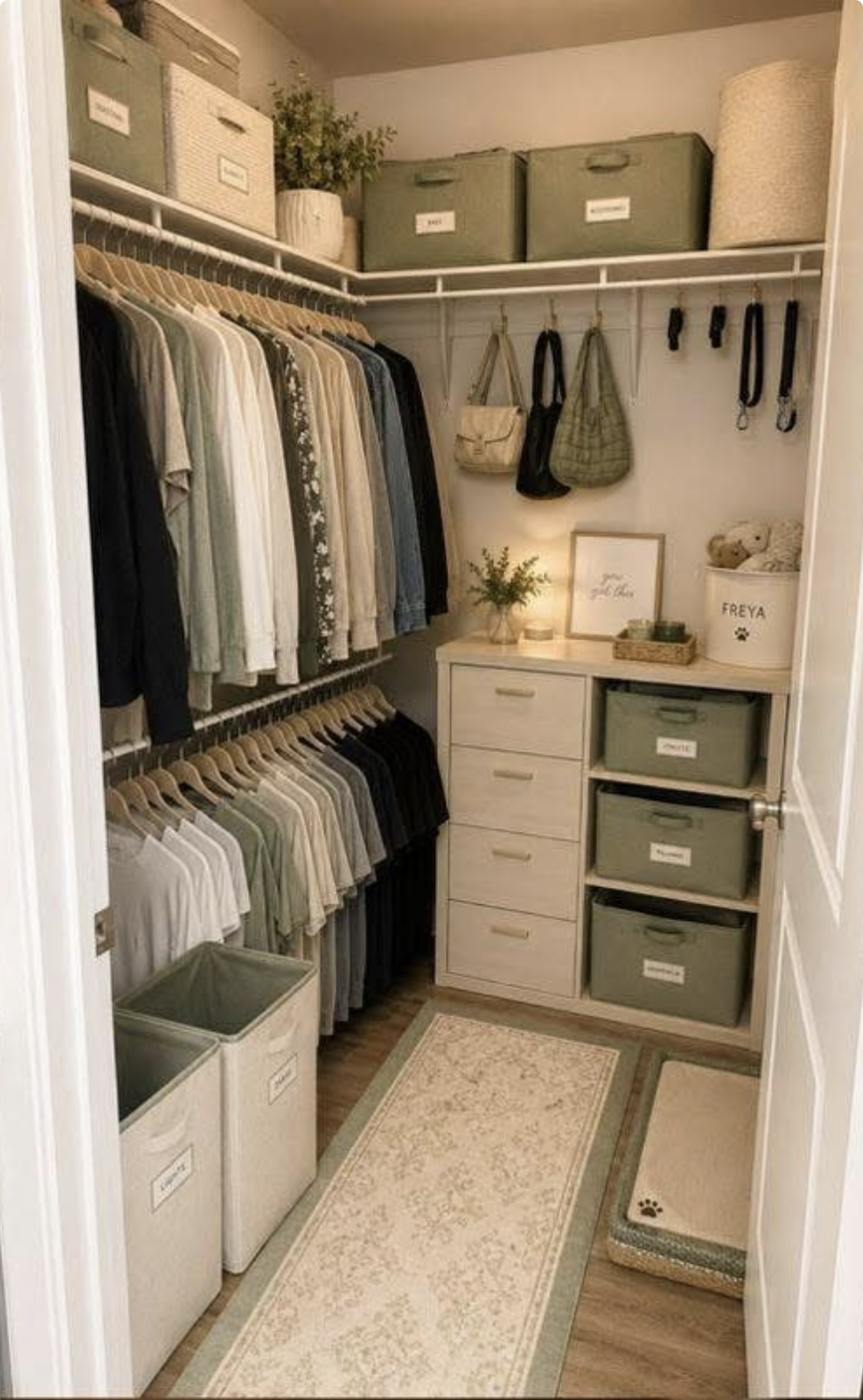
Muted green bins bring continuity to a compact walk-in closet with several storage types. Double hanging rails, drawers, hooks, and upper containers each support a separate category. The repeated color helps the arrangement feel settled despite its variety. Carry one quiet accent through your visible storage for a more cohesive finish.
44. A Walk-In Layout With a Clear Central Path
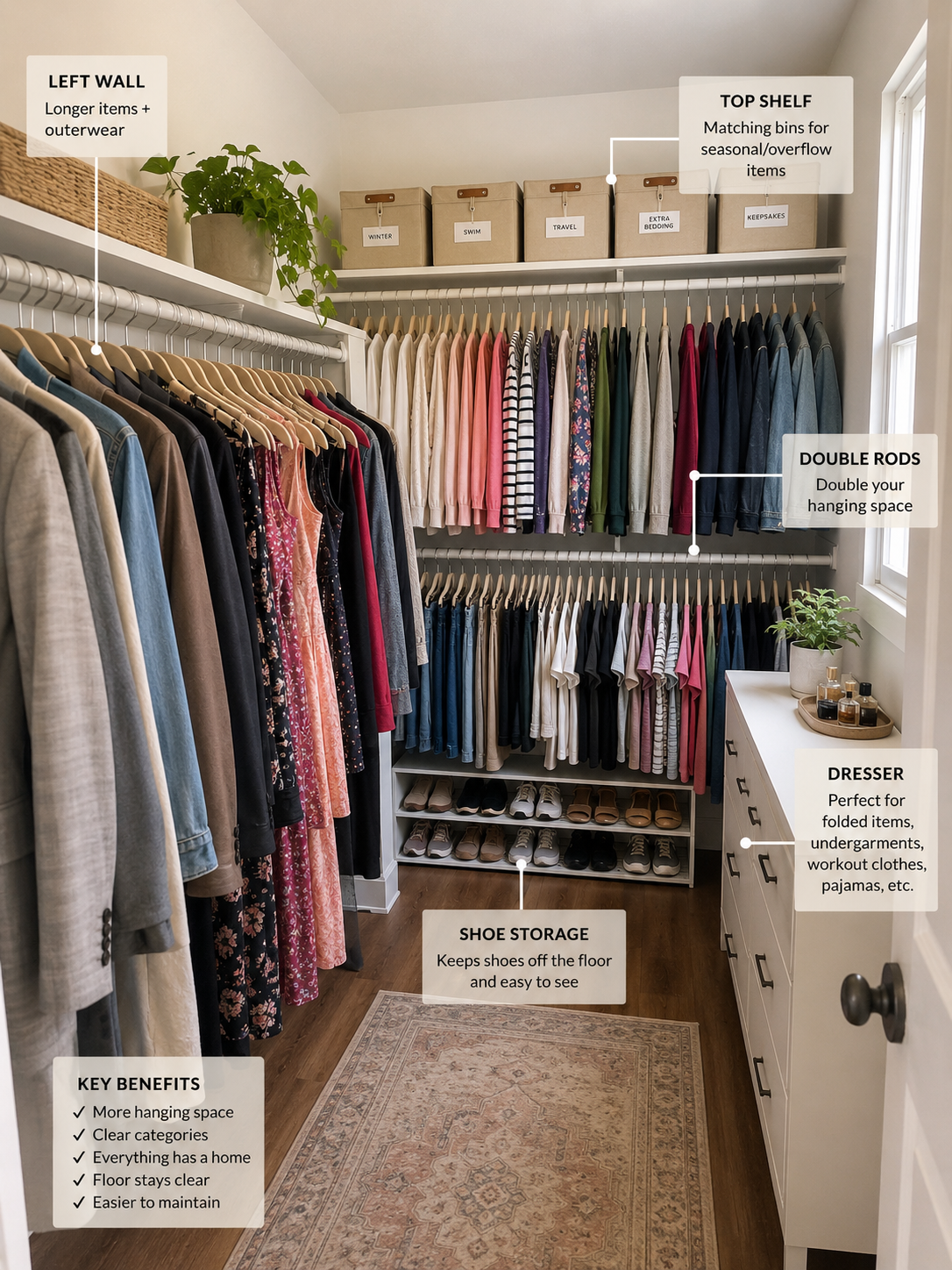
A useful walk-in closet needs room for movement as well as belongings. Hanging zones, a dresser, upper bins, and lower shoe storage line the edges while leaving the center open. That balance makes the arrangement feel easier to navigate. Protect your walking space when deciding where the next storage piece should go.
45. A Vertical Laundry Basket Tower
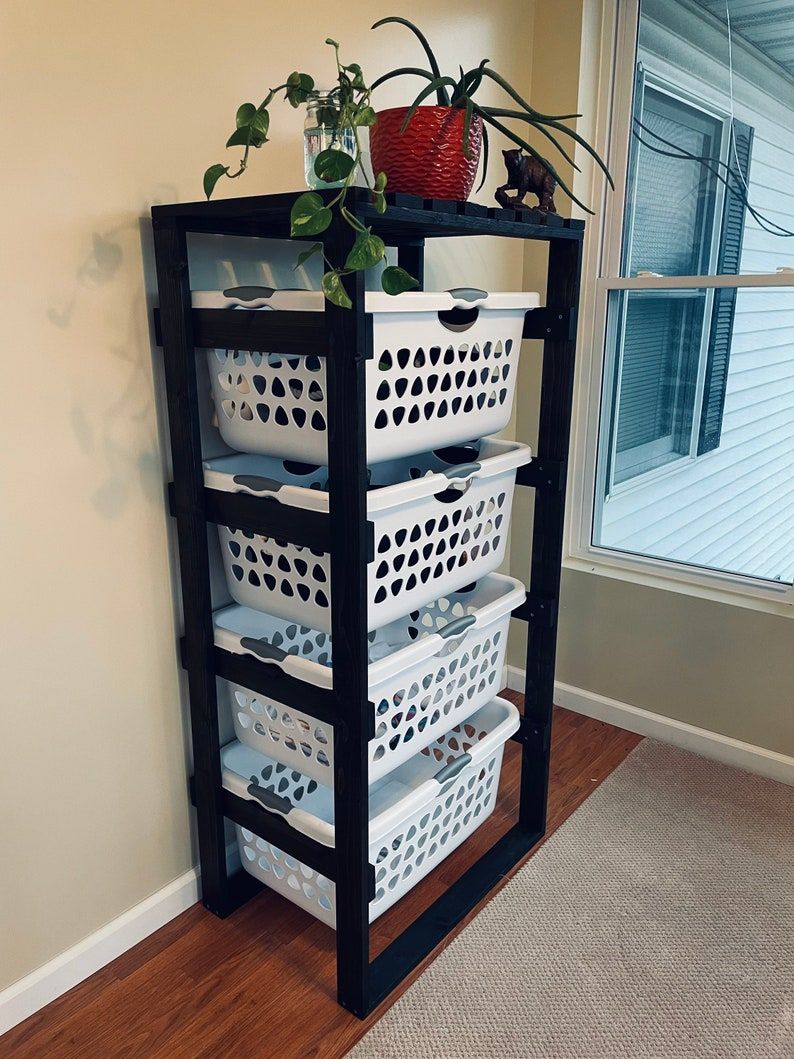
Stacked laundry baskets create separate categories within a narrow footprint. A freestanding frame keeps the baskets on individual levels rather than scattered across the floor. This idea supports closet organization by giving clothing in transition a clearer home. Adapt the basket categories to your household’s sorting and put-away routine.
46. A Dressing Closet With Dedicated Accessory Displays
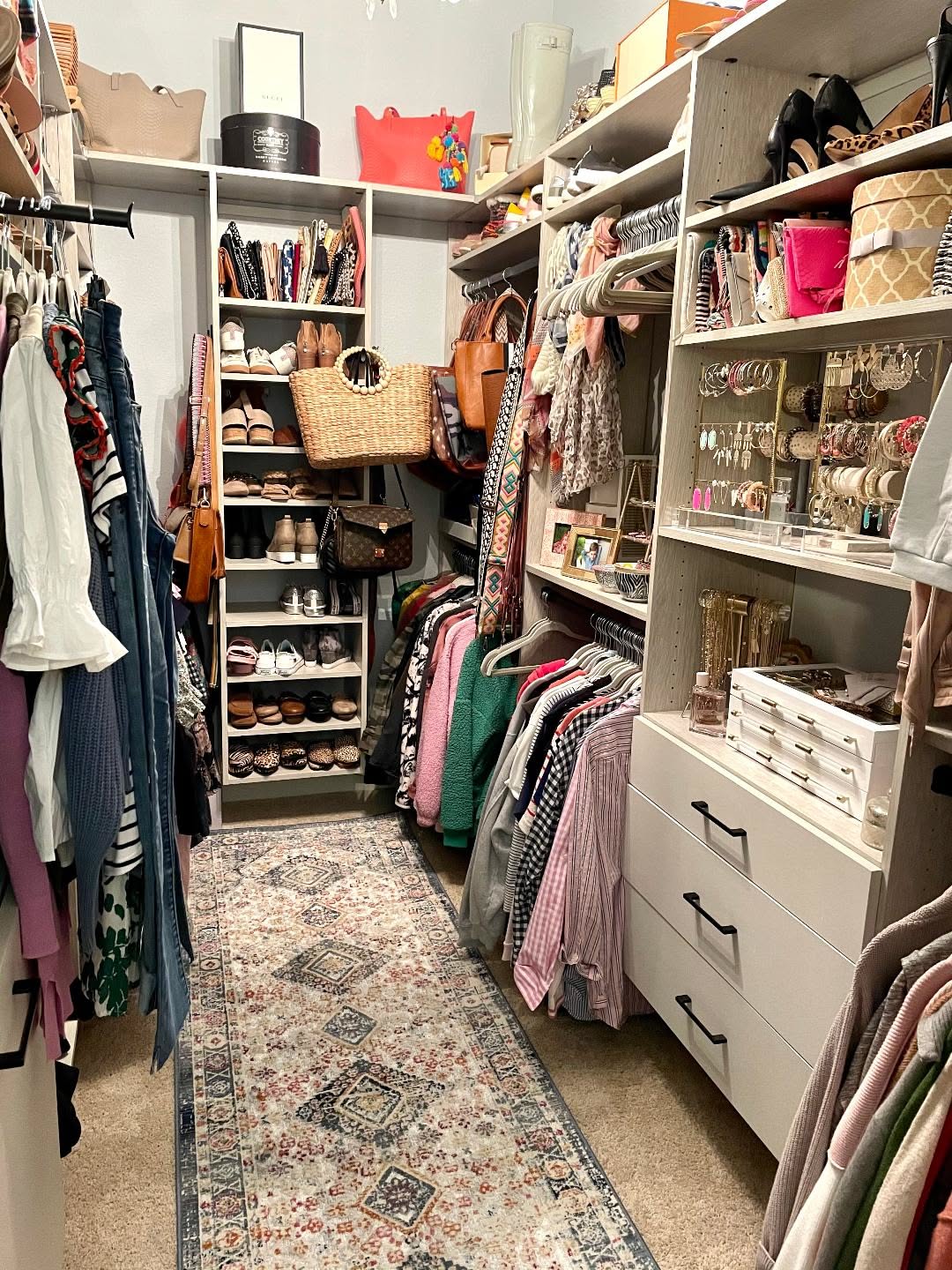
A generous accessory collection becomes easier to appreciate when bags, jewelry, and shoes have distinct display areas. Hanging clothes and drawers share the surrounding space without making every category compete for one shelf. The arrangement treats accessories as part of outfit planning. Designate a display zone for the pieces you most enjoy wearing.
47. A Tall Drawer Tower for Folded Clothing
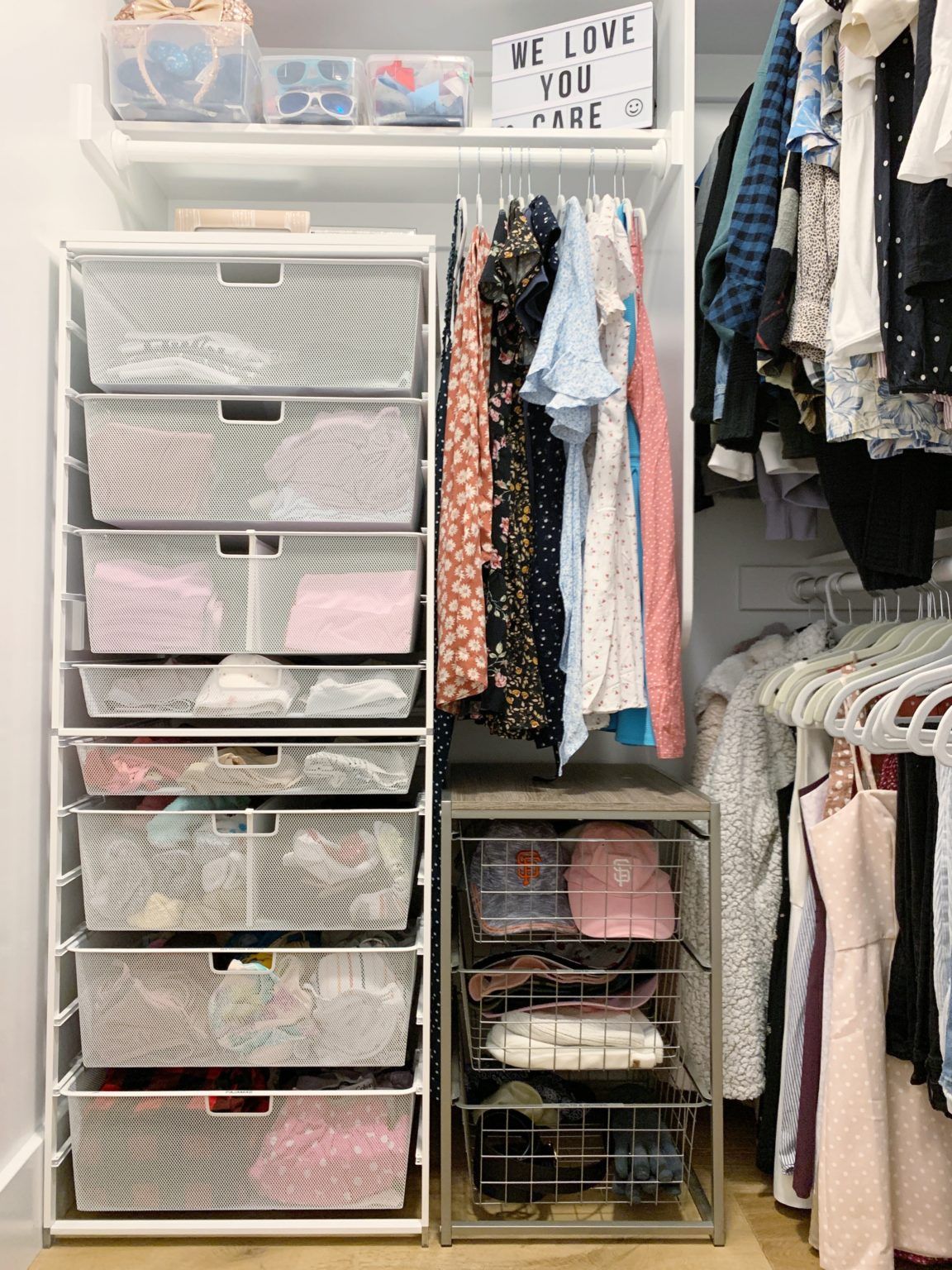
A vertical drawer tower can give folded clothes more structure beside hanging garments. Separate pull-out levels contain smaller groups, with additional baskets occupying an adjacent lower section. The approach is useful when open piles feel hard to maintain. Try assigning one category per drawer before introducing more detailed subdivisions.
48. A Craft Closet With Clear Category Labels
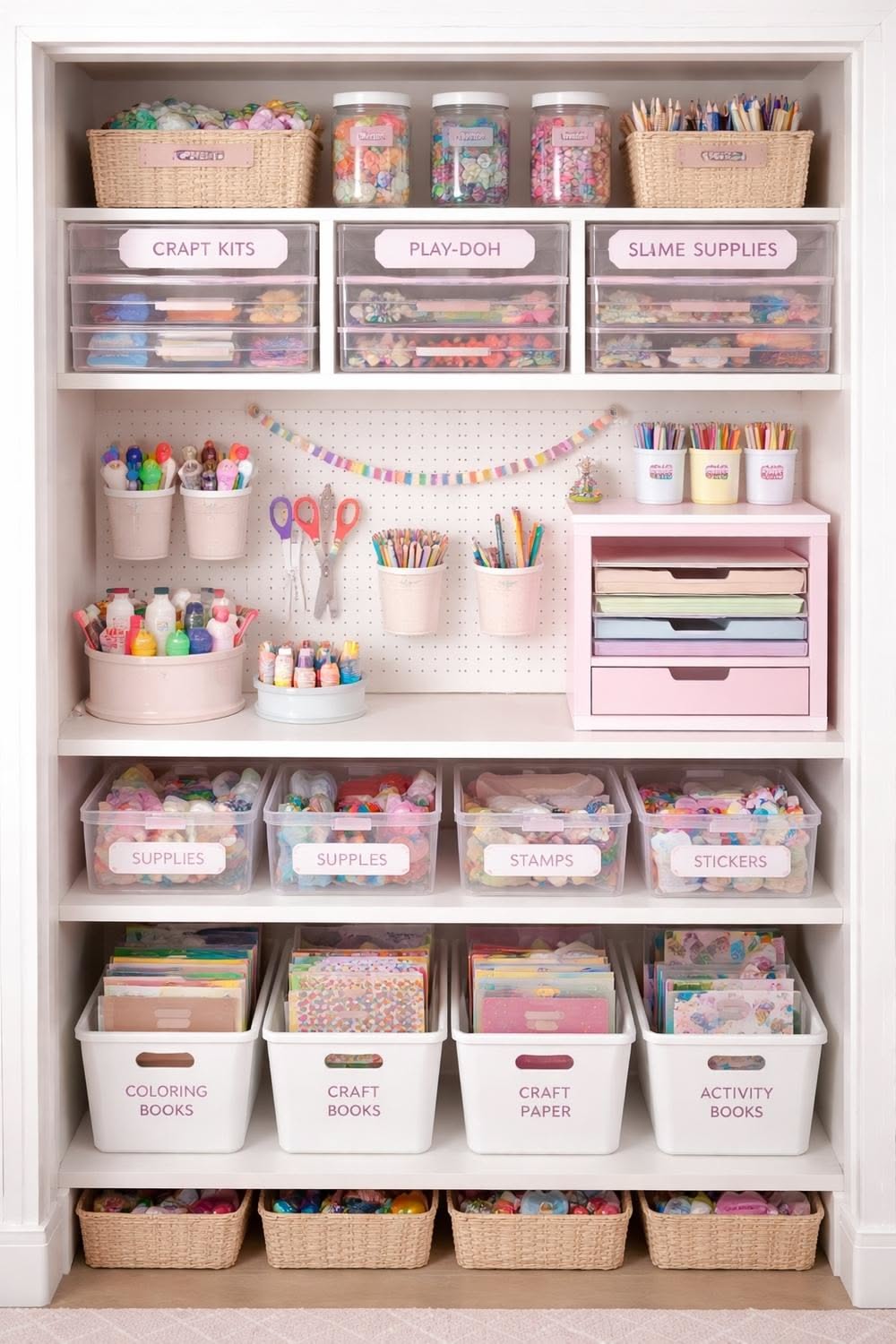
Creative supplies feel more approachable when the storage makes their categories obvious. Clear drawers, labeled bins, baskets, and small holders separate paper, tools, and activity materials across the shelves. The arrangement shows how closet organization can support a hobby as well as a wardrobe. Use your actual creative routine to name each supply zone.
49. A Basket-Rich Wardrobe With Balanced Open Storage
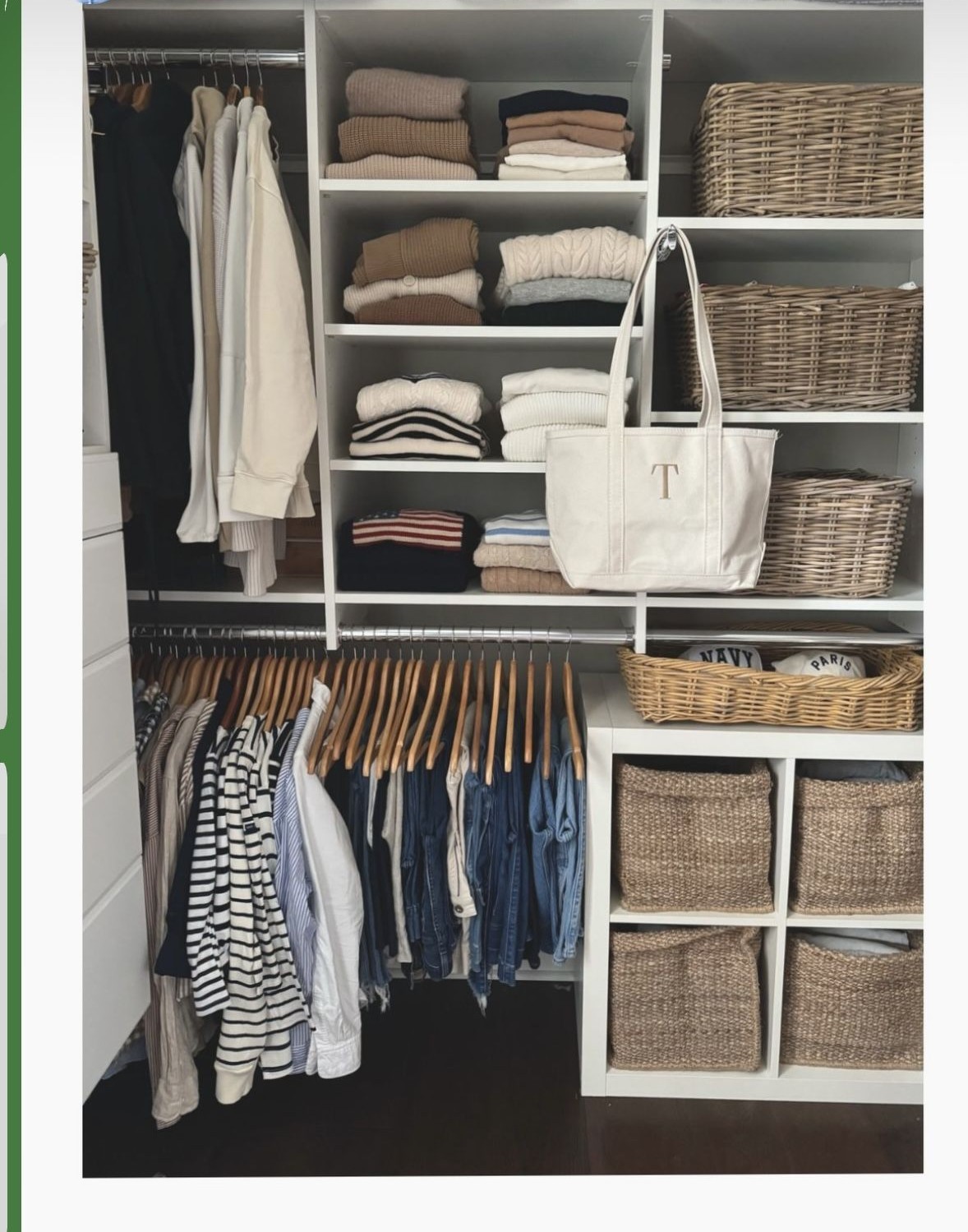
A mixture of woven baskets, folded shelves, and hanging rails brings warmth to a practical wardrobe. Open stacks keep selected clothing visible, while baskets contain categories that need less display. The varied storage feels unified through its restrained palette. Finish your closet plan with a balance of visible favorites and neatly contained essentials.
How to Choose Closet Organization That Fits Your Routine
Start with the belongings that cause the most daily friction. Shoes on the floor call for a different solution than overflowing sweater shelves or a drawer full of tangled accessories. Choose one specific problem before changing the entire closet. A focused improvement is easier to evaluate and maintain.
Next, sort your wardrobe by how each category needs to be stored. Separate hanging garments from folded pieces, then distinguish long clothing from shorter items. This reveals whether double rails would suit your collection or whether you need more uninterrupted hanging height. Keep folded stacks manageable enough that removing one piece does not unsettle everything above it.
Measure before selecting containers or furniture. Check the opening, shelf depth, available floor area, and the space drawers need when extended. Account for doors, handles, and clothing that projects beyond the rail. A container should work with the space rather than make access more awkward.
Choose visibility intentionally. Open shelves suit belongings you recognize at a glance, while baskets help contain loose categories. Clear drawers make smaller items easier to scan; opaque bins create a quieter appearance. Labels are particularly helpful when several people use the same storage.
Give everyday belongings the easiest access and place occasional categories where they will not interrupt your routine. Leave room to return an item without compressing everything around it. That small amount of flexibility matters more than filling every shelf.
Finally, make the arrangement pleasant enough to use. Coordinated containers, a limited accent palette, and neatly grouped hangers can bring cohesion, but matching everything is optional. Keep the choices that help you find, wear, and put away your belongings comfortably.
Frequently Asked Questions About Closet Organization
What is the best first step in Closet Organization?
The best first step is identifying which category is hardest to find or put away. Empty that section, sort its contents, and decide what still belongs there. Working on one problem at a time helps you understand the storage you need before adding containers. Expand the system once that first section feels useful in everyday life.
How can I organize a small closet without replacing everything?
You can improve a small closet by giving existing spaces more specific jobs. Separate folded stacks, divide a crowded drawer, or place a suitable cubby unit beneath shorter hanging garments. Use the measurements and layout you already have as your starting point. A modest change can be enough if it addresses the category creating the most clutter.
Is it better to organize clothes by color or category?
Organizing by category usually makes it easier to establish a practical system, while color can refine the arrangement afterward. Keep similar garments together so you know where to look and where to return them. Within those groups, arrange shades if that helps you choose outfits. There is no need to maintain a color sequence that makes laundry harder to put away.
How do I keep closet shelves from becoming messy?
Keep shelves manageable by limiting stack size and separating categories clearly. Dividers can provide boundaries between folded groups, while baskets contain pieces that do not stack neatly. Avoid packing shelves so tightly that one item is difficult to remove. If a section repeatedly becomes untidy, reconsider its category or storage format instead of simply refolding the same pile.
Do all closet bins and hangers need to match?
Matching bins and hangers are optional, although repetition can make visible storage feel calmer. Fit and usefulness should guide the choice first. Existing containers can still look cohesive when grouped thoughtfully or given consistent labels. Spend your effort on making categories easy to recognize rather than replacing functional pieces solely for a more uniform appearance.
How can I make a shared closet easier to maintain?
A shared closet works better when each person’s space and shared categories are clearly defined. Separate rails, labeled bins, or assigned drawer sections reduce uncertainty about where things belong. Agree on a simple arrangement that everyone can follow comfortably. Keep frequently used categories accessible, and adjust the system when belongings or routines change rather than letting overflow become permanent.