30 Ways to Organize Your Bathroom for a Calm, Clutter-Free Space

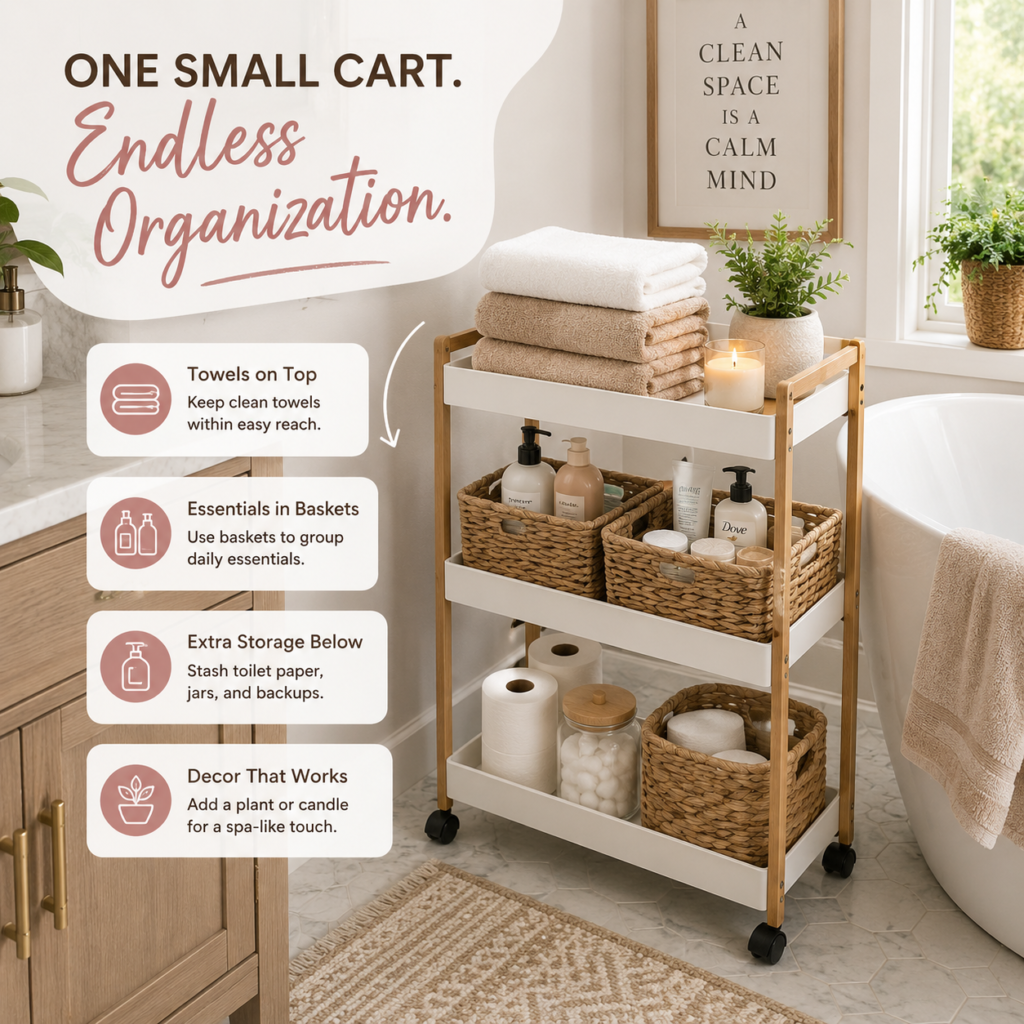
Every bathroom holds more than it looks like it should — skincare, hair tools, cleaning supplies, backup toiletries, and the daily essentials everyone reaches for before they've had coffee. When you organize your bathroom with a system instead of a junk drawer mentality, that daily routine gets simpler almost overnight. This collection pulls together drawer layouts, under-sink zones, floating shelves, labeled bins, and a few clever borrowed ideas that prove storage inspiration can come from unexpected corners of the house. Some setups lean glam, others lean practical, and a few are simple enough to build in an afternoon. Whether you're working with a single vanity or a full linen closet, there's a direction here that fits your space, your habits, and how much time you actually want to spend maintaining it.
Organizing a bathroom well comes down to grouping like items together, labeling zones so everything has a home, and using vertical space — drawers, stacked bins, and door-mounted storage — so nothing gets buried behind the pipes. Small, consistent systems beat one big overhaul every time.
1. Lace-Trimmed Brush Holders for a Pretty Vanity Display
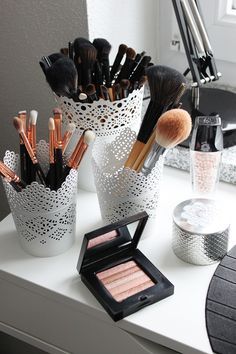
A pair of scalloped lace holders turns a cluster of makeup brushes into a countertop feature instead of a mess to hide. Grouping brushes by size keeps the daily set easy to grab without digging through a drawer. It's a small styling move that makes an open vanity feel intentional rather than cluttered. Try it if your counter space is limited and you want your tools visible and tidy at the same time.
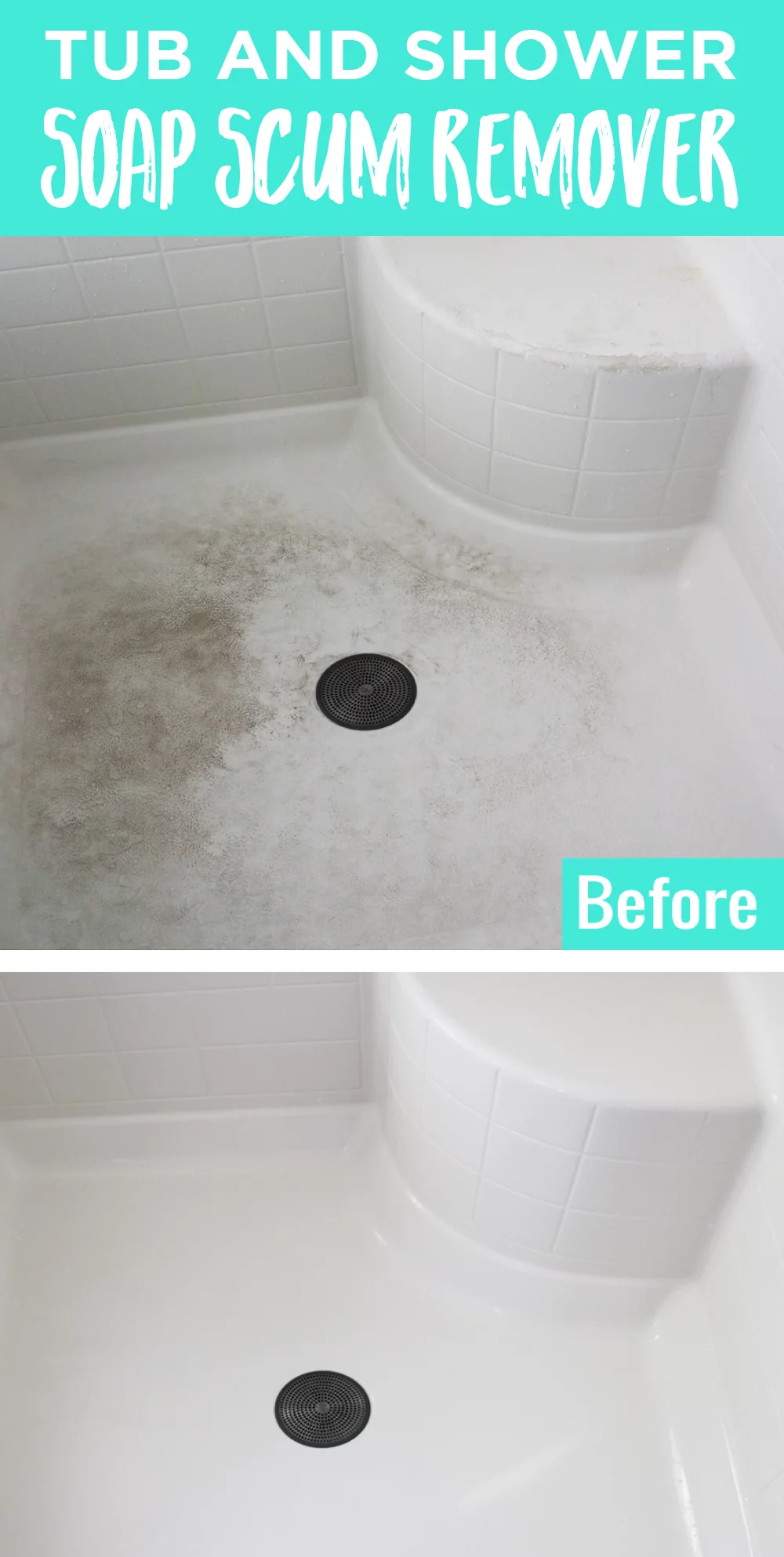
2. A Deep Clean Reset Before You Style Your Shelves
Before any storage system goes in, a genuinely clean surface makes the whole space feel fresher and easier to maintain. Soap scum and buildup collect fast in showers and tubs, and starting from a clean base means new organizers actually stay looking good longer. It's an easy first step that's often skipped in favor of buying bins. Save this as a reminder to reset before you reorganize.
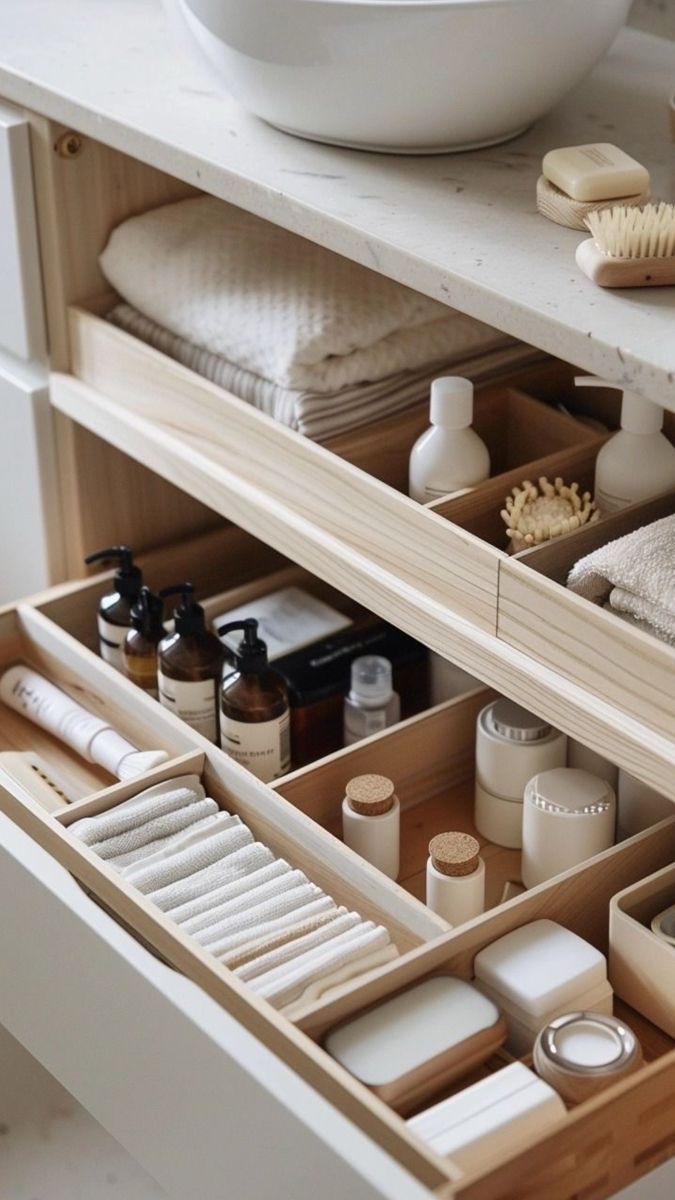
3. Layered Pull-Out Drawers for Folded Towels and Extras
Wide, shallow drawers with wood dividers let you stack folded towels, hand towels, and daily toiletries in their own defined sections instead of one crowded pile. Everything stays visible from above, so nothing gets lost at the back. This layout works especially well for vanities with deep drawer space that would otherwise go underused. Adapt the divider sizes to match what you actually store.
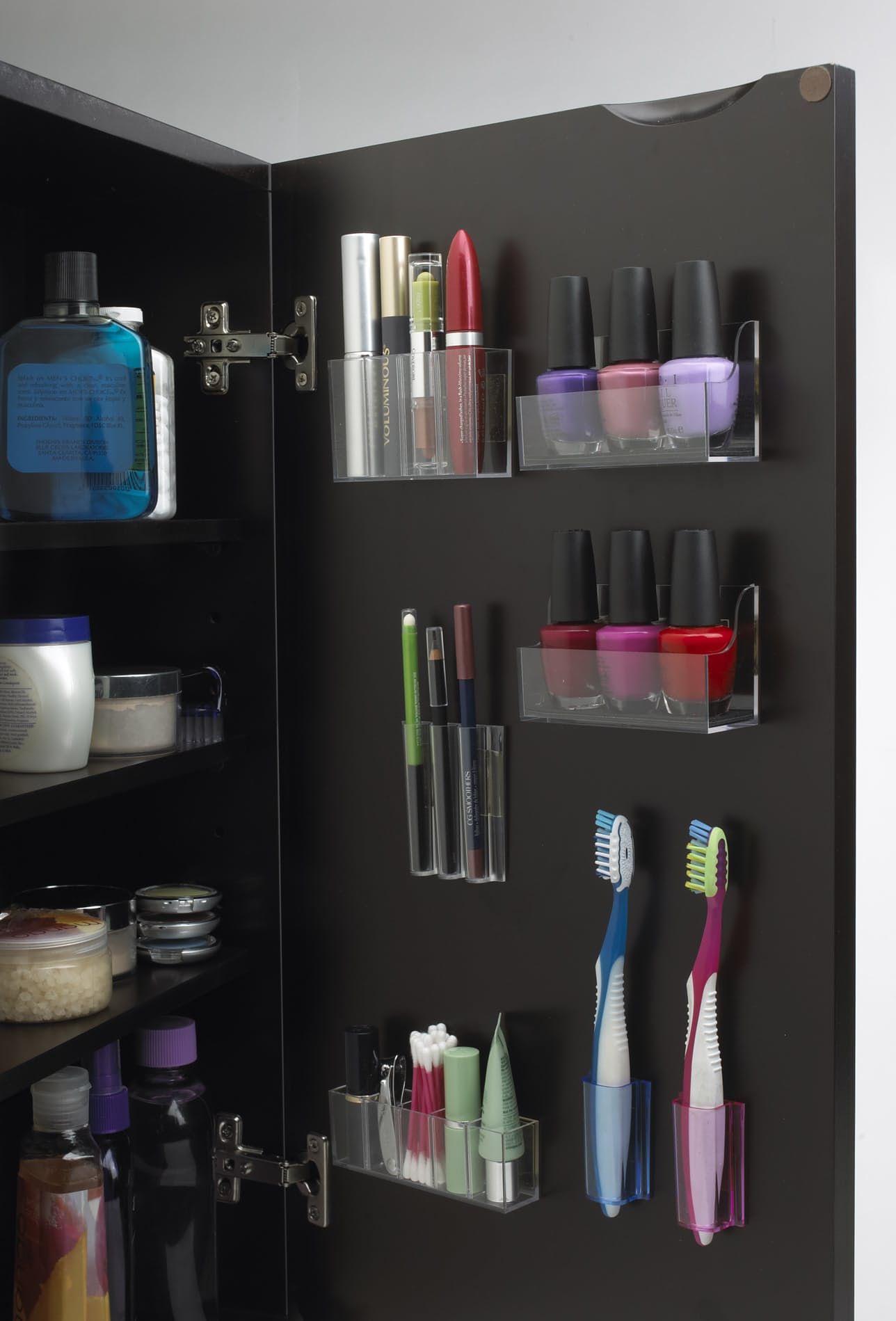
4. Turn a Cabinet Door Into Extra Storage Real Estate
Slim acrylic caddies mounted to the inside of a cabinet door hold lipsticks, nail polish, eyeliners, and toothbrushes in full view without taking up a single inch of shelf space. It's a smart way to reclaim storage that usually goes to waste. This approach works especially well in smaller medicine cabinets where every shelf already has a job. Consider it a first move before you buy any new furniture.
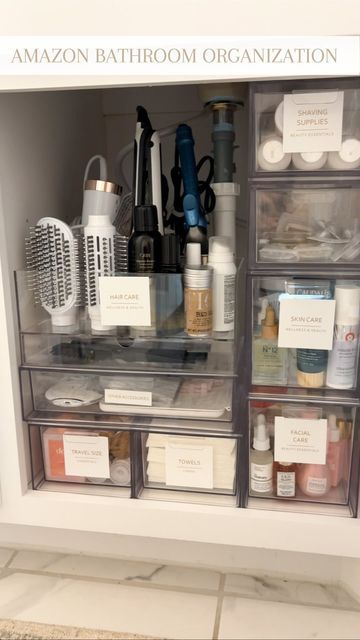
5. Labeled Bins That Sort Hair, Skin, and Facial Care
Clear, labeled bins for hair care, skin care, facial care, and shaving supplies mean every category has an obvious home and a clear boundary. Anyone in the household can find what they need and put it back in the right spot. The labeling is what makes this system stick long after the initial organizing weekend. Recreate it with whatever bin sizes fit your own cabinet depth.
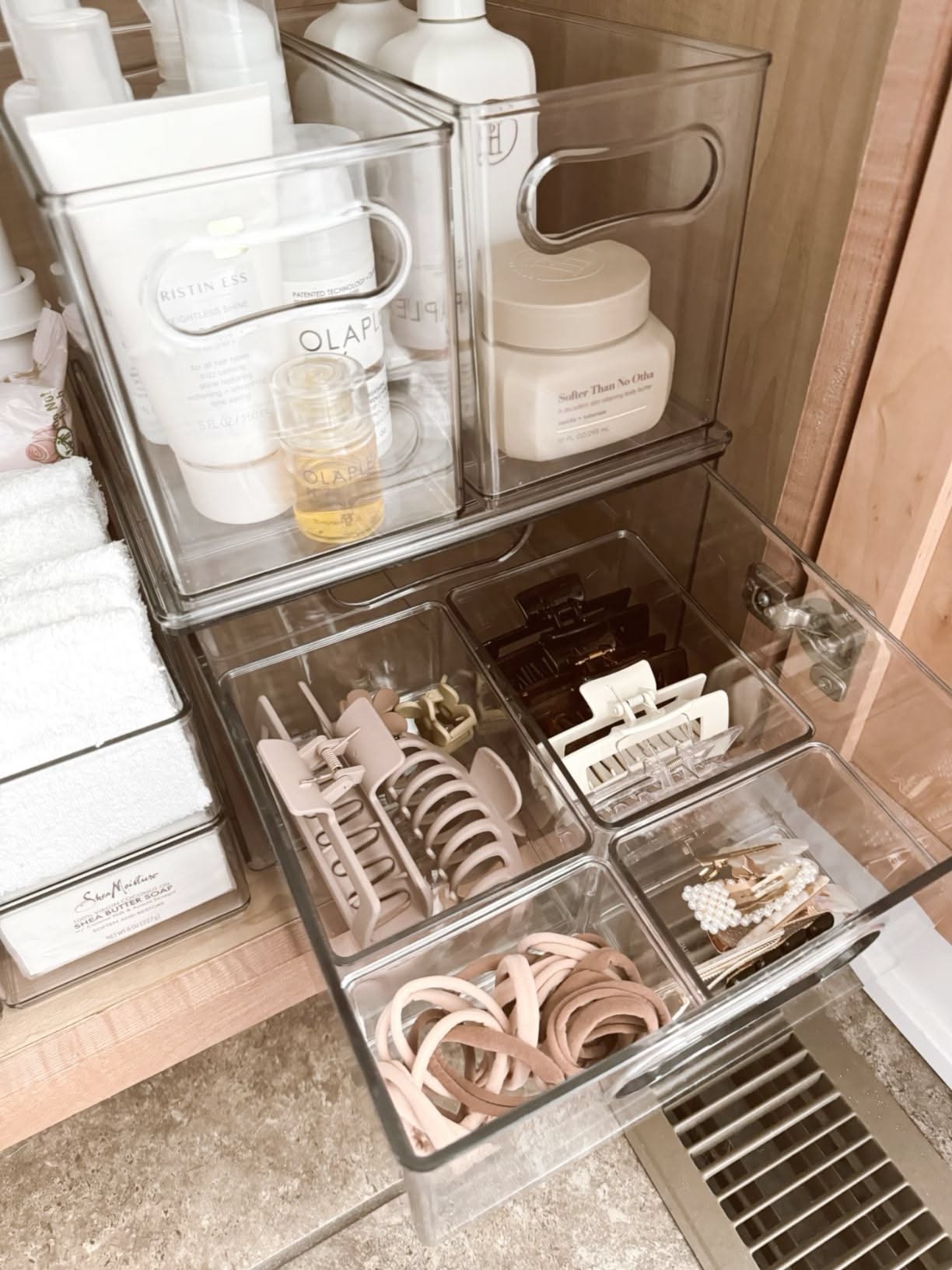
6. Clear Stacking Bins for Hair Products and Accessories
Stackable acrylic bins keep hair care bottles upright while a lower drawer section separates clips, ties, and claws by type. Being able to see contents through clear sides cuts down on the guessing that usually happens with opaque bins. It's a especially useful setup for anyone with a larger hair-tool collection. Customize the compartment sizes around your own accessories.
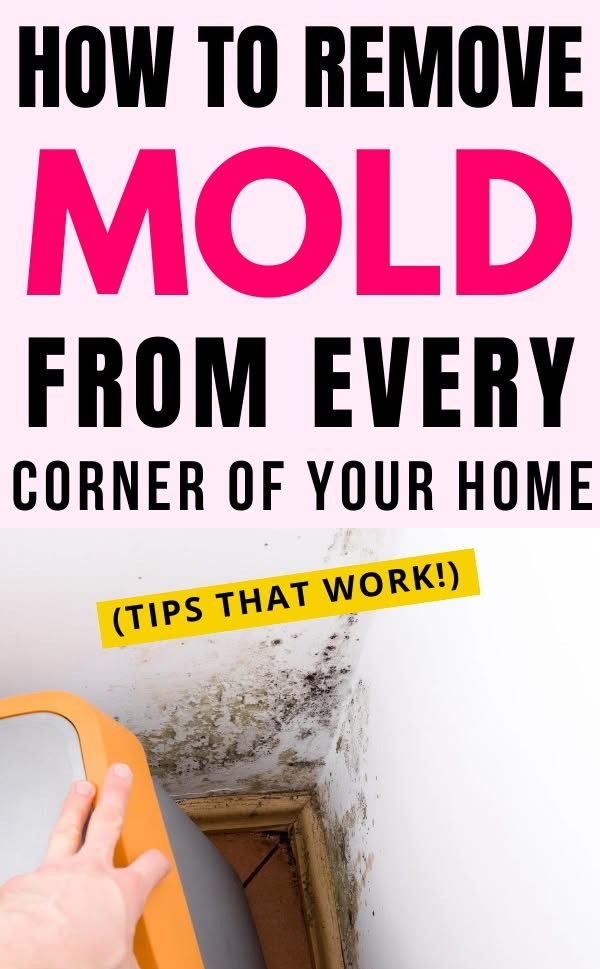
7. Tackling Mold Early Keeps Every Shelf Fresh
Mold in grout lines and corners spreads fast in humid bathrooms, and catching it early protects both your fixtures and any wood or fabric storage nearby. A quick, regular check of tile edges and window sills keeps the space healthier overall. It pairs naturally with any organizing project, since a fresher bathroom makes new shelving look better longer. Keep this maintenance step on your seasonal to-do list.
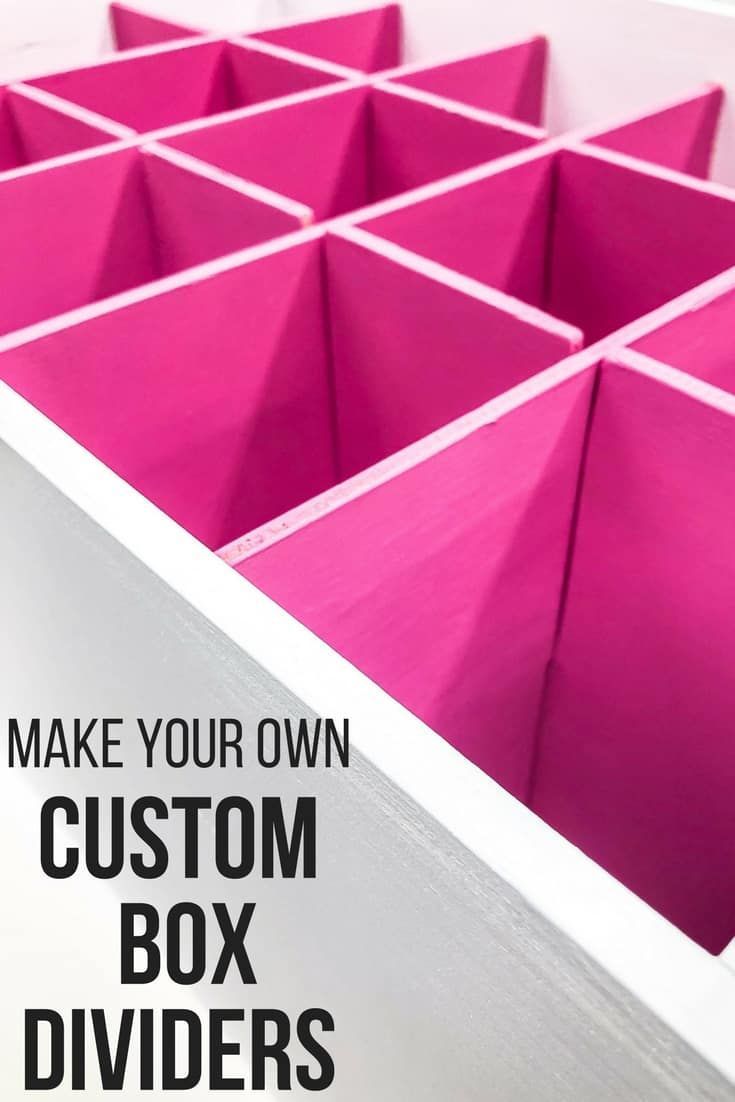
8. DIY Painted Dividers for Custom-Fit Drawer Compartments
Hand-cut, painted dividers let you build compartments to the exact size of what you're storing, rather than settling for a generic tray. A bold color like this one also makes a plain drawer feel more personal. This is a strong option for anyone who wants a tailored fit and doesn't mind a short weekend project. Make it your own with a color that matches your bathroom palette.
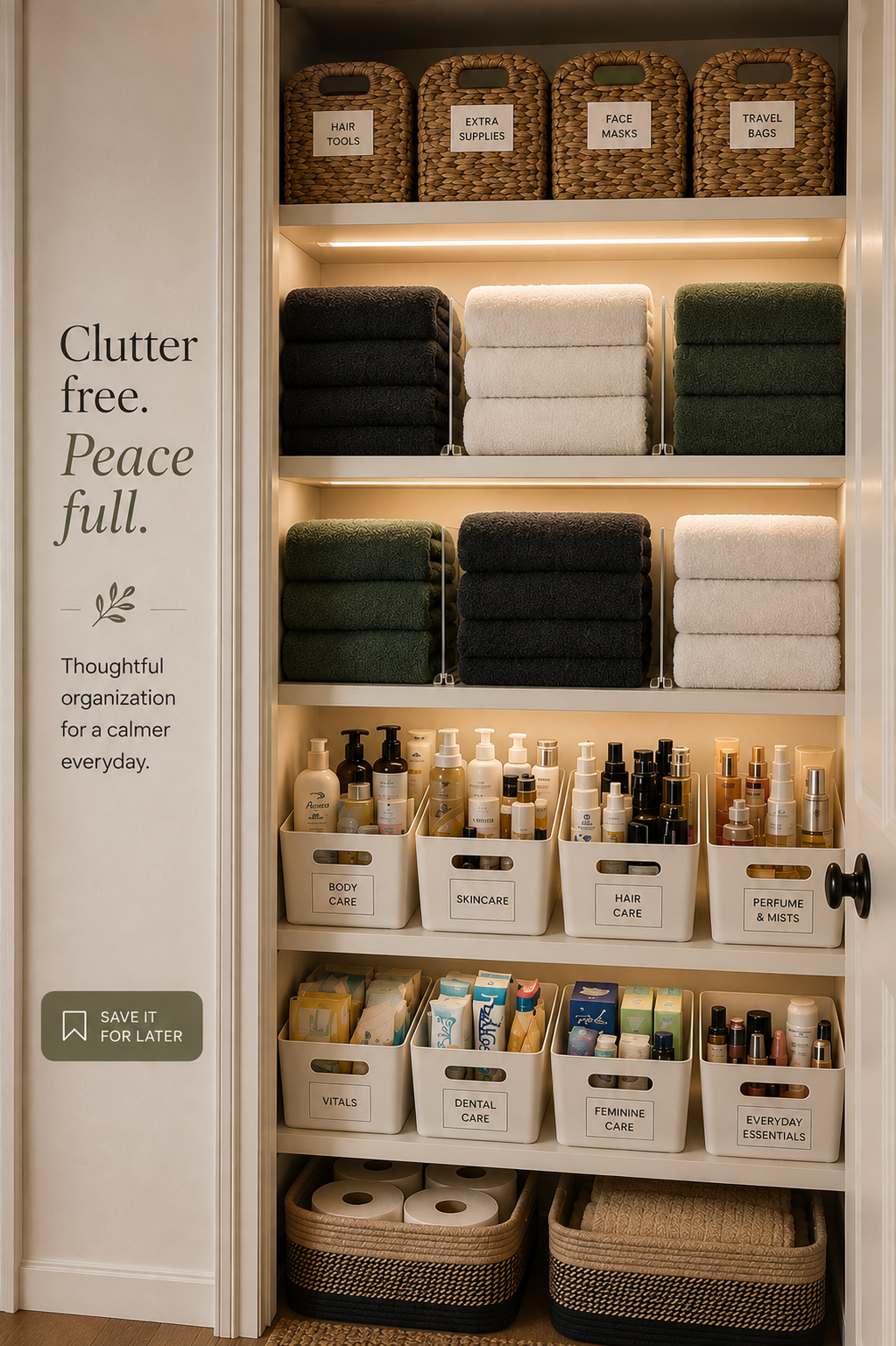
9. A Full Closet System With a Basket for Everything
A tall linen closet with labeled woven baskets — hair tools, extra supplies, face masks, travel bags — alongside neatly folded towel stacks shows how far a full-height system can go. Every category gets its own basket, and stacked towels stay creased-free between shelf dividers. This is the setup to aim for if you have a dedicated closet to work with. Use it as a blueprint and scale the number of baskets to your space.
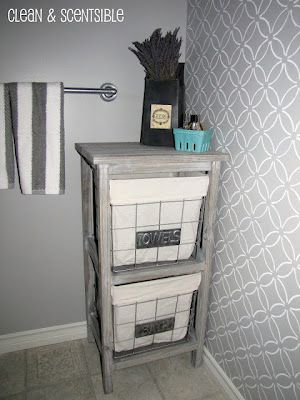
10. A Freestanding Ladder Shelf for Extra Towel Storage
A weathered wood shelf with labeled wire baskets adds standalone storage in bathrooms without much built-in cabinetry. It's a simple, budget-friendly way to add towel storage without any renovation. The open-basket style also keeps the room feeling airy rather than boxed in. Try this if you're renting or just want a flexible piece you can move later.
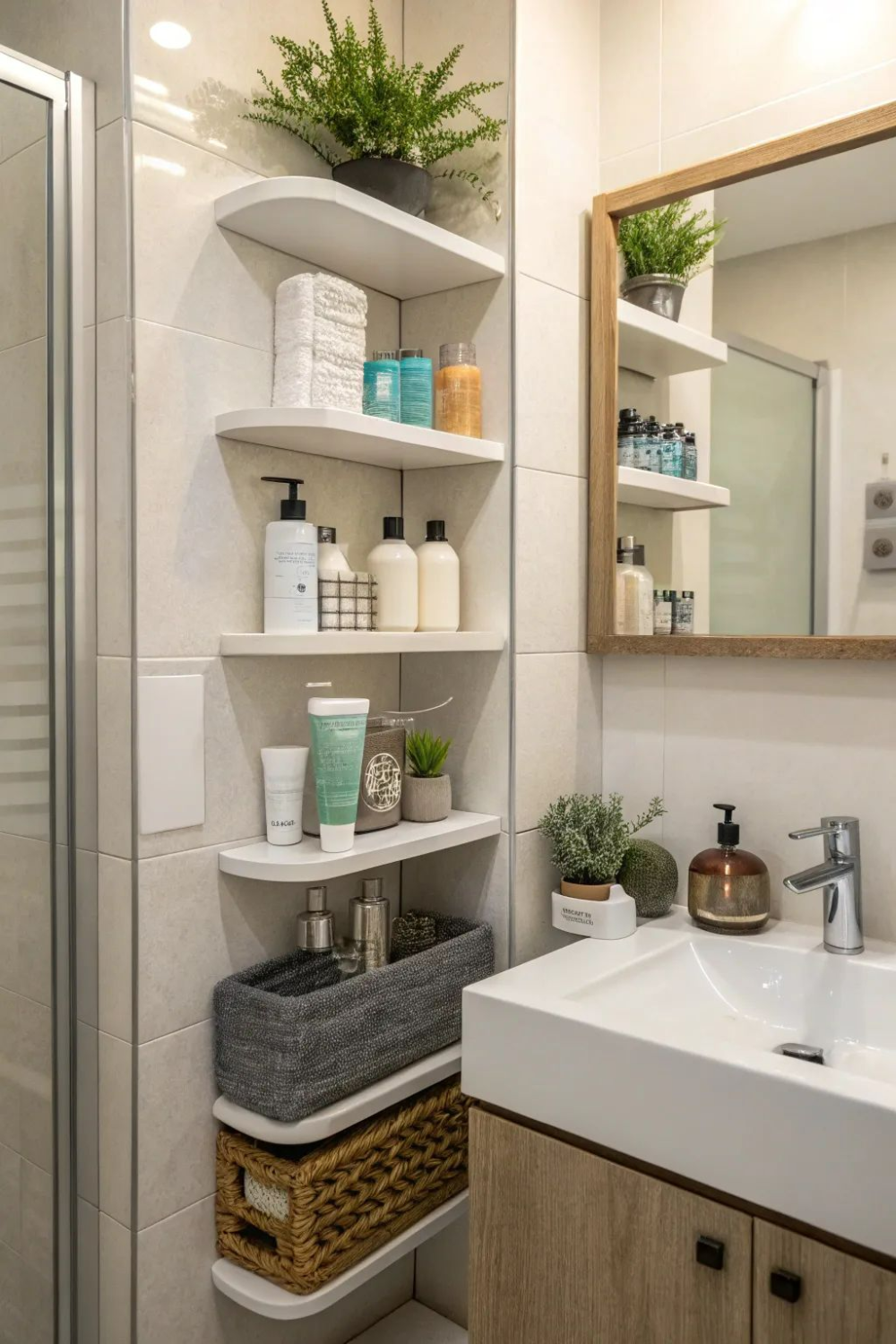
11. Floating Corner Shelves That Make Use of Tight Space
Curved floating shelves tucked into a shower corner make use of a spot that would otherwise sit empty. Stacking a plant, folded towels, and daily bottles across a few tiers keeps everything reachable without crowding the counter. This is a smart pick for narrow bathrooms where every inch of wall matters. Adapt the shelf count to however much vertical space you have.
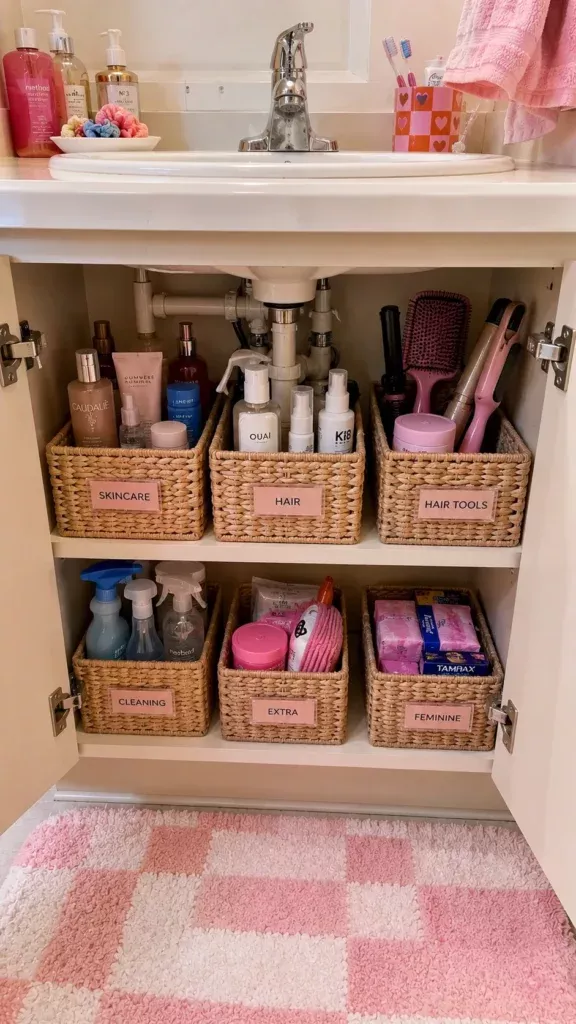
12. Woven Baskets That Bring Warmth to Under-Sink Storage
Labeled woven baskets under the sink sort skincare, hair products, hair tools, cleaning supplies, and feminine care into their own defined spots. The natural texture softens what's usually a purely functional cabinet. This is an easy weekend project that instantly makes an under-sink space feel less chaotic. Recreate the label style with whatever tags or tape you already have on hand.
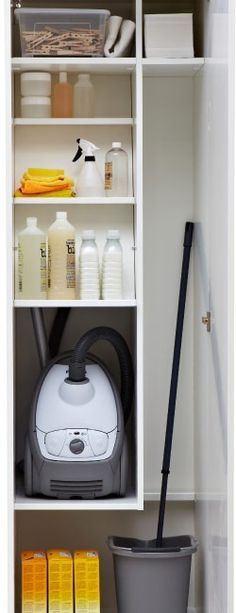
13. A Dedicated Closet for Cleaning Tools and Supplies
A narrow closet with open shelving for cleaning bottles above and a vacuum and mop stored below keeps every cleaning tool in one predictable place. Having a single dedicated spot means less time hunting for supplies before a quick tidy-up. It's a practical layout for anyone short on closet space elsewhere in the house. Bookmark it as a model for your own utility corner.
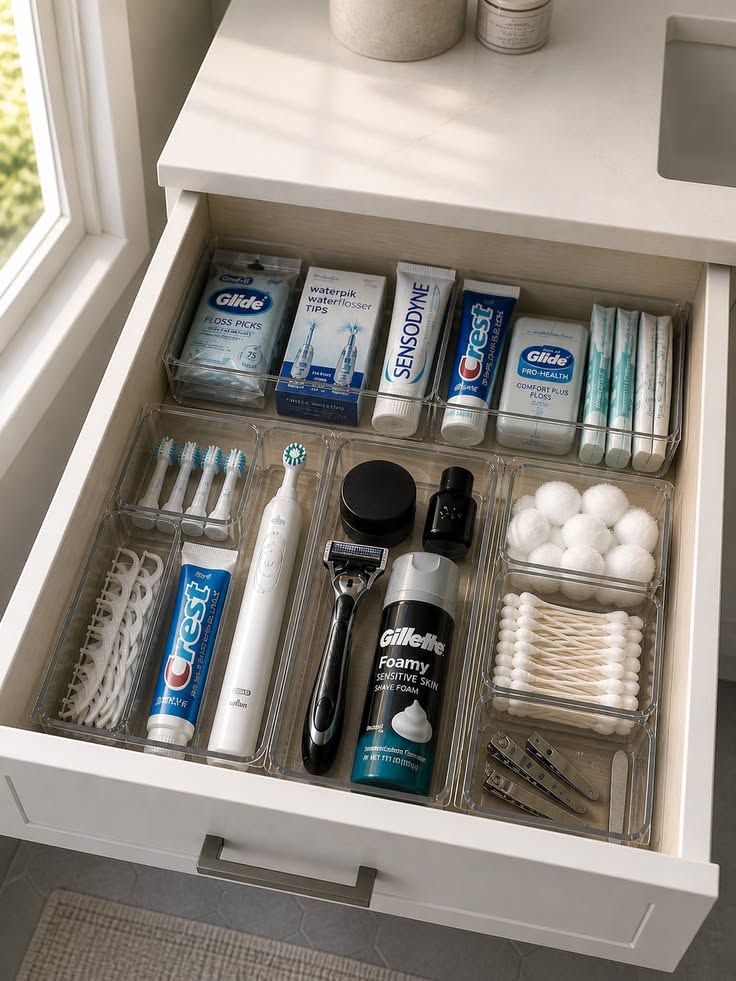
14. Compartmentalized Trays for Daily Grooming Essentials
Fitted acrylic trays separate toothbrushes, floss, razors, and cotton products so a single drawer can hold everyone's morning routine without anything sliding around. Grouping by category rather than by owner keeps restocking simple. This tray system works well for shared bathrooms where several people reach for the same drawer. Use it as a reference the next time you're restocking your own drawer organizers.
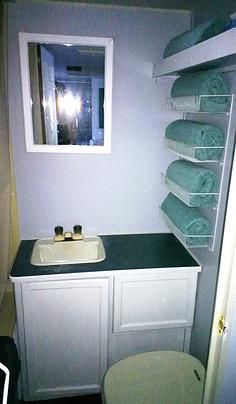
15. A Compact Layout That Proves Small Bathrooms Can Work Hard
A narrow vanity paired with open shelving above shows that a small footprint doesn't have to mean limited storage. Stacked towels on floating shelves free up cabinet space below for daily essentials. It's proof that a compact bathroom can still feel functional with the right shelf placement. Consider this layout if you're working with a similarly tight floor plan.
16. Build-Your-Own Corner Shelving for a Custom Fit
Simple wood shelves installed into an awkward corner turn dead space into genuine storage without needing a full cabinet. Building them yourself means you control the spacing to match exactly what you plan to store. This approach is worth trying if a pre-made shelving unit never quite fits your layout. Adapt the shelf depth and spacing to your own corner.
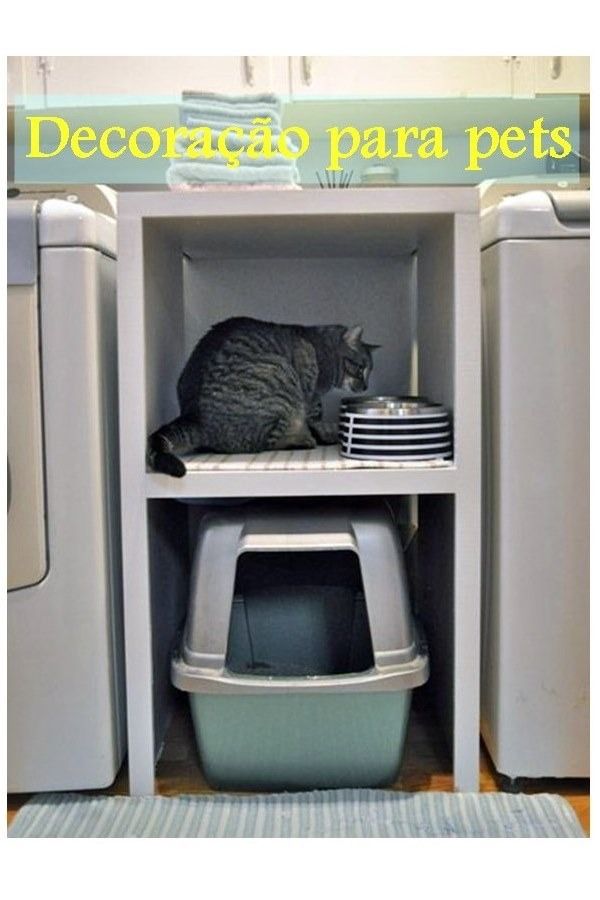
17. Borrowing a Furniture Trick From the Laundry Room
An enclosed cabinet built to hide a litter box between two washers is a reminder that furniture designed to conceal one thing can just as easily hide bathroom supplies instead. The same boxed-in structure could hold a small trash bin, extra rolls, or cleaning tools out of sight. It's a resourceful cross-room idea worth adapting rather than copying exactly. Use the concept, not the contents, for your own hidden storage build.
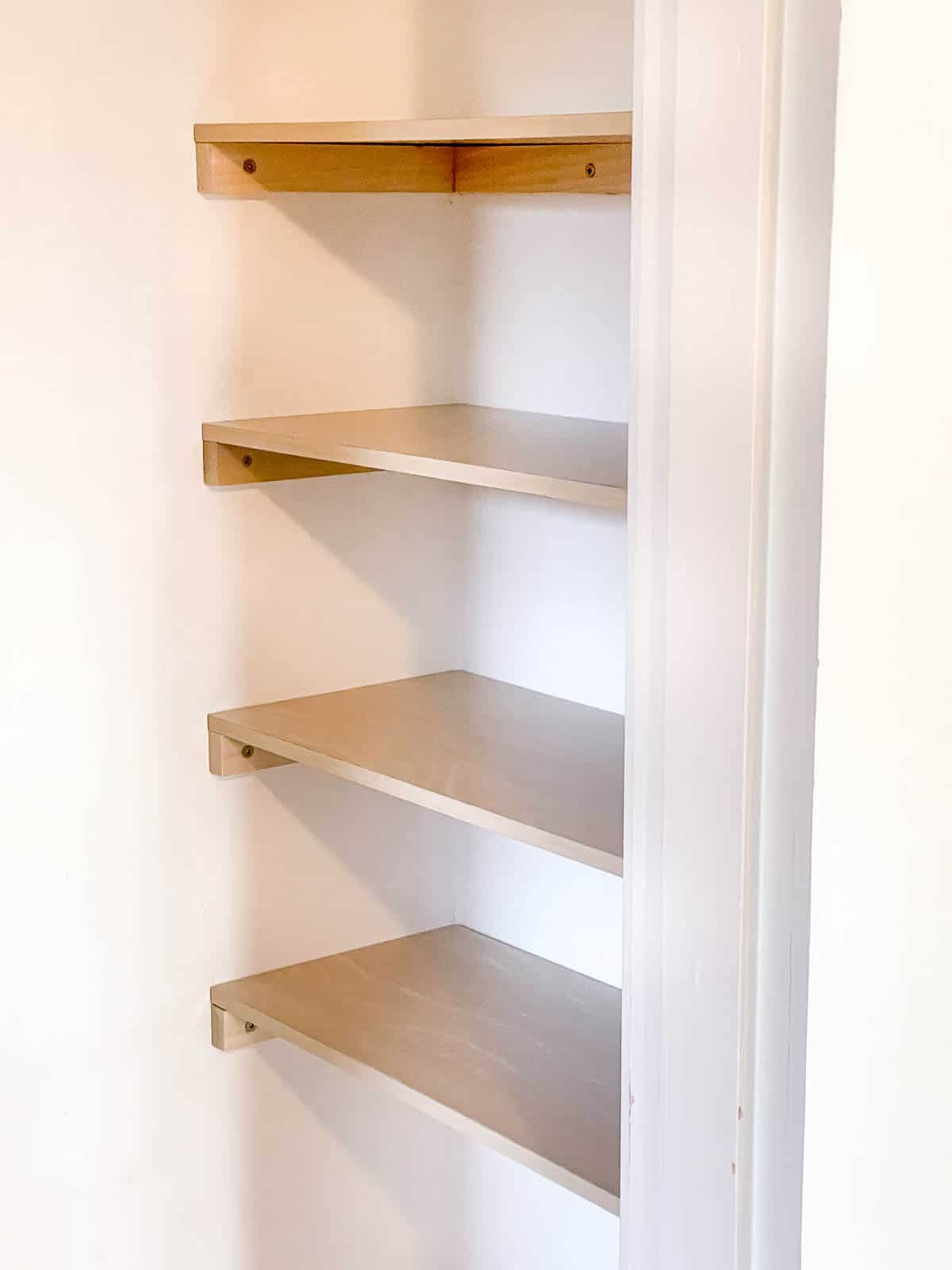
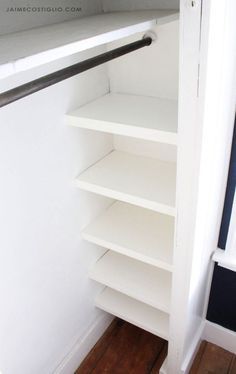
18. A Simple Shelf-and-Rod Combo for a Linen Closet
An empty closet fitted with a hanging rod and a stack of plain shelves shows how little it takes to create flexible storage from scratch. The open shelves can hold folded towels or bins, while the rod handles robes or garment bags. It's an approachable DIY for anyone converting an empty closet into bathroom overflow storage. Keep this layout in mind before you invest in a pre-built system.
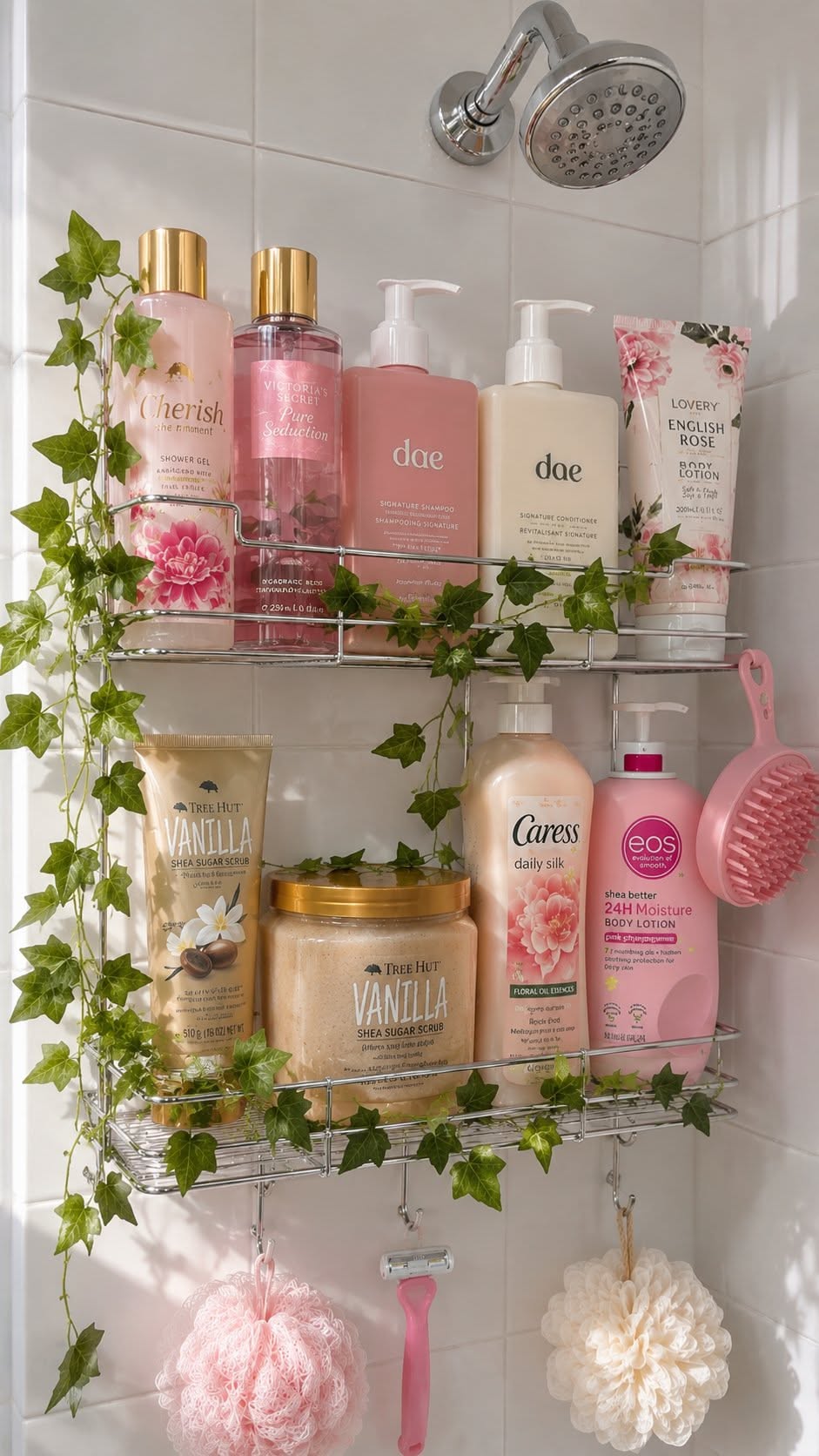
19. A Two-Tier Caddy That Keeps Shower Products Within Reach
A wire shower caddy loaded with shampoo, conditioner, body wash, and scrubs keeps everything within arm's reach without cluttering the tub ledge. Trailing greenery softens the metal hardware and gives the whole corner a more finished look. This setup works well for anyone who prefers a full product lineup over a minimalist shower shelf. Try it if you want your shower storage to feel a little more decorative.
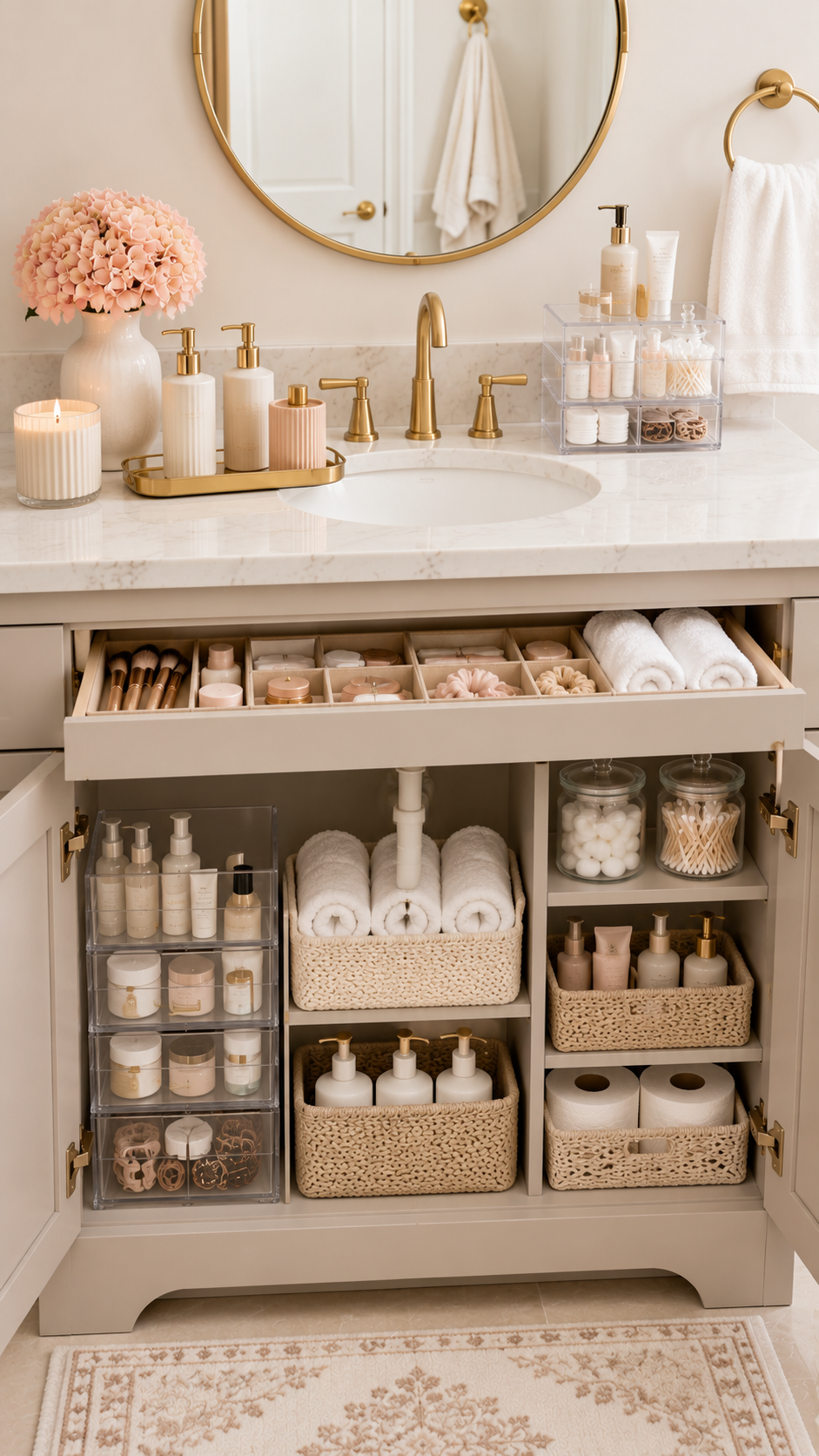
20. A Glam Vanity Setup With Every Drawer Doing Double Duty
An open vanity drawer with velvet-lined compartments for brushes, hair ties, and skincare sits above baskets for towels and toiletries, all finished with brass hardware. It's a setup that treats organization as part of the decor rather than something to hide. This direction suits anyone who wants their storage to feel as polished as the rest of the room. Use it as inspiration for your next vanity refresh.
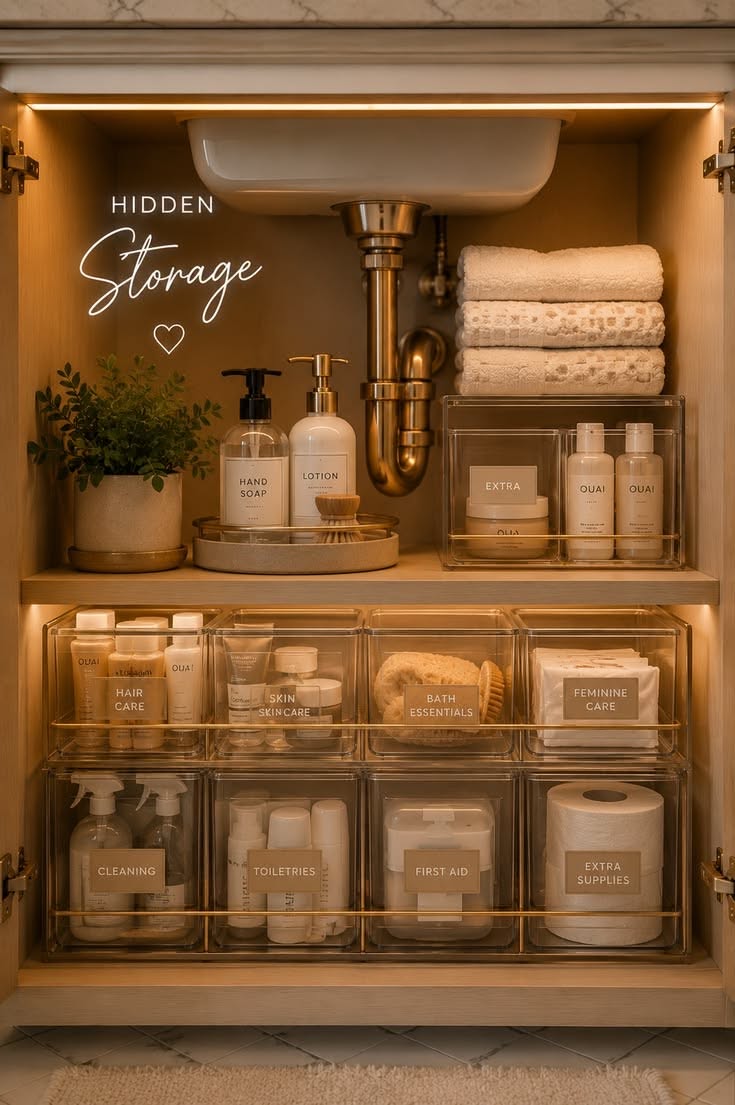
21. Under-Sink Zones Labeled for First Aid, Extras, and More
A fully zoned under-sink cabinet with labeled bins for hair care, skin care, bath essentials, feminine care, cleaning, toiletries, first aid, and extra supplies shows just how much a single cabinet can hold when it's properly sectioned. Soft under-cabinet lighting makes the whole space easier to navigate too. This is a strong model if you're starting an under-sink overhaul from zero. Save it as your labeling checklist.
22. Small Hacks That Add Up to a Big Storage Upgrade
A collection of small storage tricks — from shelf placement to caddy choices — adds up to a meaningfully more organized bathroom without one big renovation. The idea is that incremental changes, tackled one at a time, are often more sustainable than an all-at-once overhaul. This mindset is worth keeping as you work through your own space. Pick one hack to start with this week.
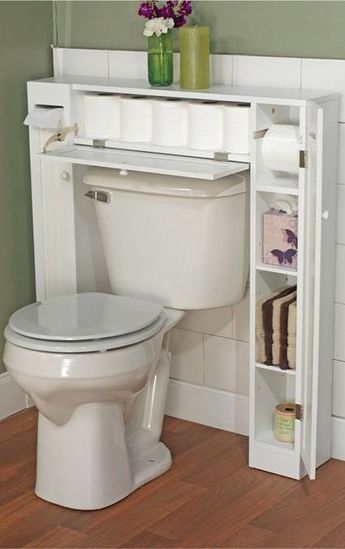
23. An Over-the-Toilet Cabinet That Reclaims Vertical Space
A slim white cabinet built to straddle the toilet adds a paper towel dispenser, a decorative shelf, and side storage compartments in a spot that's usually wasted. It's a straightforward way to add real storage without giving up any floor space. This piece works especially well in smaller bathrooms where every surface counts. Consider it for a quick, ready-made upgrade.
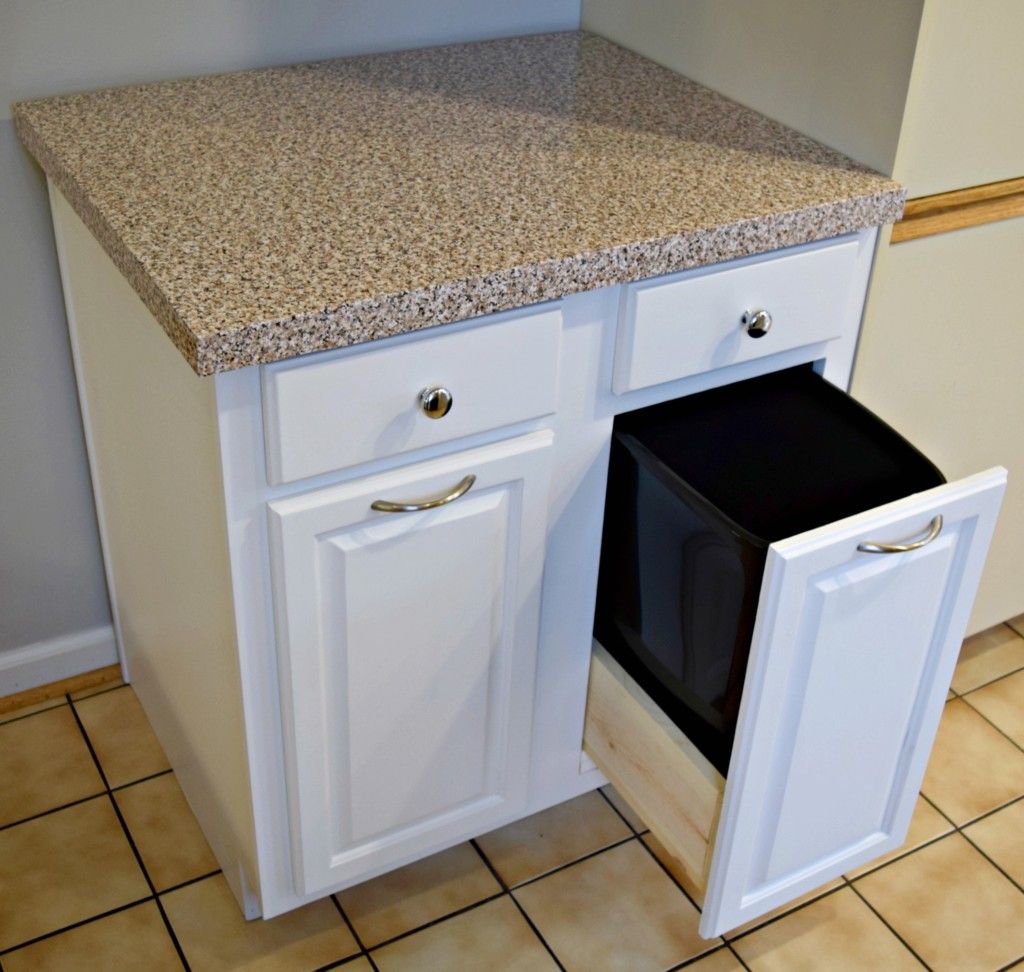
24. A Tilt-Out Bin Trick Worth Borrowing for Bathroom Waste
A tilt-out bin built into a cabinet front, originally designed for a kitchen, is a mechanism worth borrowing for a bathroom vanity. Hiding a trash bin behind a hinged panel keeps it out of sight while staying easy to access. It's a slightly more advanced build, but one that pays off in a cleaner-looking room. Adapt the concept to fit a bathroom cabinet's proportions.
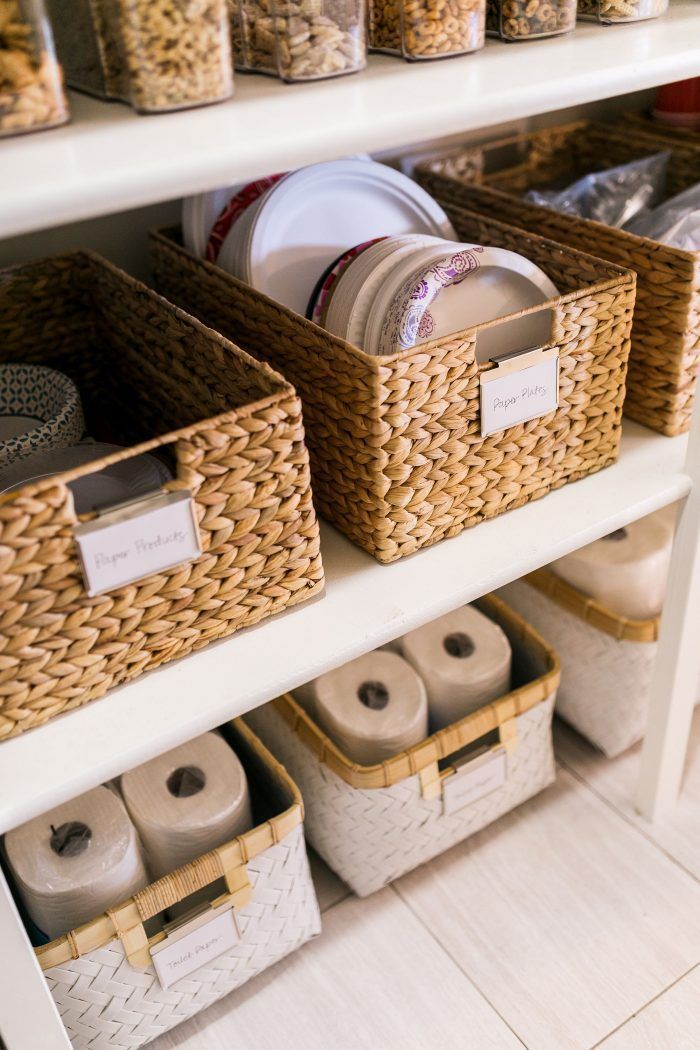
25. Labeled Baskets for Backup Toilet Paper and Paper Goods
Labeled woven baskets sorting paper products and backup toilet paper show how the same labeling system used in a pantry translates directly to a bathroom linen closet. Keeping backup rolls corralled in their own basket means you're never digging through a shelf to find one. This is an easy system to copy for any closet holding paper goods. Try grouping your own backups the same way.
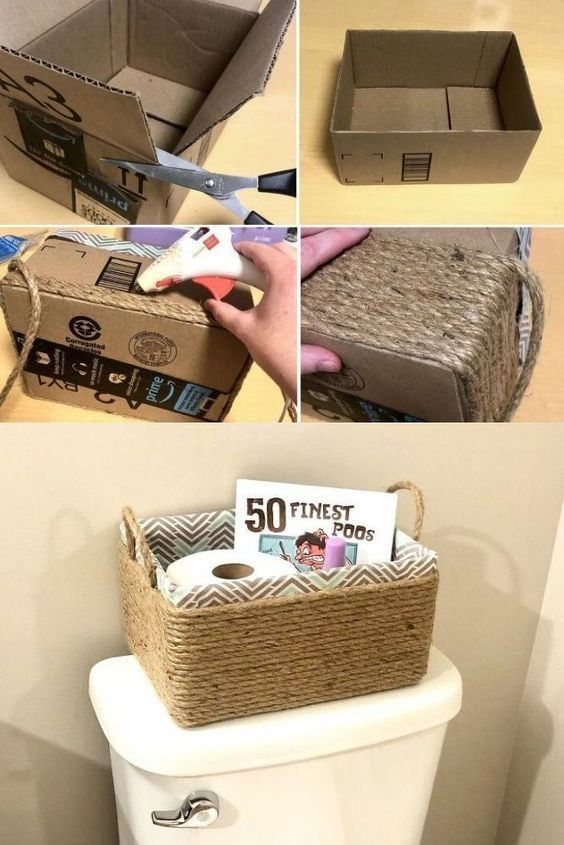
26. A Handmade Rope Basket for Toilet-Top Storage
A rope-wrapped cardboard basket made from a simple box shows that toilet-top storage doesn't require a store-bought piece. Lined and wrapped by hand, it holds spare rolls and reading material while adding texture to a plain tank lid. It's a low-cost project for anyone who enjoys a quick DIY. Personalize it with a fabric lining that matches your own bathroom.
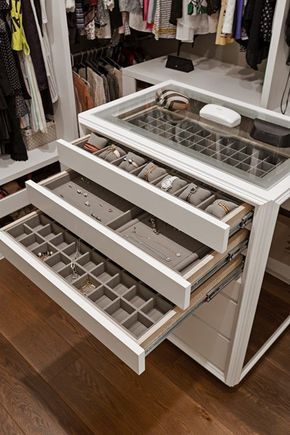
27. Velvet-Lined Trays Borrowed From Closet Organization
Deep drawers with velvet-lined, gridded trays are designed for jewelry, but the same tray style works just as well for organizing hair accessories, rings, or small grooming tools on a bathroom counter. The soft lining keeps delicate items from sliding or scratching. This is a cross-room idea worth trying if you want a more refined look for small items. Borrow the tray style for your own vanity drawer.
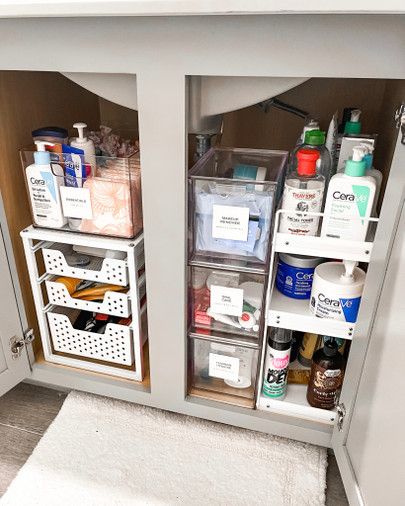
28. A Side-by-Side System for Skincare and Daily Basics
Two adjoining under-sink cabinets, one with a sliding basket unit and the other with stacked clear drawers, split skincare and daily basics into their own defined zones. Keeping two systems side by side rather than one crowded cabinet makes restocking noticeably faster. This layout suits anyone with a double-cabinet vanity looking to maximize both sides. Use it as a starting point for your own side-by-side setup.
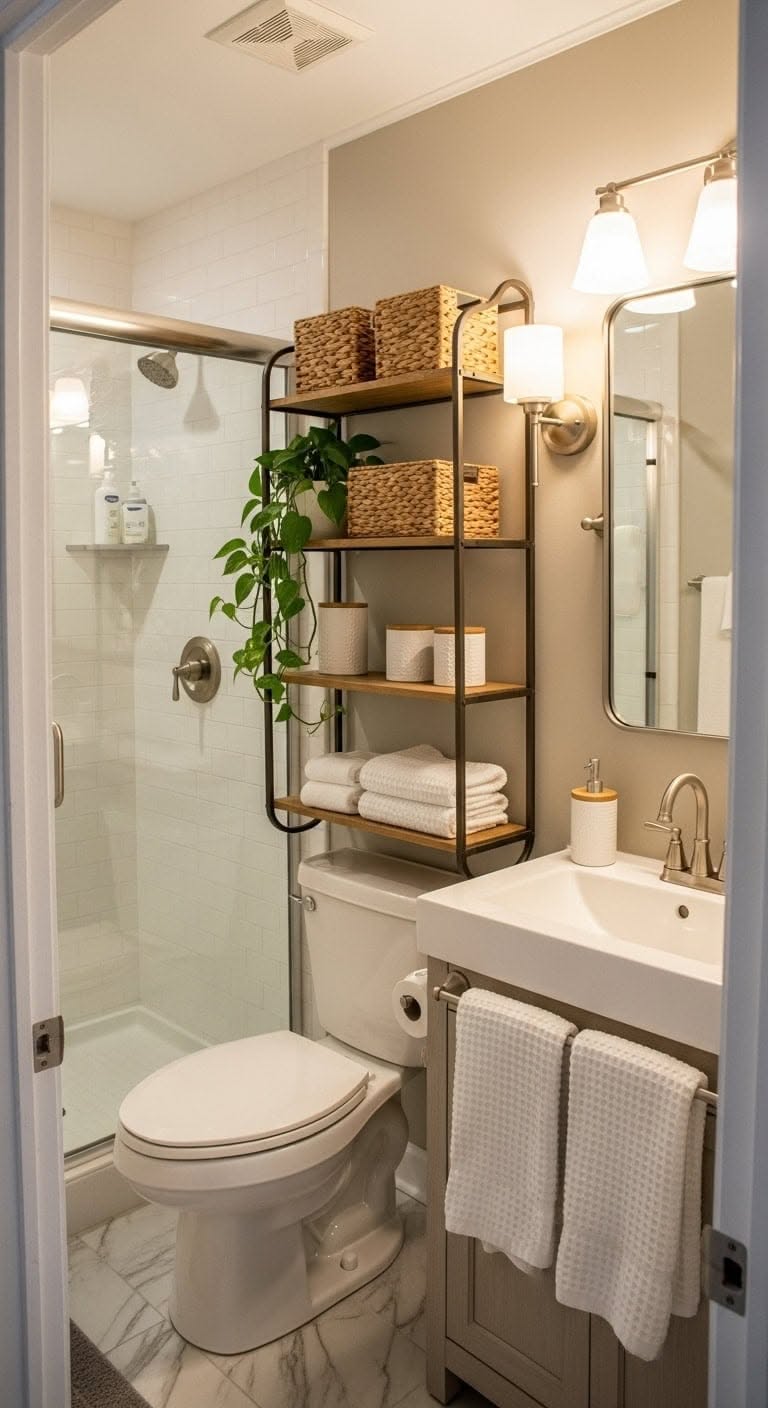
29. An Industrial Shelf Unit That Adds Storage Above the Toilet
A metal-and-wood shelving unit mounted above the toilet holds woven baskets, canisters, and folded towels while a trailing plant softens the industrial frame. It's a strong option for bathrooms that need storage but don't have room for a full cabinet. The open shelving also keeps the space feeling airy rather than closed in. Consider this style if your bathroom leans more modern than traditional.
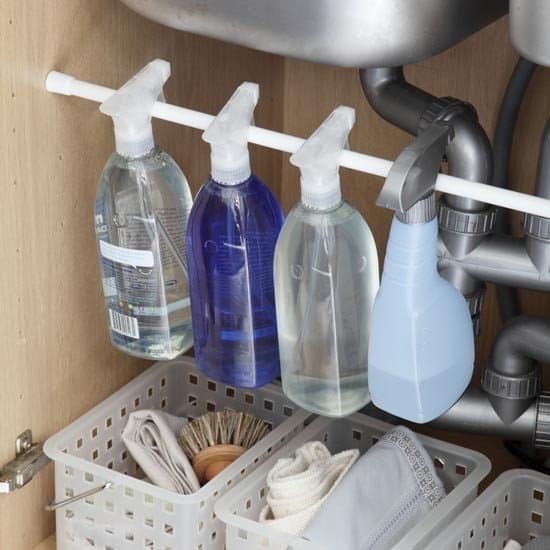
30. A Tension Rod Hack That Frees Up Shelf Space
A simple tension rod mounted under the sink lets spray bottles hang by their trigger handles instead of taking up shelf space below. It's a nearly free fix that instantly opens up room for baskets and bins underneath. This hack is worth trying before you buy any additional organizers for that cabinet. Add it to your list of quick under-sink wins.
How to Organize Your Bathroom for Long-Term Function
The systems that hold up over time all share a few habits. Start by grouping items into categories that match how you actually use them — daily essentials, backups, cleaning supplies, and occasional-use products each deserve their own zone rather than one shared shelf. Clear bins and labels matter more than they seem to; being able to see and identify contents at a glance is what keeps a system from sliding back into clutter within a few weeks.
Vertical space is often the most underused resource in a bathroom. Floating shelves, over-the-toilet units, and door-mounted caddies can add meaningful storage without touching the floor plan, which matters most in smaller layouts. Inside cabinets, stackable bins and drawer dividers make use of height that would otherwise sit empty above a single row of bottles.
When you organize your bathroom, match the storage style to how often an item gets used. Daily products belong at eye level or in the top drawer; backups and rarely used items can move to a higher shelf or a labeled basket further back. Woven baskets and acrylic organizers both work well, so choose based on whether you want a warmer, textured look or a cleaner, more visible one.
Finally, build in a light maintenance routine. A quick reset every week — wiping down surfaces, returning items to their labeled spot, and checking for anything that's crept out of its zone — keeps even an ambitious system from unraveling. The goal isn't a perfect bathroom every single day; it's a layout simple enough that putting things back is easier than leaving them out.
Frequently Asked Questions About Organizing Your Bathroom
What's the easiest place to start when you organize your bathroom? Start under the sink, since it's usually the most crowded and least categorized space. Sort everything into groups like cleaning, skincare, and backups, then add bins or baskets for each group. This single cabinet often makes the biggest visible difference for the least effort.
Do I need to buy matching bins for a cohesive look? No — consistency in color or material helps visually, but function matters more than a perfect match. Clear bins are useful because you can see contents without opening them, while woven baskets add warmth to open shelving. Choose based on your storage needs first, aesthetics second.
How often should under-sink storage be reorganized? A quick check every few months is usually enough, especially after buying new products or finishing old ones. Pull everything out, wipe the cabinet down, and only put back what you're actually using. This prevents half-empty bottles from quietly taking up space indefinitely.
What's the best way to store backup toiletries? Group backups by category in labeled bins or baskets on a higher shelf, separate from daily-use items. This keeps your most-used products easy to grab while backups stay out of the way until needed. A dedicated "extras" bin also makes it obvious when it's time to restock.
Are floating shelves a good option for small bathrooms? Yes, floating shelves add storage without using floor space, which makes them especially useful in tight layouts or awkward corners near a shower. They work well for towels, plants, and frequently used bottles. Just avoid overloading a single shelf, since visual clutter can make a small room feel smaller.
How can I keep drawers from becoming a junk catch-all? Add dividers or small trays so every item has a defined spot rather than a general drawer to toss things into. When a drawer only has room for what belongs there, it naturally resists becoming a catch-all. Revisiting the layout every few months keeps it working as intended.
Is it worth labeling bins if I live alone? Labels still help even in a single-person household, mainly because they remove the guesswork of remembering which bin holds what. They also make it much easier to put things back correctly in a hurry. It's a small step that keeps a system consistent over the long run.
Bringing all of these ideas together comes down to matching the system to your space and your habits, not copying a layout exactly. A small bathroom might only need a tension rod hack and a couple of labeled bins, while a larger linen closet can handle a full basket-and-bin system with room to spare. What matters most is that every category — daily essentials, backups, cleaning supplies, and specialty items — has one clear, consistent home. Once you organize your bathroom around those categories rather than around whatever container you happen to have on hand, maintaining it becomes far less effort. Pick two or three ideas from this list that fit your current setup, try them first, and build outward from there as you see what actually works for your routine.