How to Make a Small Kitchen Look Bigger: 15 Smart Ideas

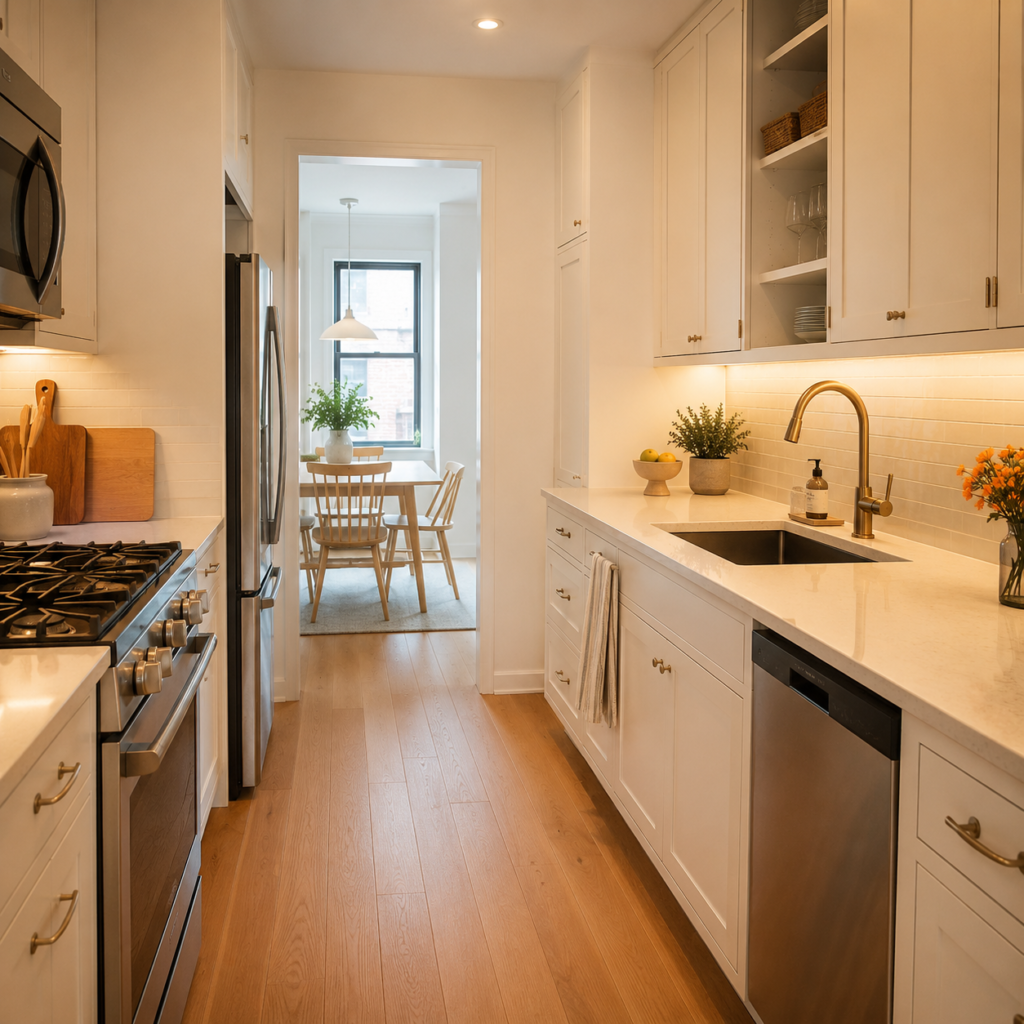
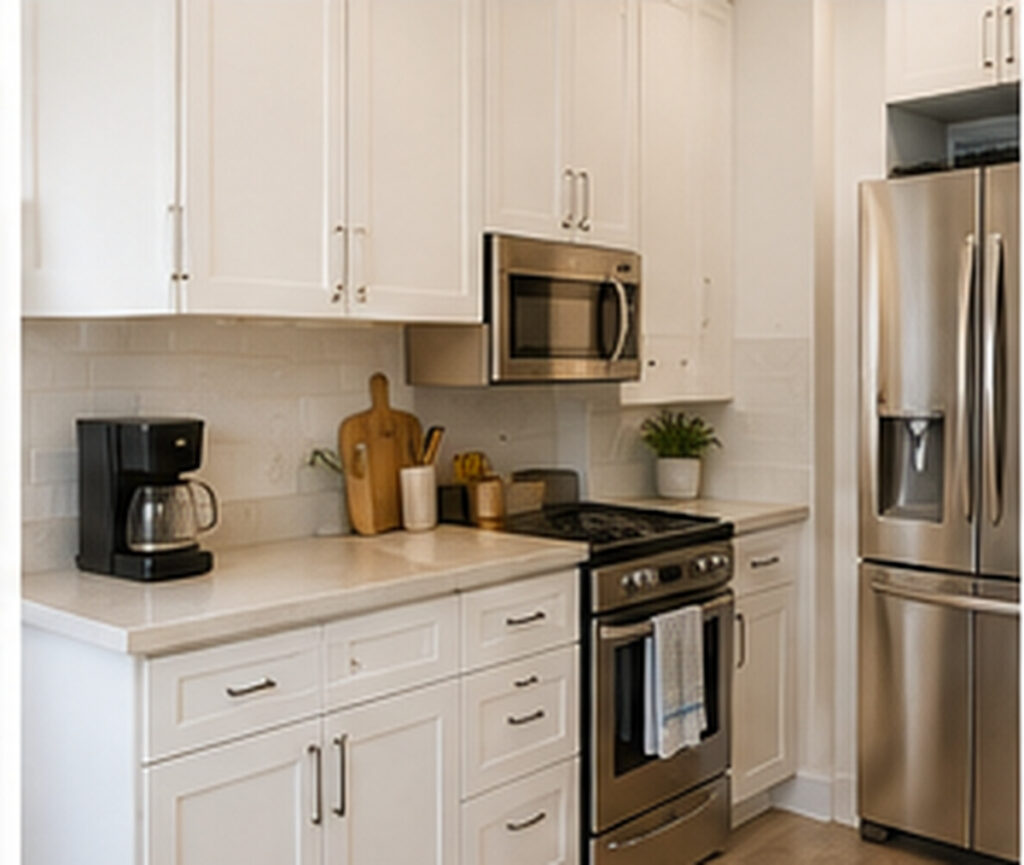
A small kitchen can feel cramped long before it actually runs out of usable square footage. Crowded countertops, bulky cabinet hardware, poor lighting, deep cabinets, and too many visible items can make even a functional kitchen feel tighter than it needs to.
The good news is that you do not necessarily need to remove a wall or start an expensive remodel to make a small kitchen look bigger. Strategic decluttering, better storage, lighter finishes, improved lighting, and a few smart design decisions can dramatically change how open the room feels.
One of the most important principles is to treat storage and visual space as part of the same problem. The original design inspiration also emphasizes starting with decluttering and carefully planning the kitchen layout instead of simply adding more organizers.
Below are 15 practical ideas you can use in an apartment kitchen, narrow galley kitchen, compact L-shaped kitchen, or any space where every inch matters.
What Wasn’t Working in This Small Kitchen
Small kitchens usually struggle with several problems at once.
Countertops become permanent storage for appliances, spices, utensils, and food packages. Upper cabinets can make the room feel visually heavy. Deep lower cabinets hide items behind one another, while awkward corners become storage spaces nobody wants to use.
Another common problem is trying to fit the storage habits of a large kitchen into a much smaller footprint.
When every cabinet is completely full, there is nowhere for new groceries or frequently used items to go. The result is usually countertop clutter.
Poor lighting makes the problem even more noticeable. Dark corners, heavy finishes, and shadows under upper cabinets visually reduce the room.
The goal is not simply to squeeze more things into the kitchen. It is to create enough functional storage while keeping the room visually calm.
The Plan for a More Spacious Small Kitchen
The most effective small-kitchen plan should accomplish six things:
- Reduce unnecessary countertop clutter.
- Make everyday items easier to reach.
- Use vertical cabinet space efficiently.
- Keep visual lines as uninterrupted as possible.
- Improve lighting across work surfaces.
- Create enough empty space that cabinets do not immediately become cluttered again.
That last point matters more than it seems.
A cabinet filled to 100% capacity might technically store more, but it becomes frustrating to use. Leaving a small amount of breathing room makes it easier to remove and replace items without rearranging an entire shelf.
What You’ll Need
You do not need every organizer on this list. Choose products according to the storage problems you actually have.
Organization Supplies
- Drawer dividers
- Shelf risers
- Stackable food containers
- Turntables for appropriate cabinets
- Clear or matching bins
- Vertical tray dividers
- Under-shelf baskets
- Cabinet-door organizers
- Small baskets for grouped items
- Labels
- Hooks or adhesive organizers
- Slim storage containers
Tools
- Measuring tape
- Pencil
- Notepad
- Level
- Screwdriver
- Drill if installing permanent organizers
- Cleaning cloths
- Multipurpose cleaner
Budget Tip: Declutter and measure before buying organizers. You may discover that removing unused items solves half of the storage problem without purchasing anything.
Measure Before Buying Kitchen Organizers
Small kitchens leave very little room for organizers that almost fit.
Measure the usable width, height, and depth of each cabinet—not just the exterior cabinet dimensions.
Pay particular attention to hinges, pipes, shelf supports, doors, and cabinet frames that reduce usable space.
For drawers, measure interior width and depth as well as usable height. An organizer can technically fit inside the drawer but still prevent it from closing.
Upper cabinets deserve the same attention. If there is substantial unused space above dishes or mugs, a shelf riser may be more valuable than another container.
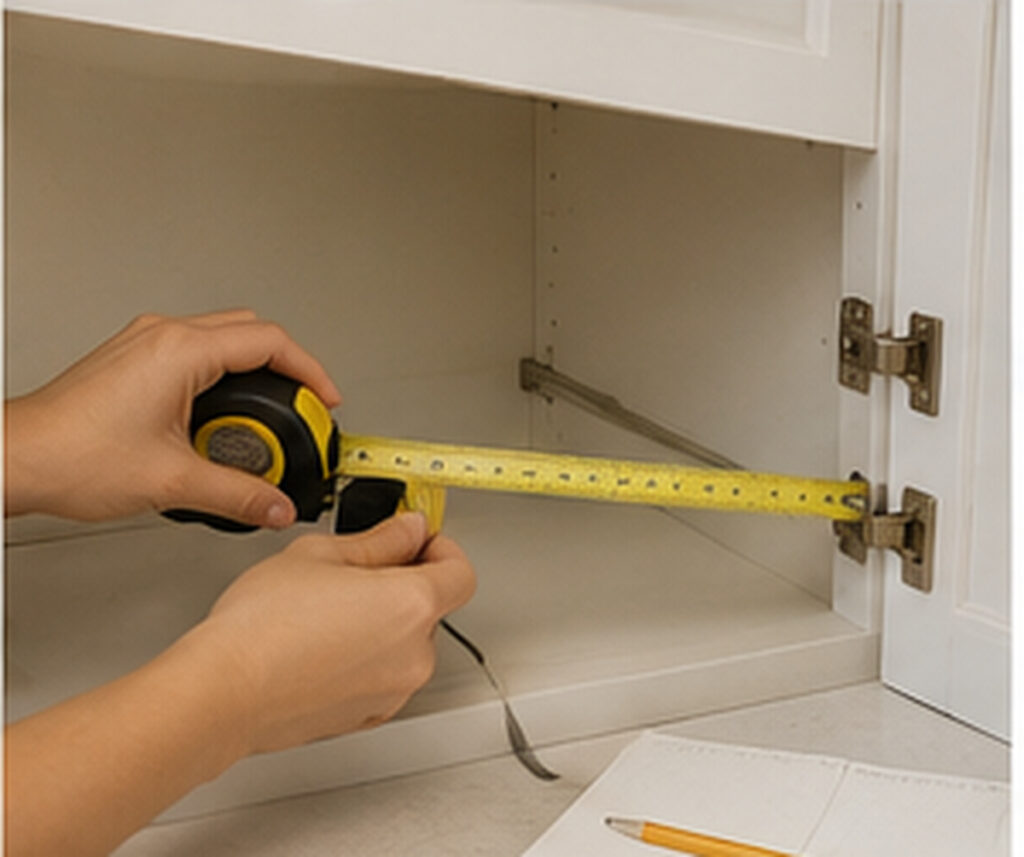
Organization Tip: Save your measurements in your phone. When you find an organizer later, you can immediately check whether it will fit instead of guessing.
How to Make a Small Kitchen Look Bigger
1. Start by Removing Visual Clutter
The fastest change usually comes from clearing the countertops.
Remove appliances you rarely use, duplicate utensils, unopened gadgets, decorative objects that take up preparation space, and food packages that can be stored elsewhere.
Keep only the items that genuinely need to remain accessible.
If you make coffee every morning, keeping the coffee machine out makes sense. A large appliance used twice a month probably belongs inside a cabinet or another storage area.
The objective is not an empty showroom kitchen. You simply want enough clear counter space to create long uninterrupted surfaces.
Longer visible surfaces make the kitchen feel calmer and more spacious.
2. Create Zones Based on How You Cook
Instead of storing items wherever they fit, organize them around specific activities.
A practical small-kitchen setup might include:
- Coffee and beverage zone
- Food preparation zone
- Cooking zone
- Baking zone
- Cleaning zone
- Everyday dish zone
- Food storage zone
Keep chopping boards and knives close to the main preparation area. Store pots near the stove. Place everyday dishes somewhere easy to unload from the dishwasher or drying rack.
Good zoning reduces the number of times you need to cross a tiny kitchen while preparing a meal.
It also prevents random items from spreading across several cabinets.
3. Use Vertical Cabinet Space
Look upward before deciding you have run out of storage.
Many cabinets contain a surprising amount of unused space between the top of one stack and the shelf above it.
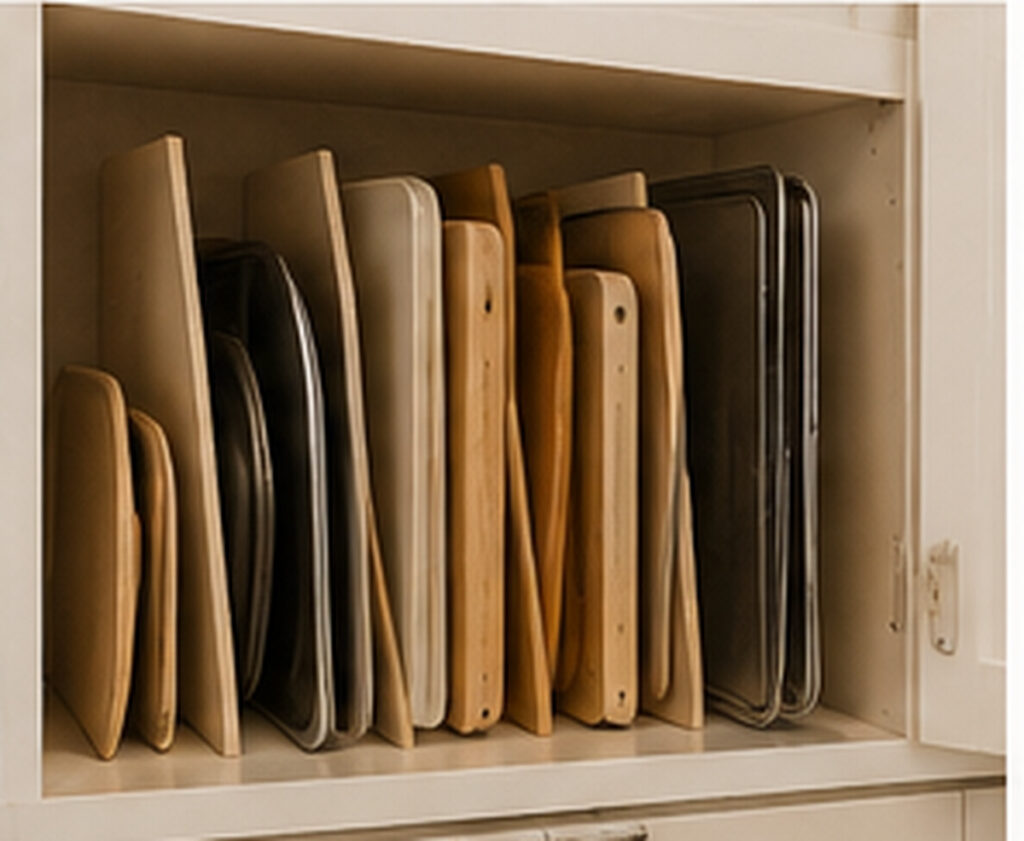
Shelf risers can create two levels for plates, mugs, bowls, canned goods, or pantry staples. Vertical dividers can organize baking sheets, cutting boards, serving trays, and pan lids without stacking them horizontally.
The source inspiration similarly recommends maximizing vertical storage instead of relying only on horizontal cabinet space.
The important part is accessibility.
Avoid stacking so many items vertically that removing one item requires dismantling everything around it.
4. Choose a Light, Consistent Color Palette
Color does not physically enlarge a kitchen, but it strongly affects how visually heavy the space feels.
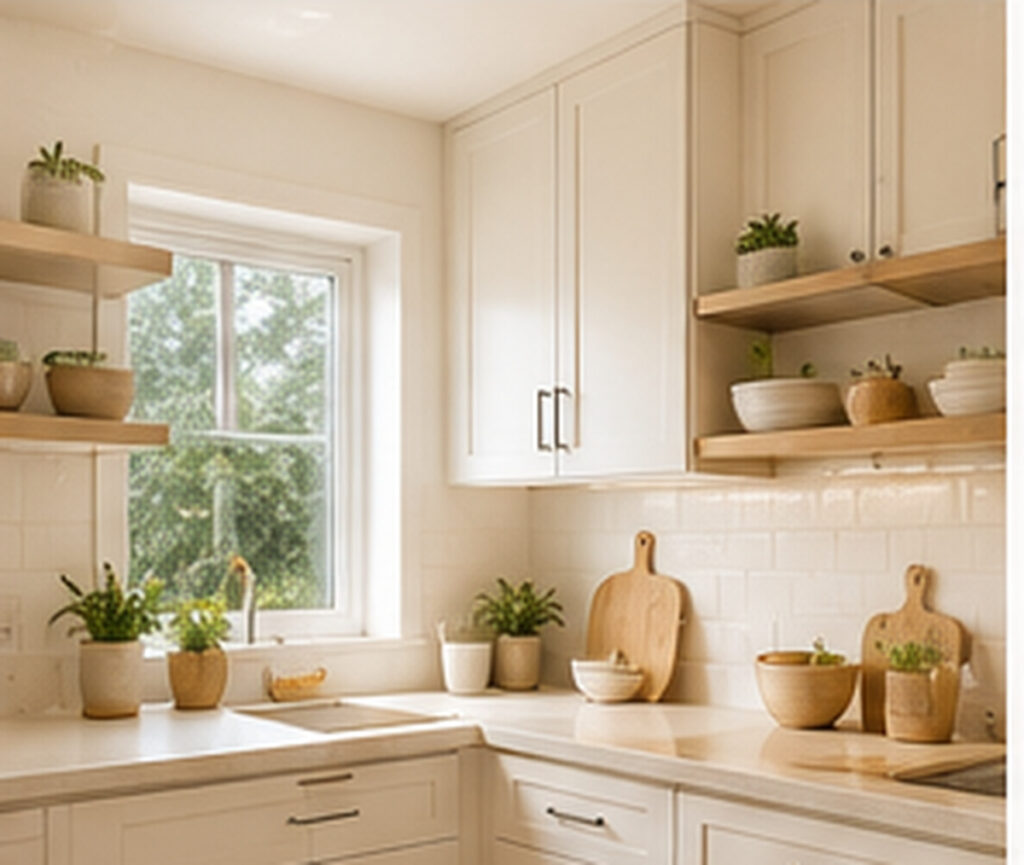
White, warm white, cream, pale beige, soft greige, and other light neutrals can help cabinetry and walls reflect more available light.
Using similar tones across walls and larger cabinetry surfaces also reduces sharp visual interruptions.
You do not need an entirely white kitchen.
Wood accents, brass hardware, dark fixtures, colorful accessories, or a backsplash can add warmth without overwhelming the room.
The source article also highlights neutral palettes and reflective finishes as ways of creating a more visually open small kitchen.
5. Improve Under-Cabinet Lighting
A ceiling fixture cannot always illuminate countertops hidden beneath upper cabinets.
That creates dark horizontal bands around the room.
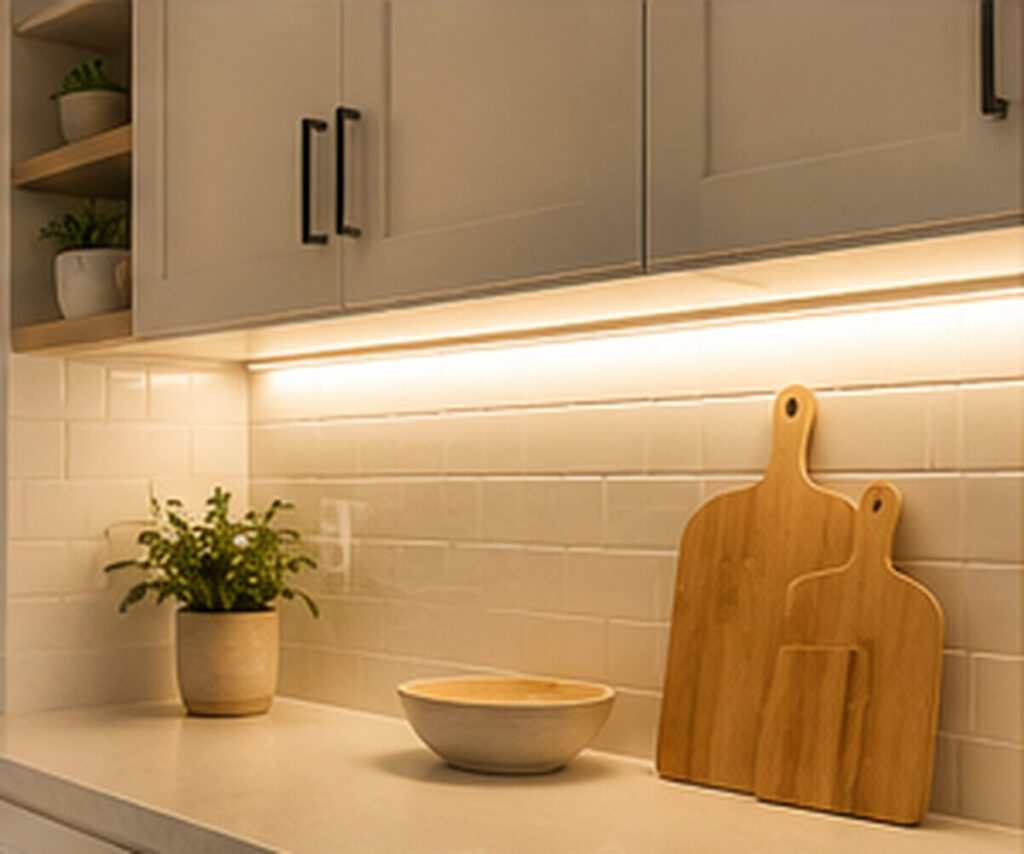
Adding under-cabinet lighting makes work surfaces easier to use while visually opening the space between the countertop and upper cabinetry.
LED strips or slim under-cabinet fixtures work particularly well because they require very little physical space.
Natural daylight should also remain unobstructed whenever possible.
Avoid covering a small kitchen window with oversized decorations, plants, or heavy window treatments.
Better lighting is specifically identified in the source as an important part of preventing a small kitchen from looking darker and tighter than it actually is.
6. Keep Cabinet Hardware Visually Simple
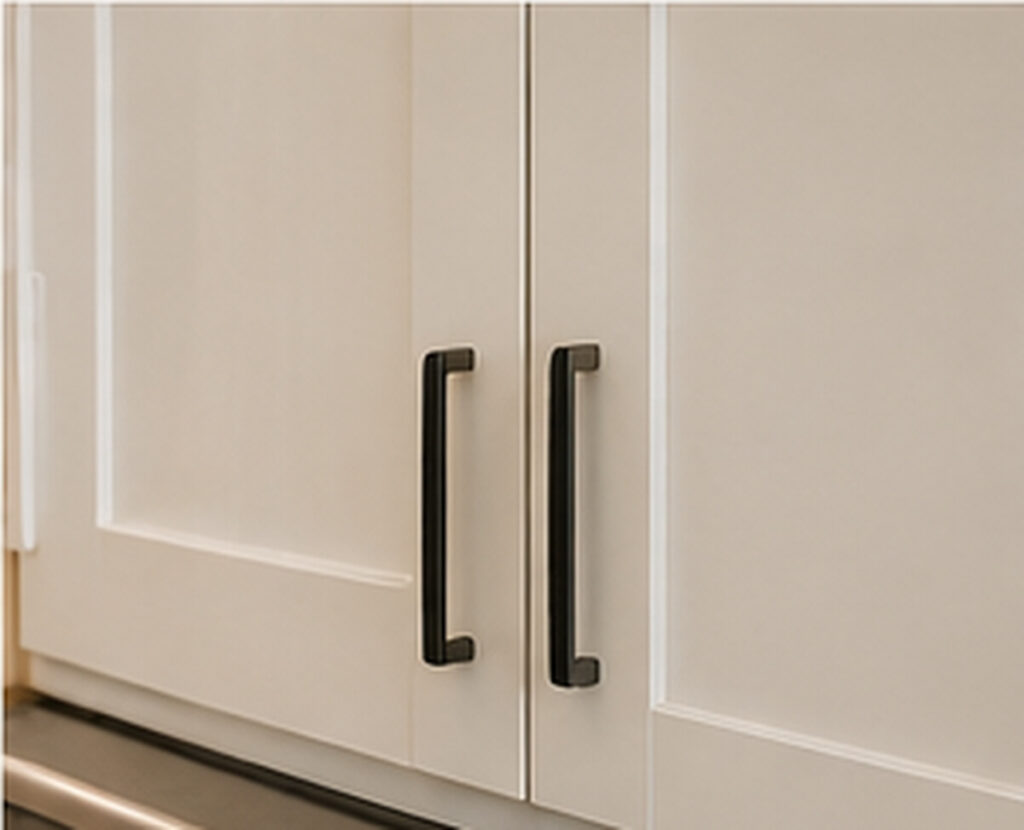
Large handles are beautiful in the right space, but rows of prominent hardware can create additional visual lines across a compact kitchen.
Slim pulls, compact knobs, integrated handles, or handleless cabinetry can make the cabinet fronts appear cleaner.
This works especially well when upper and lower cabinets already have a simple, consistent finish.
You do not necessarily need to replace the cabinetry.
Changing outdated oversized hardware can provide a similar visual improvement for considerably less money.
7. Use Glass Strategically
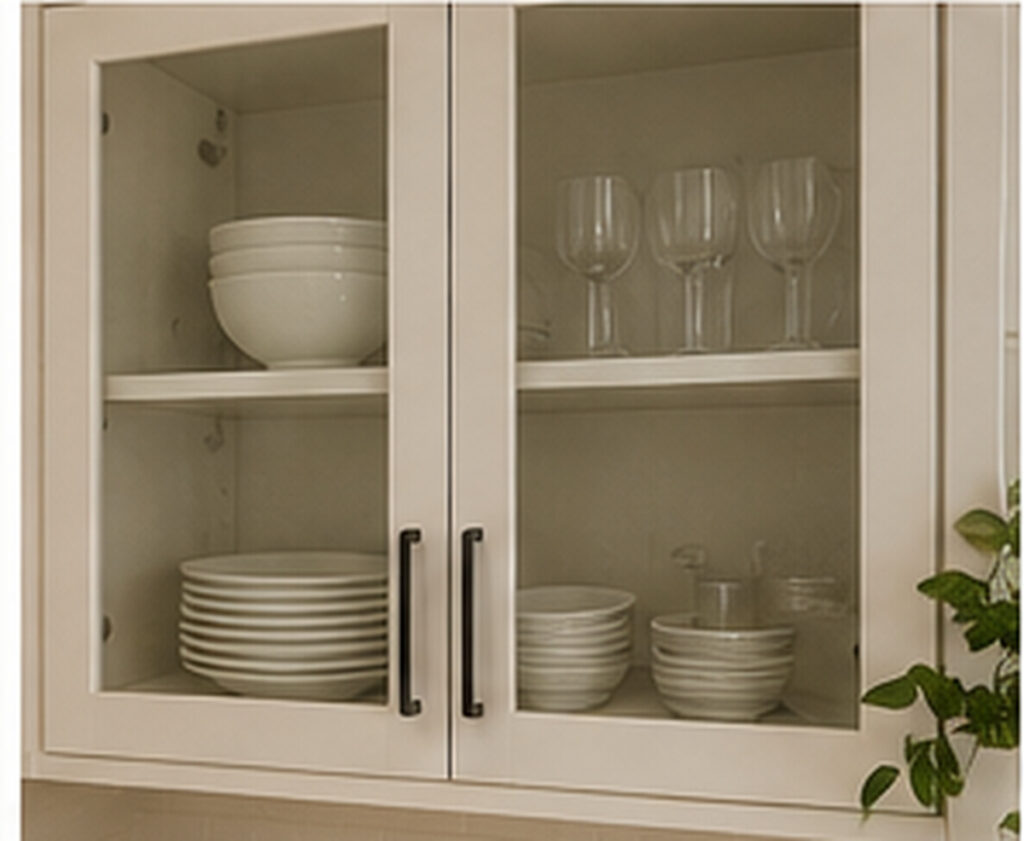
A limited amount of glass can make upper cabinetry feel less solid.
Glass-front doors are particularly useful for attractive dishes, glasses, or neatly arranged everyday pieces.
However, there is an important trade-off.
Transparent cabinetry filled with mismatched packages and crowded shelves can create more visual clutter than solid doors.
Use glass only where you can maintain a relatively simple arrangement.
For extremely busy storage areas, closed cabinetry will usually make the kitchen look calmer.
8. Turn Deep Cabinets Into Accessible Storage
A deep cabinet is not automatically efficient storage.
Items pushed behind several other objects quickly become forgotten.
Use pull-out baskets, drawers, categorized bins, or appropriate turntables so that objects stored toward the back remain accessible.
Before installing elaborate corner mechanisms, compare how much actual usable storage they provide.
Some complex systems consume considerable interior cabinet space. The source also warns that certain corner mechanisms can reduce usable storage in very compact kitchens.
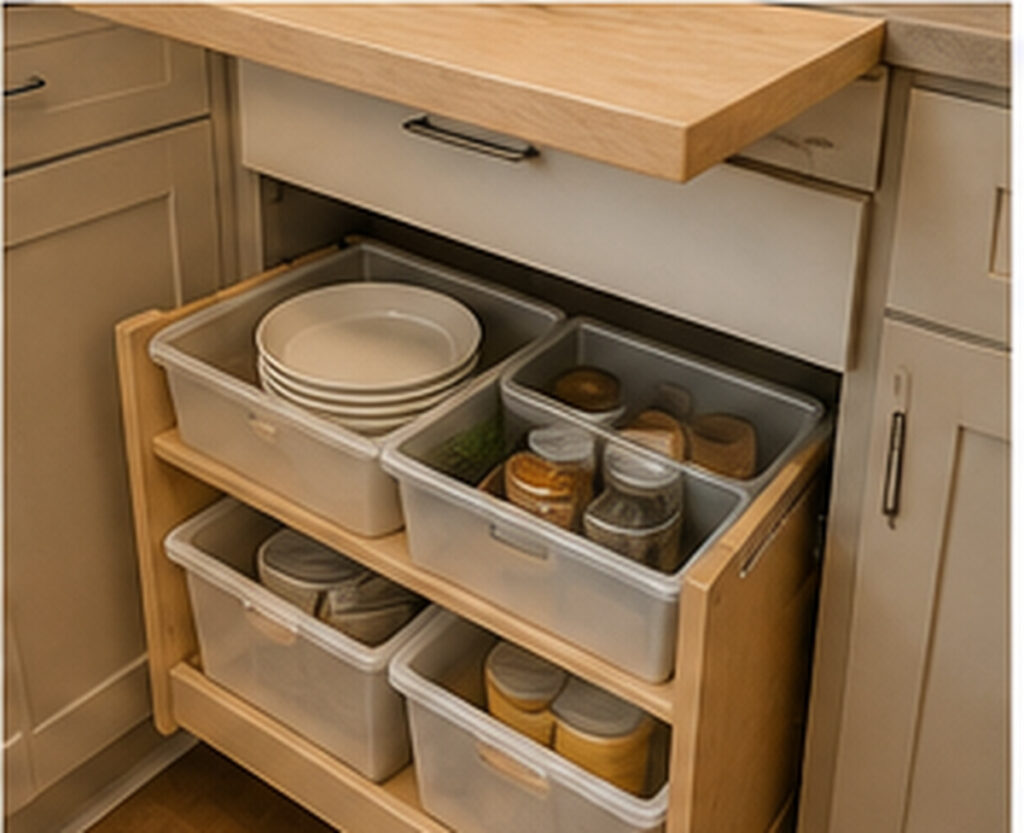
For some kitchens, simple shelves combined with removable bins are easier and cheaper to maintain.
9. Store Flat Items Vertically
Baking sheets, cutting boards, muffin tins, serving trays, and cooling racks become frustrating when stacked.
Place them vertically using dividers.
Instead of lifting four trays to reach the one underneath, you can pull each piece out individually.
This technique also makes narrow cabinets surprisingly useful.
A slim cabinet that cannot accommodate cookware may be perfect for trays and boards.
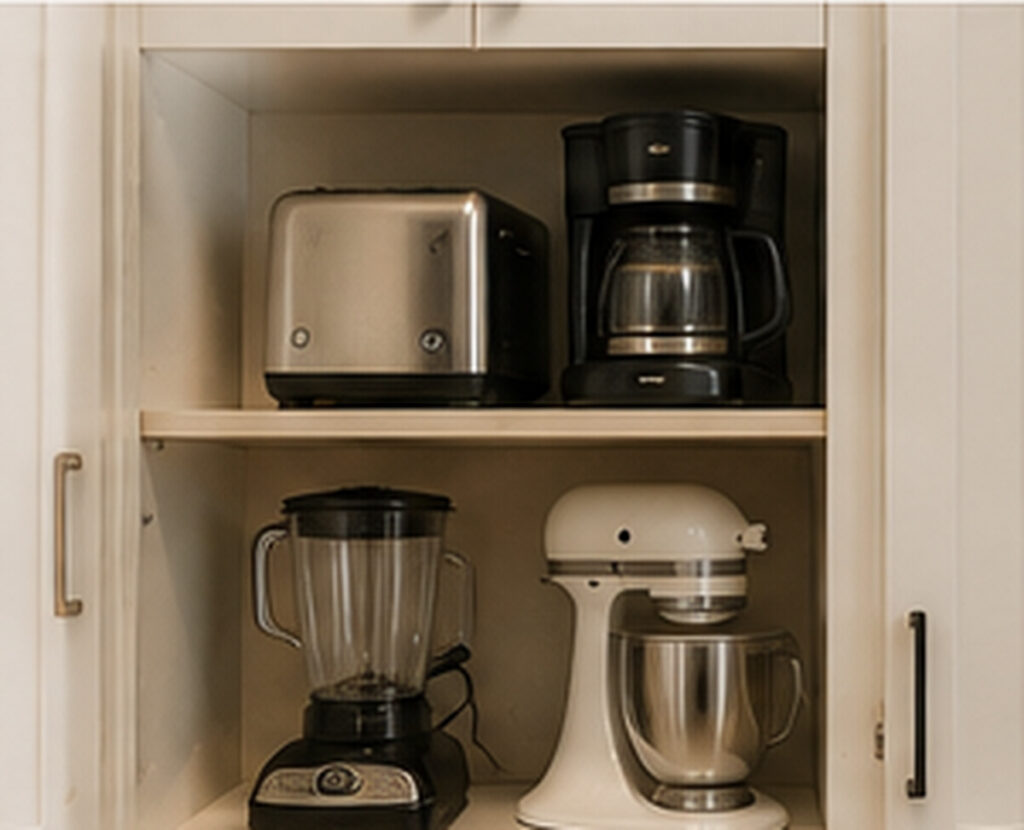
10. Make Appliances Earn Their Counter Space
Small appliances are among the biggest contributors to countertop clutter.
Think about frequency rather than price or size.
An inexpensive toaster used every morning deserves convenient access more than an expensive appliance used four times per year.
For occasionally used appliances, create an appliance cabinet or dedicate a lower shelf.
If possible, place frequently used appliances together rather than scattering them around the kitchen.
Small-Space Tip: Avoid replacing every appliance with a smaller version simply because your kitchen is small. First determine what you actually use. Owning fewer appliances often saves more space than owning many compact ones.
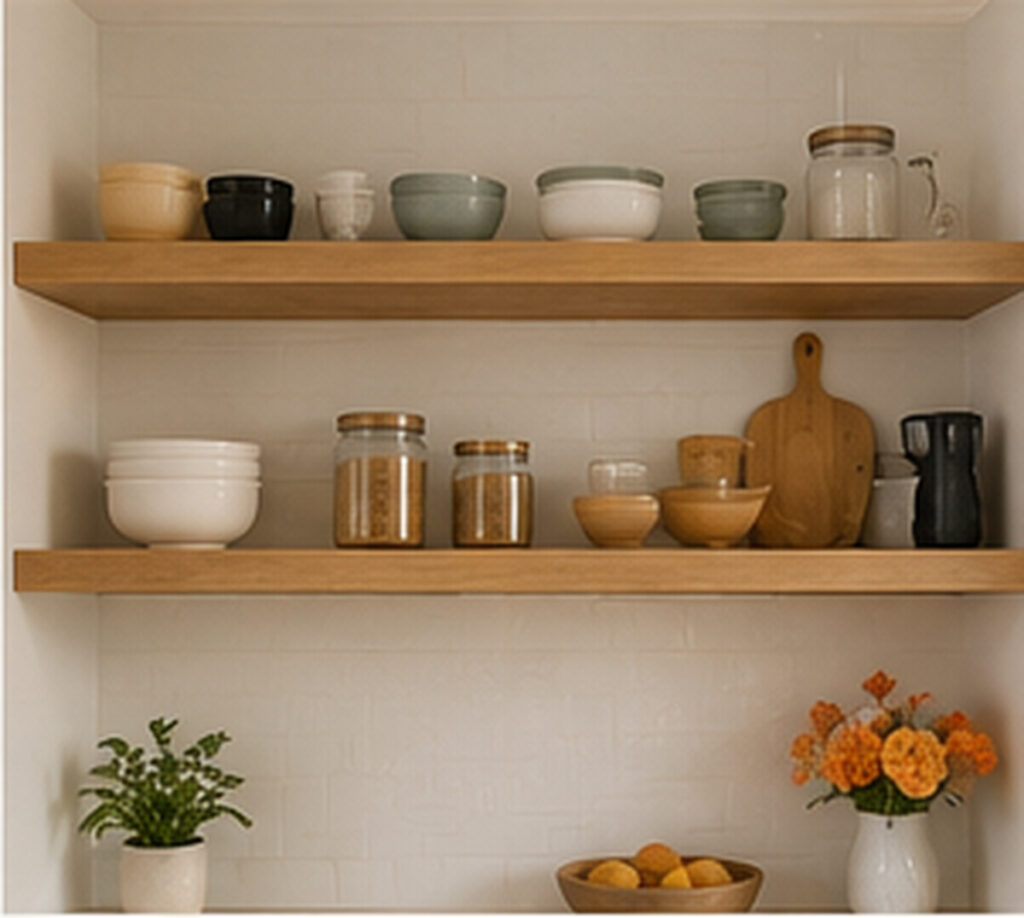
11. Keep Open Shelving Selective
Open shelving can visually lighten a wall because there are no large cabinet fronts covering it.
But open shelves are not automatically a good small-space solution.
They work best for frequently used, visually simple items such as:
- Drinking glasses
- Everyday bowls
- A small collection of plates
- Coffee cups
- A few pantry jars
Avoid turning open shelves into storage for dozens of unrelated objects.
That trades physical openness for visual clutter.
If you already struggle to keep surfaces organized, closed cabinetry may be easier to maintain.
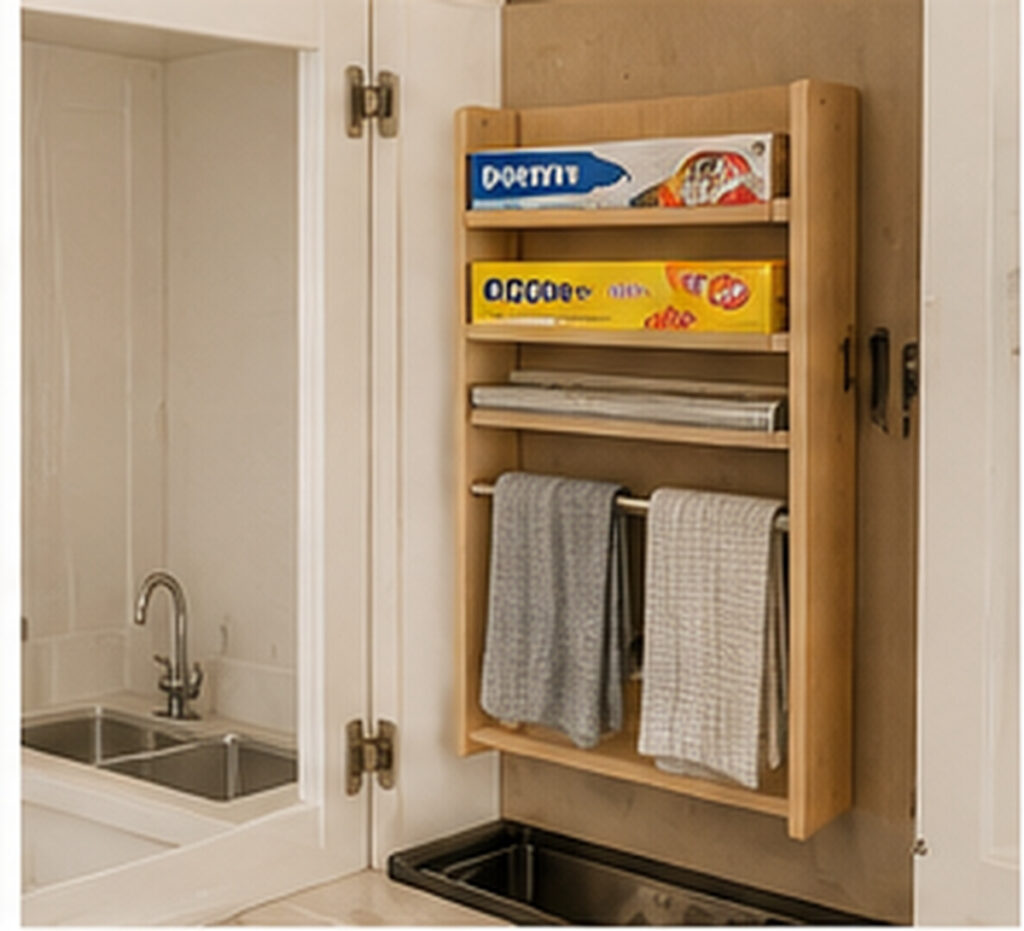
12. Use the Inside of Cabinet Doors
Cabinet doors offer thin storage areas that are often completely unused.
Depending on clearance, they can hold:
- Measuring spoons
- Cleaning cloths
- Foil and wrap
- Small cutting boards
- Lightweight lids
- Cleaning accessories
Always test door clearance before installing anything.
The organizer must not collide with shelves or prevent the door from closing.
This strategy works particularly well beneath the sink, where pipes often make conventional shelving difficult.
13. Simplify What Stays on Display
A room looks smaller when the eye has to process dozens of competing shapes and packages.
You do not need to transfer every grocery product into a matching container.
Instead, concentrate on the items that remain permanently visible.
For example, if coffee, sugar, cooking utensils, and oil stay on the counter, group them intentionally instead of allowing each item to occupy a separate location.
A small tray can visually turn several individual objects into one organized group.
This reduces the feeling of clutter without hiding things you genuinely use.
14. Protect Your Main Preparation Area
A small kitchen becomes much easier to use when at least one section of counter remains available for food preparation.
Do not automatically use every empty surface for storage.
Choose your best preparation area and protect it.
Move knife blocks, utensil containers, paper towels, decorative boards, and appliances elsewhere when they interfere with that space.
Even a modest uninterrupted work surface can make the entire kitchen feel more functional.
15. Leave Some Empty Space
One of the most overlooked small-kitchen organization ideas is intentionally storing less.
You do not need to fill every shelf, every hook, every drawer, and every inch above the cabinets.
A little empty space gives your eyes somewhere to rest and gives your storage system room to adapt.
It also prevents the kitchen from becoming disorganized immediately after a grocery trip.
What I’d Do Differently: Instead of trying to maximize storage capacity first, prioritize accessibility. A kitchen that holds slightly fewer items but allows you to reach everything easily is usually more functional.
The Finished Organized Space
After applying these ideas, the biggest improvement should be functional rather than purely decorative.
Countertops remain clearer because appliances and supplies have designated storage locations.
Cabinets become easier to navigate because items are categorized and vertical space is used intentionally.
Frequently used tools remain within easy reach without needing to stay scattered across the counter.
Lighting also helps remove dark visual pockets beneath cabinetry, while a more consistent palette prevents individual surfaces from competing for attention.
Most importantly, the kitchen gains breathing room.
Instead of trying to make a tiny kitchen behave like a huge one, the organization system works with the space that is actually available.
How Much Does It Cost to Make a Small Kitchen Look Bigger?
You can make noticeable improvements without completing a full renovation.
Approximate budget ranges might include:
- Drawer dividers: $10–$30
- Shelf risers: $10–$30
- Storage bins: $15–$50
- Vertical dividers: $10–$30
- Door organizers: $10–$30
- Under-cabinet lighting: $20–$80
- New cabinet hardware: $25–$100+
- Paint or minor cosmetic updates: $30–$100+
Estimated basic organization budget: approximately $50–$150.
A more extensive refresh involving lighting, paint, hardware, and additional organizers might fall around $150–$400+.
These are general estimates. Actual costs depend on kitchen size, materials, existing storage, and the organizers you choose.
How Long Does This Project Take?
A basic organization reset can often be completed over a weekend.
Allow approximately:
- Decluttering: 1–2 hours
- Cleaning: 30–60 minutes
- Measuring: 30 minutes
- Planning zones: 30–60 minutes
- Installing simple organizers: 1–2 hours
- Reorganizing cabinets: 1–3 hours
- Final adjustments: 30 minutes
A straightforward project may require roughly 4–8 hours of active work.
Painting cabinets, replacing hardware, installing permanent pull-outs, or completing electrical lighting work can extend the project considerably.
Common Small Kitchen Organization Mistakes to Avoid
Buying Organizers Before Measuring
An organizer that wastes two inches on either side may be a poor choice in a tiny cabinet.
Measure first.
Keeping Too Many Duplicate Items
Six frying pans, multiple sets of measuring cups, or stacks of unused mugs consume storage quickly.
Keep quantities realistic for your household.
Filling Every Available Inch
Leave enough room to remove items without rearranging everything.
Creating Too Many Categories
Categories should simplify storage.
If every product has its own tiny category, maintaining the system becomes unnecessarily complicated.
Putting Everyday Items Too High
Upper shelves are better for lightweight or less frequently used items.
Store daily essentials within comfortable reach.
Choosing Appearance Over Function
Beautiful containers are not useful if they waste half of a cabinet’s depth.
Fit and accessibility should come first.
Adding Too Much Open Storage
Open shelves and hanging systems can increase useful storage while simultaneously making a kitchen look busier.
Use them selectively.
How to Keep a Small Kitchen Organized
A successful small-kitchen system needs regular maintenance, but it should not require constant reorganizing.
Spend five or ten minutes each week returning misplaced items to their zones.
Before grocery shopping, check existing pantry and refrigerator supplies to prevent unnecessary duplicates.
Try a one-in, one-out approach for kitchen gadgets, mugs, water bottles, and other categories that tend to grow.
Keep at least a little free space in frequently used cabinets.
Finally, reassess the system whenever your routines change. Storage designed around how you actually cook will always be easier to maintain than storage designed around how a kitchen is supposed to look.
Frequently Asked Questions
What colors make a small kitchen look bigger?
Light neutrals such as warm white, cream, pale beige, and light greige can create a brighter visual environment. A consistent palette across larger surfaces also reduces visual interruptions. Dark accents can still work well when used selectively for contrast.
How can I make my small kitchen look bigger without remodeling?
Start by clearing countertops, decluttering cabinets, improving lighting, organizing items vertically, simplifying visible objects, and creating dedicated storage zones. These changes do not increase square footage, but they can make the kitchen feel significantly less crowded.
What is the best storage idea for a very small kitchen?
There is no single organizer that works for every small kitchen. Start with unused vertical space. Shelf risers, vertical dividers, stacked drawers, and appropriately sized bins can increase accessible storage without taking additional floor space.
Should a small kitchen have open shelves?
Open shelving can make a wall feel visually lighter, but it works best when the shelves contain a limited number of organized everyday items. If your kitchen requires dense storage, closed cabinets often create a calmer appearance.
How do I organize a small kitchen with very little counter space?
Move infrequently used appliances into cabinets, group frequently used items, use cabinet doors where appropriate, store trays vertically, and designate one section of countertop exclusively for food preparation.
Are dark cabinets bad for a small kitchen?
Not necessarily. Dark cabinetry can work beautifully in a small kitchen with sufficient lighting and thoughtful contrast. However, lighter finishes generally reflect more available light, which can help a compact room feel visually brighter.
How do you make a small galley kitchen feel bigger?
Keep countertops relatively clear, improve lighting along both sides, avoid overcrowding the walkway, organize vertically, and maintain visual consistency between cabinetry and walls. Keeping the far end of the galley visually open can also reduce the tunnel-like feeling.