Get Your FREE Home Organization Checklist — Start Decluttering Today
25 Corner Pantry Ideas to Upgrade Kitchen Storage and Style

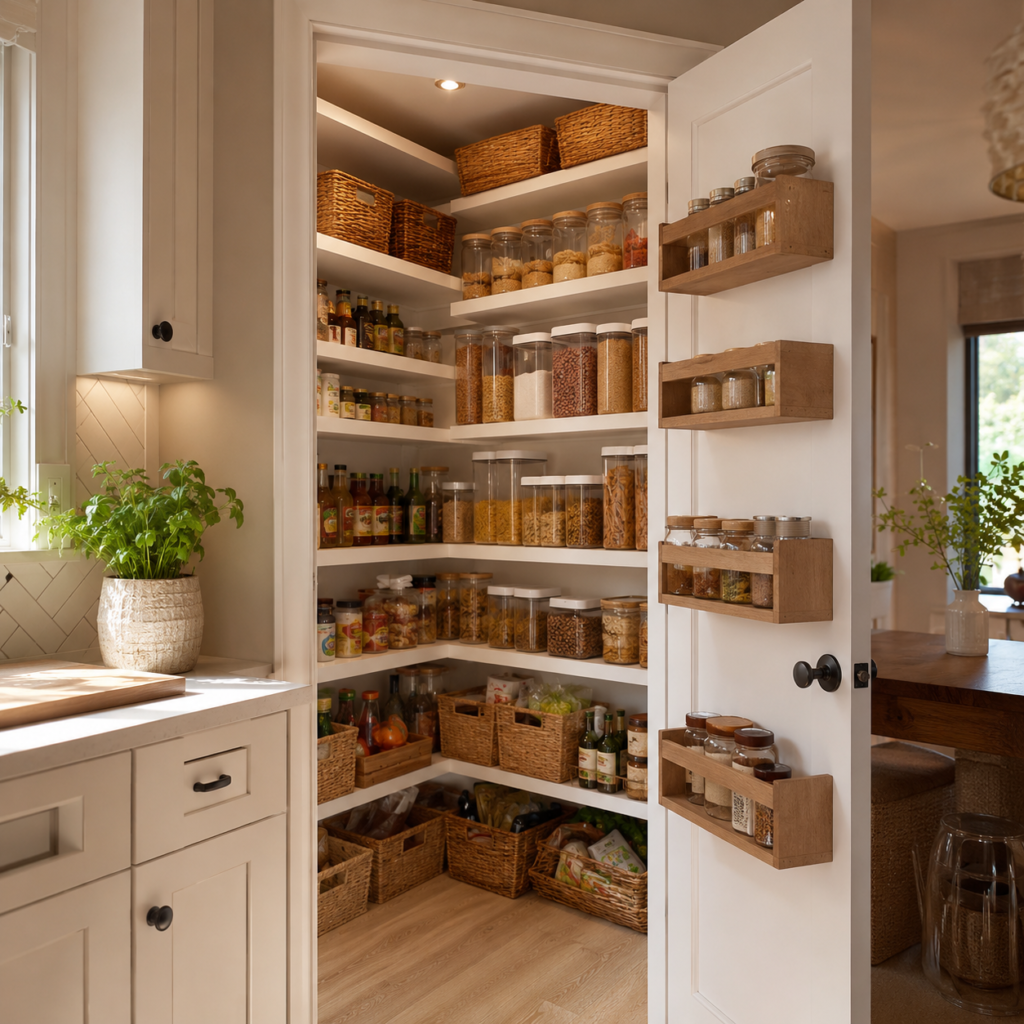
If your kitchen always feels a little short on storage, a corner pantry can solve more problems than you might expect. Corners are often awkward, underused, or packed with items that disappear into the back and never get seen again. But with the right layout, shelving, and door design, that same space can become one of the hardest-working storage zones in the kitchen.
These corner pantry ideas are perfect if you want to improve kitchen organization, make better use of unused space, or add a more custom look without sacrificing practicality. Whether you have a small L-shaped kitchen, a larger family kitchen, or you are planning a remodel, the right corner pantry can hold dry goods, small appliances, serving pieces, snacks, and even a coffee station.
In this guide, you’ll find 25 original corner pantry ideas, plus practical planning tips, common mistakes to avoid, and smart ways to keep your pantry organized long-term.
What Makes a Corner Pantry So Useful?
A corner pantry works because it solves two problems at once.
First, it turns a difficult kitchen corner into functional storage. Second, it helps you move bulky, mismatched, or frequently used pantry items out of your main kitchen cabinets. That means less crowding near the stove, sink, and prep areas.
A well-designed corner pantry can help you:
- Use awkward kitchen corners more efficiently
- Add vertical storage without expanding the room
- Keep food categories easier to manage
- Store small appliances out of sight
- Reduce countertop clutter
- Create a cleaner, more custom-looking kitchen layout
Not every corner pantry has to be a full walk-in space. Some are tall cabinet pantries, some use angled shelves, and others combine pantry storage with coffee bars, wine storage, or appliance garages.
The Plan Before Choosing a Corner Pantry Design
Before picking a pantry style, it helps to think about how you actually use your kitchen.
Ask yourself:
- Do you need more food storage or more appliance storage?
- Do you prefer hidden storage or open display?
- Will the pantry hold everyday items or bulk backstock?
- Do you want the corner pantry to blend in or stand out?
- Do you need children to access snacks easily?
- Will it sit next to a refrigerator, oven wall, or empty corner?
A corner pantry that looks beautiful but stores the wrong things will still feel inconvenient. The best pantry designs match your kitchen habits, your available space, and the way you want the room to function every day.
What You’ll Need for a Corner Pantry Project
Organization Supplies
- Clear or matching storage containers
- Baskets
- Turntables
- Shelf risers
- Pull-out drawers or trays
- Labels
- Door-mounted racks
- Vertical dividers
- Produce bins
- Wire or wood baskets
- Small bins for packets and snacks
Tools
- Measuring tape
- Notebook or planning app
- Pencil
- Level
- Drill or screwdriver for installations
- Cleaning supplies
- Shelf liners if desired
Organization Tip: Measure first, buy second. Corner spaces can be deceptively tricky, especially when doors, trim, hinges, or nearby appliances affect how much usable storage you actually have.
Measure Before You Build or Buy
When planning a corner pantry, measure:
- Wall-to-wall width
- Depth at both sides of the corner
- Door swing clearance
- Distance from refrigerator or adjacent cabinets
- Ceiling height
- Shelf access depth
- Any trim or molding that affects fit
If you are adding shelves inside a cabinet-style corner pantry, also think about the reach factor. A shelf that looks generous on paper may be too deep to use comfortably if items constantly get lost at the back.
25 Corner Pantry Ideas
1. Full-Height Built-In Corner Pantry
A full-height built-in pantry makes a kitchen feel polished and intentional. This type of pantry usually runs from floor to ceiling and blends in with surrounding cabinetry, which helps the whole kitchen look more custom.
It works especially well in kitchens that need a lot of hidden storage. Dry goods, baking supplies, extra paper products, and serving pieces can all live inside without making the room look cluttered.
If you want maximum capacity with a clean exterior, this is one of the strongest corner pantry ideas to start with.
2. Angled Corner Pantry With Double Doors
An angled corner pantry softens a sharp 90-degree kitchen corner and can make the layout feel more natural. Double doors create a wider opening, which helps with visibility and makes larger pantry items easier to reach.
This style is especially useful when you want the pantry to feel integrated with the cabinetry instead of like a separate storage closet.
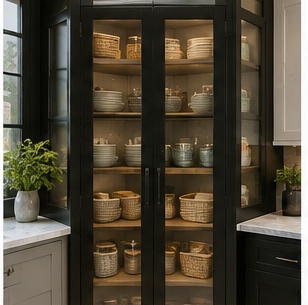
3. Glass-Front Corner Pantry
Glass doors make a corner pantry feel lighter and more decorative. They work well if you store attractive canisters, dishware, jars, or neatly organized pantry staples.
The key is simplicity. A glass-front pantry looks best when the contents are curated, not overpacked. If the shelves are messy, solid doors may be a better choice.
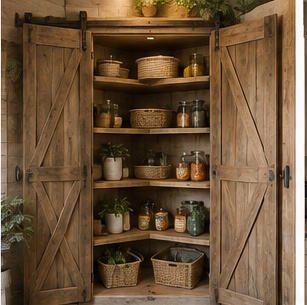
4. Rustic Wood Corner Pantry
A rustic wood pantry adds warmth and character to the kitchen while still solving practical storage needs. Natural wood tones pair beautifully with farmhouse, cottage, and transitional interiors.
You can use this style for both closed cabinetry and open shelving inside. Woven baskets, labeled jars, and wooden crates all complement the look nicely.
5. Modern Minimalist Corner Pantry
If your kitchen has sleek lines and minimal hardware, a streamlined corner pantry can continue that aesthetic without disrupting the design. Think flat-front doors, integrated pulls, neutral finishes, and clean shelving.
Minimalist pantries are especially effective when you want a calm, uncluttered kitchen that still stores a lot behind closed doors.
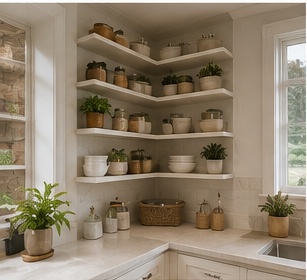
6. Corner Pantry With Open Shelving
Open shelving can make a pantry corner feel airy and more visually accessible. This is a great choice for everyday dishes, cereal containers, cookbooks, baskets, or frequently used pantry staples.
The trade-off is that open shelving needs visual discipline. Group like items together and avoid turning the shelves into an overflow zone for random products.
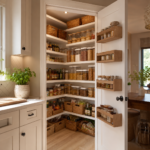
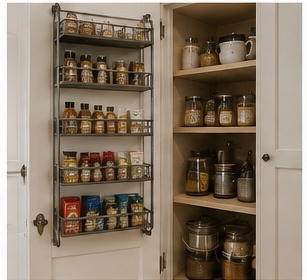
7. Pantry With Door-Mounted Storage
The inside of pantry doors is easy to overlook, but it can add valuable shallow storage. Door racks are useful for spices, snacks, wraps, seasoning packets, oils, or small jars.
This idea works best when shelf depth and door clearance are planned carefully. It is a smart way to use every inch without crowding the main shelves.
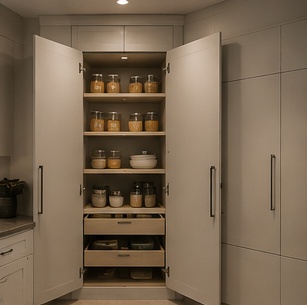
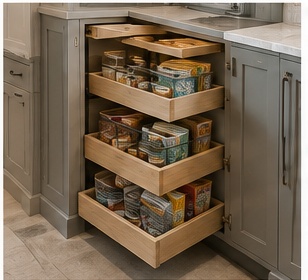
8. Corner Pantry With Pull-Out Drawers
Pull-out drawers or trays can dramatically improve a pantry’s function. Instead of digging through deep shelves, you can slide items forward and see what you have immediately.
This is one of the best corner pantry ideas for busy households because it reduces wasted food, forgotten ingredients, and frustration during meal prep.
9. Coffee Station Corner Pantry
A corner pantry can do more than hold groceries. It can also become a hidden coffee station with mugs, beans, syrups, tea, filters, and small appliances all stored in one place.
This setup works especially well when you want to keep the countertop cleaner but still have a dedicated beverage area.
10. Pantry and Appliance Garage Combo
If small appliances take over your counters, a corner pantry can double as an appliance garage. Store the toaster, blender, stand mixer, or air fryer inside while keeping them easy to access.
A countertop section inside the pantry can also act as a mini work zone for coffee, baking, or breakfast prep.
11. Farmhouse Corner Pantry
A farmhouse-style corner pantry blends practical storage with warm details like shaker doors, soft white paint, wood countertops, beadboard backing, or woven baskets.
This style feels welcoming and timeless, and it works especially well in family kitchens where storage needs are high but the room still needs personality.
12. Hidden Corner Pantry That Blends Into Cabinetry
A hidden pantry is ideal if you want storage to disappear visually. From the outside, it may look like a tall cabinet wall. Inside, it can hold an impressive amount of food and kitchen supplies.
This is especially helpful in smaller kitchens where too many visible elements can make the room feel busier.
13. Corner Pantry Next to the Refrigerator
Placing a pantry beside the refrigerator creates an efficient food-storage zone. Cold items and dry goods stay in the same general area, which makes grocery unloading and meal prep more convenient.
If you have the space, use the lower sections for snacks and everyday staples, and reserve upper shelves for less frequently used backstock.
14. Curved Corner Pantry Design
A curved pantry front softens the kitchen visually and gives the corner a more custom, furniture-like feel. It can work beautifully in Mediterranean, transitional, or high-end traditional kitchens.
This idea is more design-forward, but it still provides practical storage if the interior shelves are planned thoughtfully.
15. White Corner Pantry for a Bright Look
A white corner pantry reflects light and tends to make the kitchen feel more open. This is especially useful in smaller kitchens or spaces that do not get a lot of natural light.
Pair it with warm wood accents or black hardware if you want contrast without losing brightness.
16. Moody Dark Corner Pantry
A dark pantry in navy, charcoal, or black can create a dramatic focal point. It works especially well in modern or transitional kitchens with enough light to support a deeper color palette.
To keep it practical, use interior lighting or lighter shelving finishes inside so the pantry remains easy to use.
17. Corner Pantry With Interior Lighting
Built-in interior lighting instantly upgrades a pantry. It helps you see what is on each shelf, especially in deeper cabinet pantries or darker kitchen corners.
Lighting also adds a high-end feel and makes the pantry more pleasant to use every day.
18. Pantry With Mixed Open and Closed Storage
Some of the most practical pantry designs combine open and closed storage. Closed cabinets hide less attractive items, while open shelves display everyday essentials, pretty canisters, or dishes.
This hybrid approach gives you flexibility and helps the corner feel balanced rather than overly heavy.
19. Narrow Corner Pantry for Small Kitchens
Even a compact kitchen may have room for a slim corner pantry. A narrow design can still store canned goods, bottles, jars, or baking ingredients if the interior is organized efficiently.
Use vertical spacing carefully, and avoid shelves that are so deep they become unusable.
20. Corner Pantry With Wine Storage
If you entertain often, consider combining dry goods storage with a few wine cubbies or a small beverage section. This turns the pantry into a multi-purpose kitchen hub without requiring a separate bar area.
Just be sure the wine section does not take over storage you need more urgently for everyday food.
21. Pantry With Vertical Dividers
Vertical dividers are useful for trays, cutting boards, baking sheets, cooling racks, and platters. If your pantry is tall or extra deep, adding a section for flat items can prevent those pieces from being stacked awkwardly elsewhere in the kitchen.
This small detail adds a surprising amount of order.
22. Corner Pantry With Produce Storage
If you regularly keep onions, potatoes, garlic, or fruit in the kitchen, a produce-friendly pantry setup can be very useful. Use ventilated bins, baskets, or lower pull-out crates to keep produce organized while allowing airflow.
This keeps bulky produce off the countertop and out of the way.
23. Pantry With Child-Friendly Snack Zone
A lower shelf or basket section dedicated to snacks can make the pantry more family-friendly. Kids can reach what they need without pulling everything else out of place.
This works best when the snack zone is clearly limited and easy to reset.
24. Pantry With Labels and Clear Categories
Sometimes the biggest pantry upgrade is not the cabinet itself but the system inside it. Labels, bins, zones, and clear shelf assignments make a corner pantry easier to maintain.
Group by use, not just by product type. For example, baking ingredients, lunch supplies, breakfast foods, and grab-and-go snacks are often easier to manage than a shelf full of random dry goods.
25. Custom Luxury Corner Pantry
If you are doing a remodel and want a true showpiece, a custom corner pantry can include lighting, drawers, shelf variations, special racks, a countertop, appliance space, and designer finishes.
It is the most tailored option, and it works best when your kitchen storage needs are very specific. The goal is not luxury for its own sake, but a pantry that makes daily kitchen life more efficient while looking beautifully integrated.
The Finished Corner Pantry: What Changes the Most?
A good corner pantry changes more than storage volume.
It improves visibility, makes everyday ingredients easier to reach, reduces countertop clutter, and gives the kitchen a more intentional layout. It can also solve “overflow cabinet syndrome,” where several cabinets become half pantry, half cookware, and half random storage all at once.
The best results usually come from combining three things:
- A layout that fits the kitchen
- Storage features that match real habits
- Enough simplicity that the system remains easy to maintain
How Much Does a Corner Pantry Cost?
Costs depend on whether you are organizing an existing corner cabinet or building a new pantry as part of a remodel.
Approximate ranges:
- Basic bins, labels, and small organizers: $30–$100
- Pull-out drawers or trays: $50–$250+
- Door racks and shelf accessories: $20–$80
- Freestanding or semi-custom pantry modifications: $150–$600+
- Custom built-in corner pantry: $1,000–$5,000+ depending on materials and labor
If you are simply improving the inside of an existing pantry, you can often make a big difference on a modest budget.
How Long Does a Corner Pantry Project Take?
A simple organization update may take only a few hours.
Approximate time ranges:
- Emptying and decluttering: 1–2 hours
- Measuring and planning: 30–60 minutes
- Installing bins, labels, or small accessories: 1–2 hours
- Installing pull-outs or hardware: 2–4 hours
- Full custom pantry build or remodel: several days to several weeks depending on complexity
Common Corner Pantry Mistakes to Avoid
Buying Storage Products Before Measuring
Corner spaces are rarely as straightforward as they look.
Making Shelves Too Deep
Storage that looks spacious can become frustrating if everything gets lost in the back.
Using Open Shelves for Everything
Open shelving works best in moderation. Too much of it can create visual clutter.
Ignoring Door Swing Clearance
A beautiful pantry door still needs to open comfortably without hitting nearby cabinetry or appliances.
Overfilling Every Shelf
Leave some space so the pantry stays easy to use and can absorb weekly grocery changes.
Forgetting About Lighting
Dark pantry corners are harder to maintain. Even simple lighting can improve visibility.
Creating Too Many Tiny Categories
A pantry should feel organized, not overcomplicated.
How to Keep a Corner Pantry Organized
A corner pantry stays functional when the system is simple enough to maintain.
Use broad categories, return items to their zones after grocery trips, and do a quick weekly reset. Check expiration dates regularly, limit duplicate purchases, and keep a small amount of breathing room on each shelf.
If your pantry holds both food and appliances, create clear boundaries so one category does not gradually take over the other.
Frequently Asked Questions
What is the best layout for a corner pantry?
The best layout depends on your kitchen size and storage needs. Tall built-in pantries, angled double-door pantries, and corner cabinet pantries with pull-outs are among the most practical options. The ideal choice should make items easy to reach and fit naturally within your kitchen layout.
Are corner pantries good for small kitchens?
Yes, corner pantries can work very well in small kitchens because they use space that often goes underused. A slim or built-in corner pantry can add significant storage without taking up a lot of floor area.
Should a corner pantry have open shelves or closed doors?
Both can work. Open shelves feel lighter and make items easy to see, while closed doors hide visual clutter. Many kitchens benefit from a mix of both for the best balance of style and function.
How deep should corner pantry shelves be?
Shelves should be deep enough to hold pantry items comfortably but not so deep that items disappear into the back. Moderate depth usually works better than oversized shelving, especially in smaller kitchens.
Can a corner pantry store small appliances?
Yes. Many corner pantry ideas include appliance storage, especially when the pantry is full height or has a small counter section inside. This is a useful way to keep counters cleaner.
How do I organize a corner pantry efficiently?
Start by grouping items into categories like breakfast foods, baking supplies, snacks, canned goods, and backstock. Use bins, labels, and pull-out storage where possible, and keep the most frequently used items at the easiest-to-reach height.